
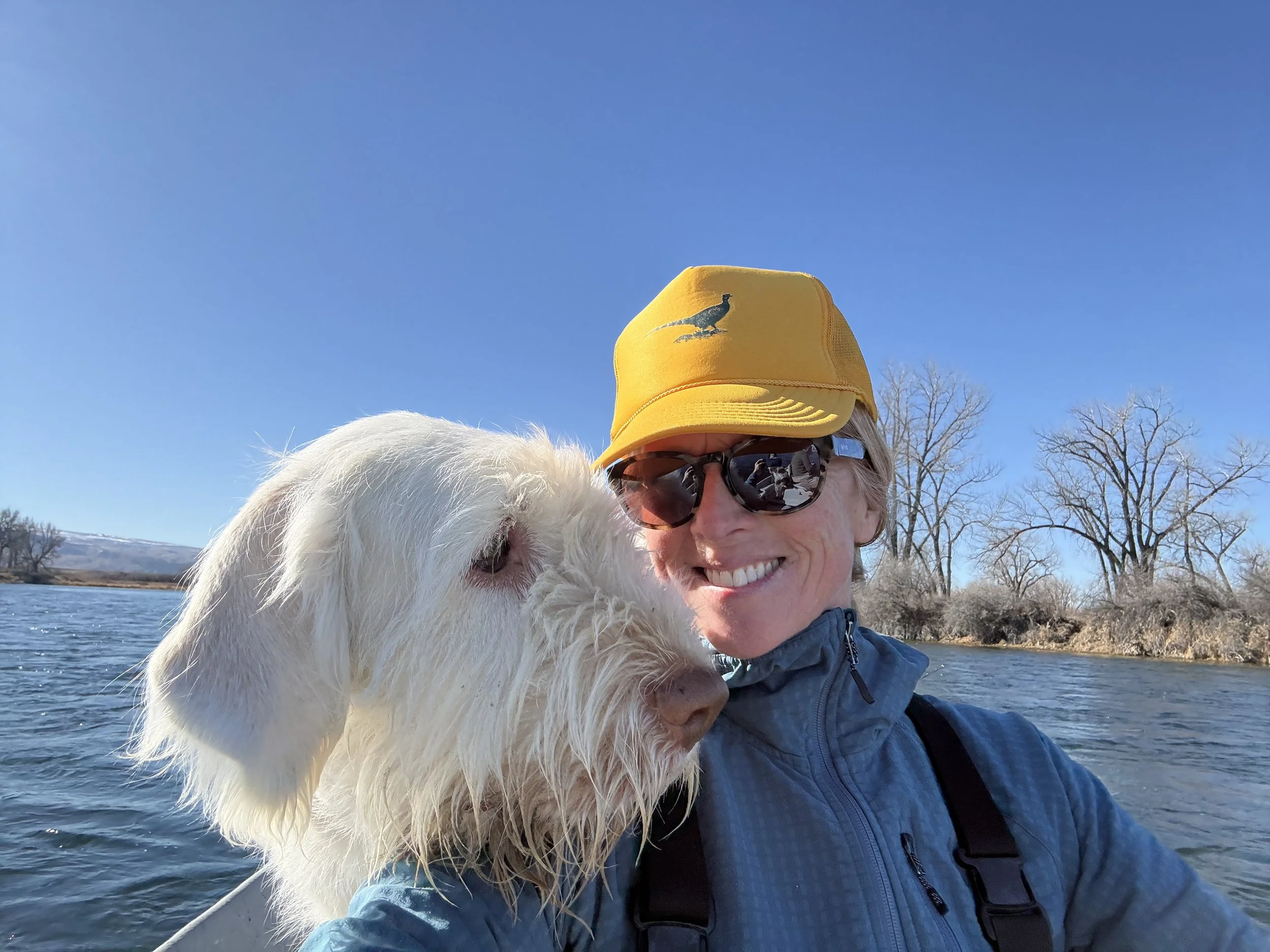
Molly Brewer
“I love the tactile nature of making something real.”
— Molly Brewer
Can you share the journey that led you to become a designer?
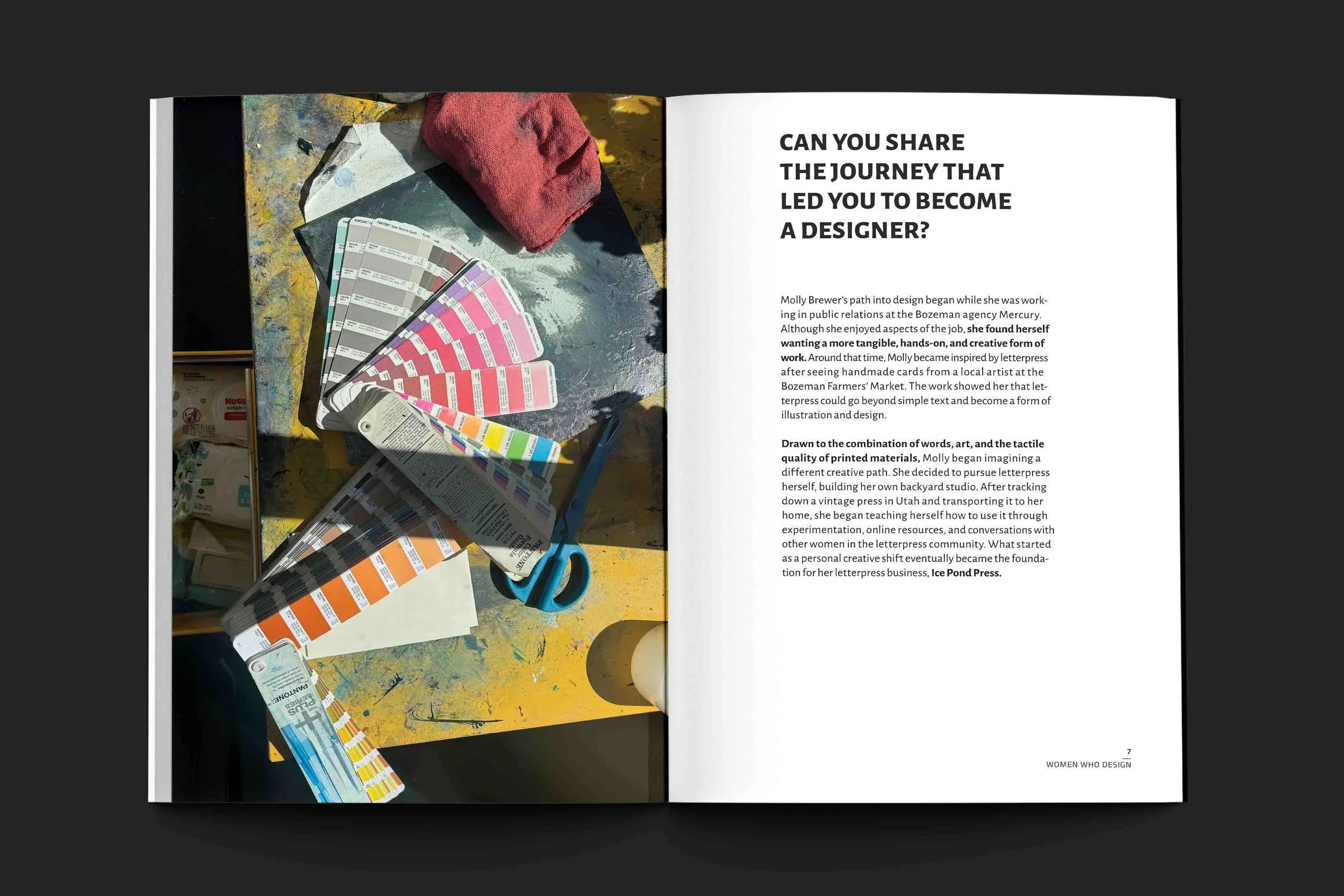
Molly Brewer’s path into design began while she was working in public relations at the Bozeman agency Mercury. Although she enjoyed aspects of the job, she found herself wanting a more tangible, hands-on, and creative form of work. Around that time, Molly became inspired by letterpress after seeing handmade cards from a local artist at the Bozeman Farmers’ Market. The work showed her that letterpress could go beyond simple text and become a form of illustration and design.
Drawn to the combination of words, art, and the tactile quality of printed materials, Molly began imagining a different creative path. She decided to pursue letterpress herself, building her own backyard studio. After tracking down a vintage press in Utah and transporting it to her home, she began teaching herself how to use it through experimentation, online resources, and conversations with other women in the letterpress community. What started as a personal creative shift eventually became the foundation for her letterpress business, Ice Pond Press.
What is it like to be a woman designer in Bozeman?
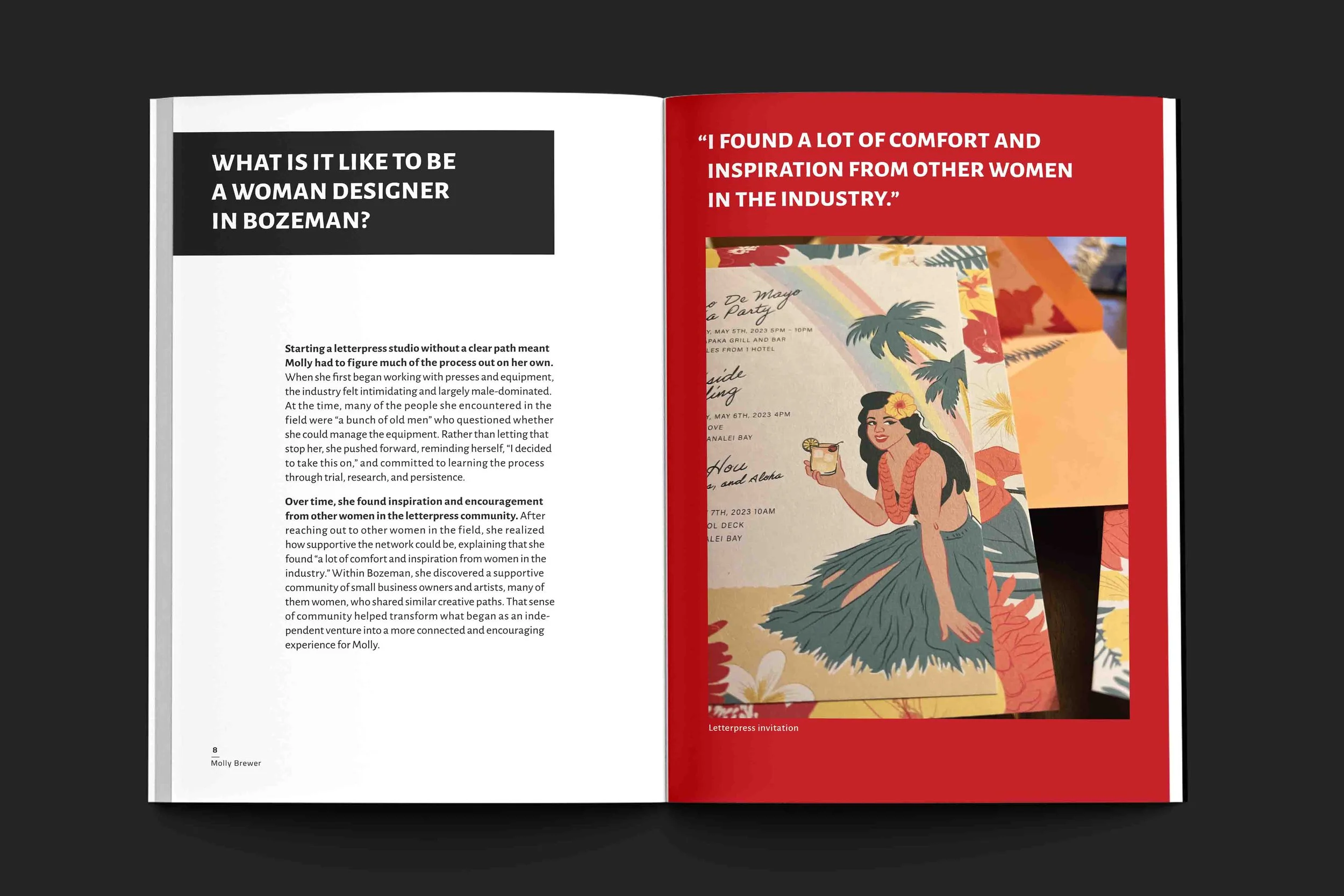
Starting a letterpress studio without a clear path meant Molly had to figure much of the process out on her own. When she first began working with presses and equipment, the industry felt intimidating and largely male-dominated. At the time, many of the people she encountered in the field were “a bunch of old men” who questioned whether she could manage the equipment. Rather than letting that stop her, she pushed forward, reminding herself, “I decided to take this on,” and committed to learning the process through trial, research, and persistence.
Over time, she found inspiration and encouragement from other women in the letterpress community. After reaching out to other women in the field, she realized how supportive the network could be, explaining that she found “a lot of comfort and inspiration from women in the industry.” Within Bozeman, she discovered a supportive community of small business owners and artists, many of them women, who shared similar creative paths. That sense of community helped transform what began as an independent venture into a more connected and encouraging experience for Molly.
The weight of print.
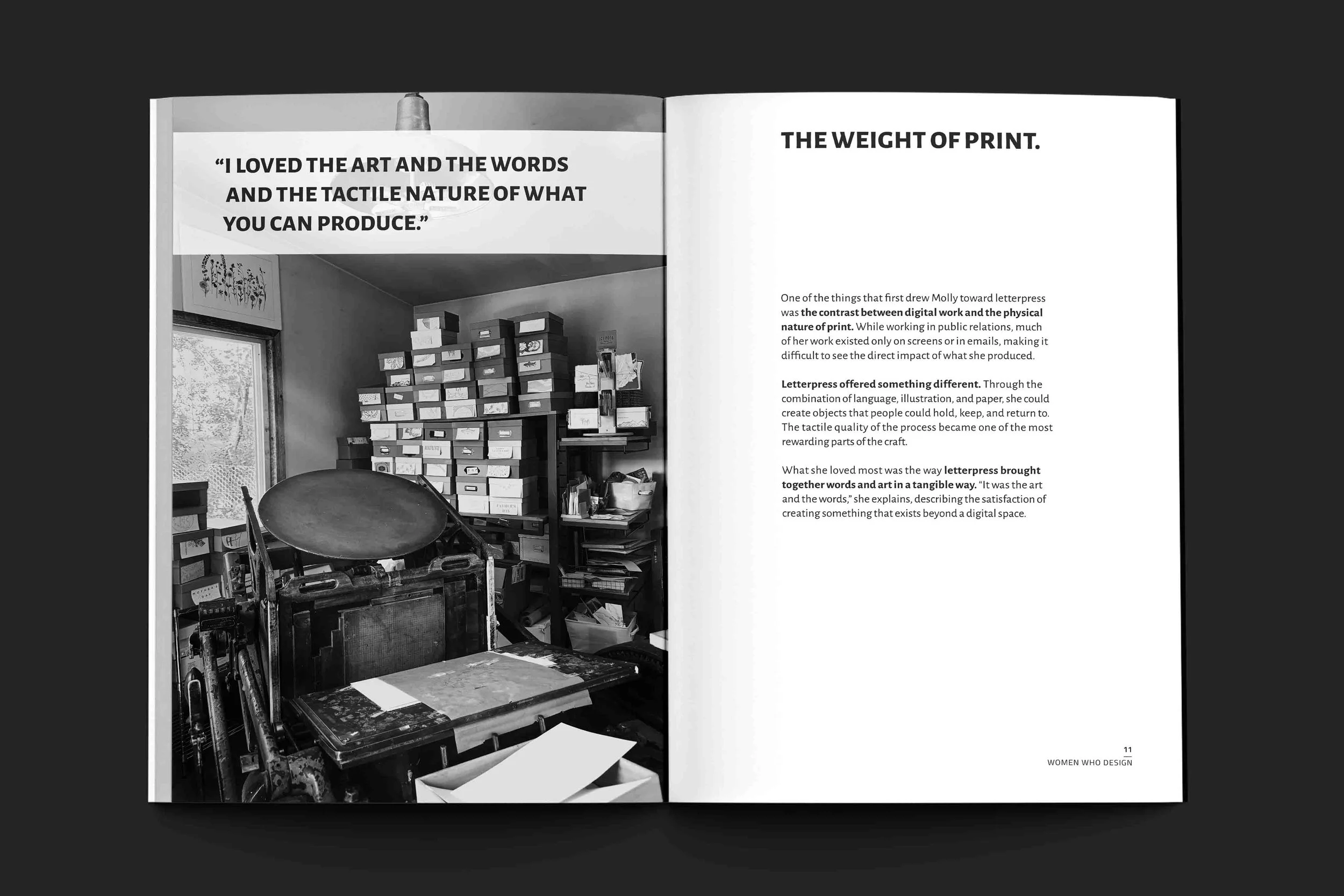
One of the things that first drew Molly toward letterpress was the contrast between digital work and the physical nature of print. While working in public relations, much of her work existed only on screens or in emails, making it difficult to see the direct impact of what she produced.
Letterpress offered something different. Through the combination of language, illustration, and paper, she could create objects that people could hold, keep, and return to. The tactile quality of the process became one of the most rewarding parts of the craft.
What she loved most was the way letterpress brought together words and art in a tangible way. “It was the art and the words,” she explains, describing the satisfaction of creating something that exists beyond a digital space.
What advice would you give to young women entering design?
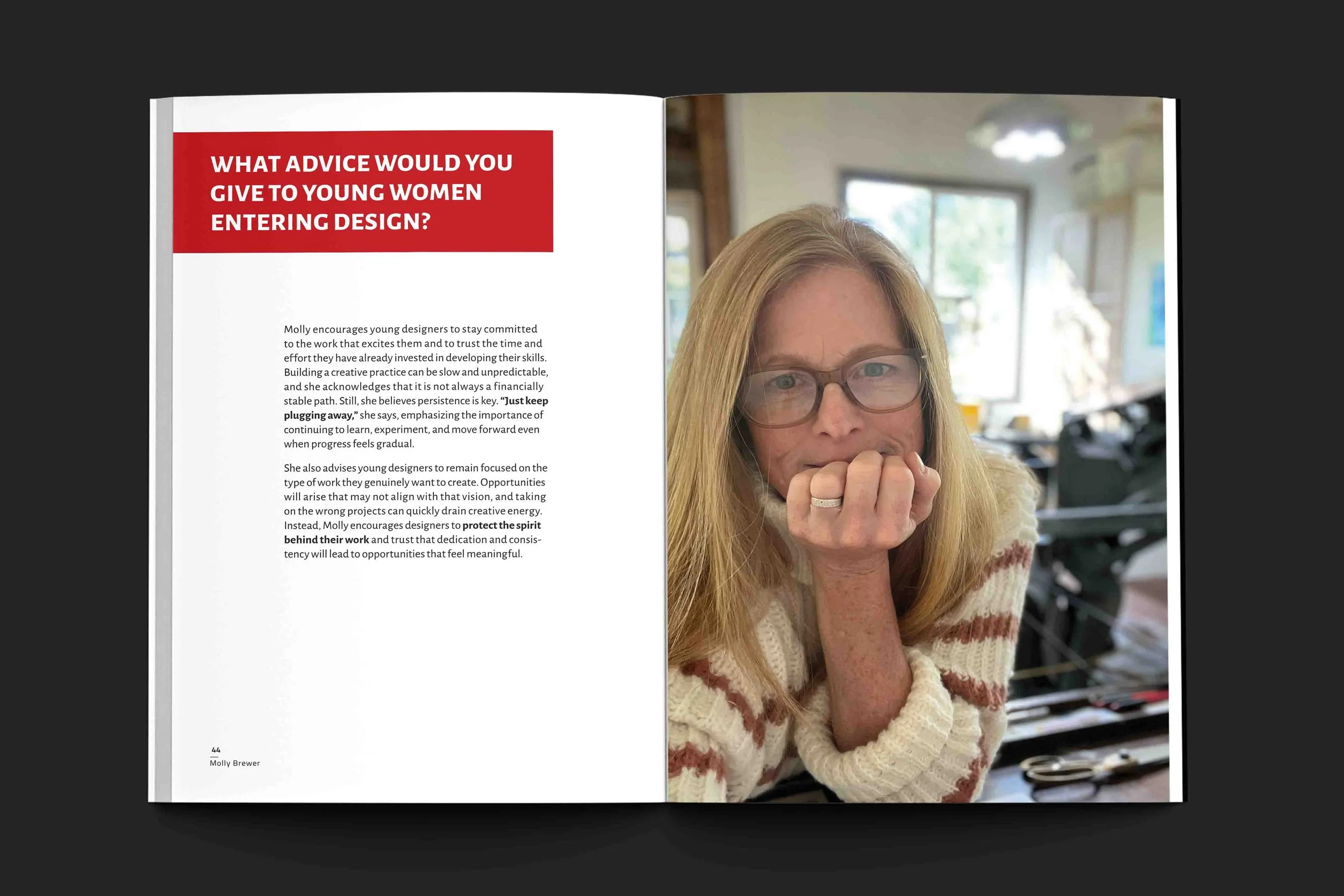
Molly encourages young designers to stay committed to the work that excites them and to trust the time and effort they have already invested in developing their skills. Building a creative practice can be slow and unpredictable, and she acknowledges that it is not always a financially stable path. Still, she believes persistence is key. “Just keep plugging away,” she says, emphasizing the importance of continuing to learn, experiment, and move forward even when progress feels gradual.
She also advises young designers to remain focused on the type of work they genuinely want to create. Opportunities will arise that may not align with that vision, and taking on the wrong projects can quickly drain creative energy. Instead, Molly encourages designers to protect the spirit behind their work and trust that dedication and consistency will lead to opportunities that feel meaningful.
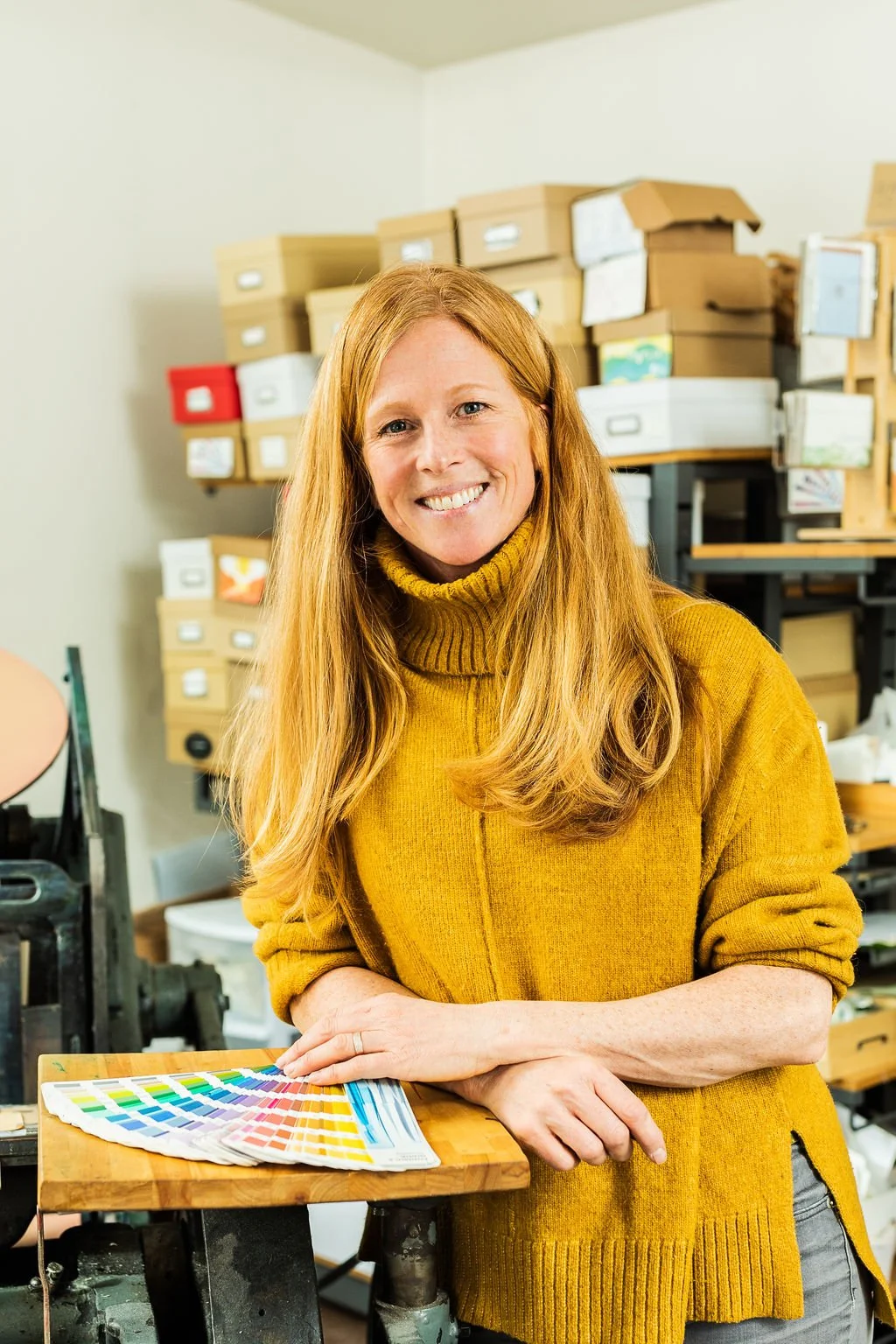
“I loved the art and the words
and the tactile nature of what you can produce.”
— Molly Brewer