

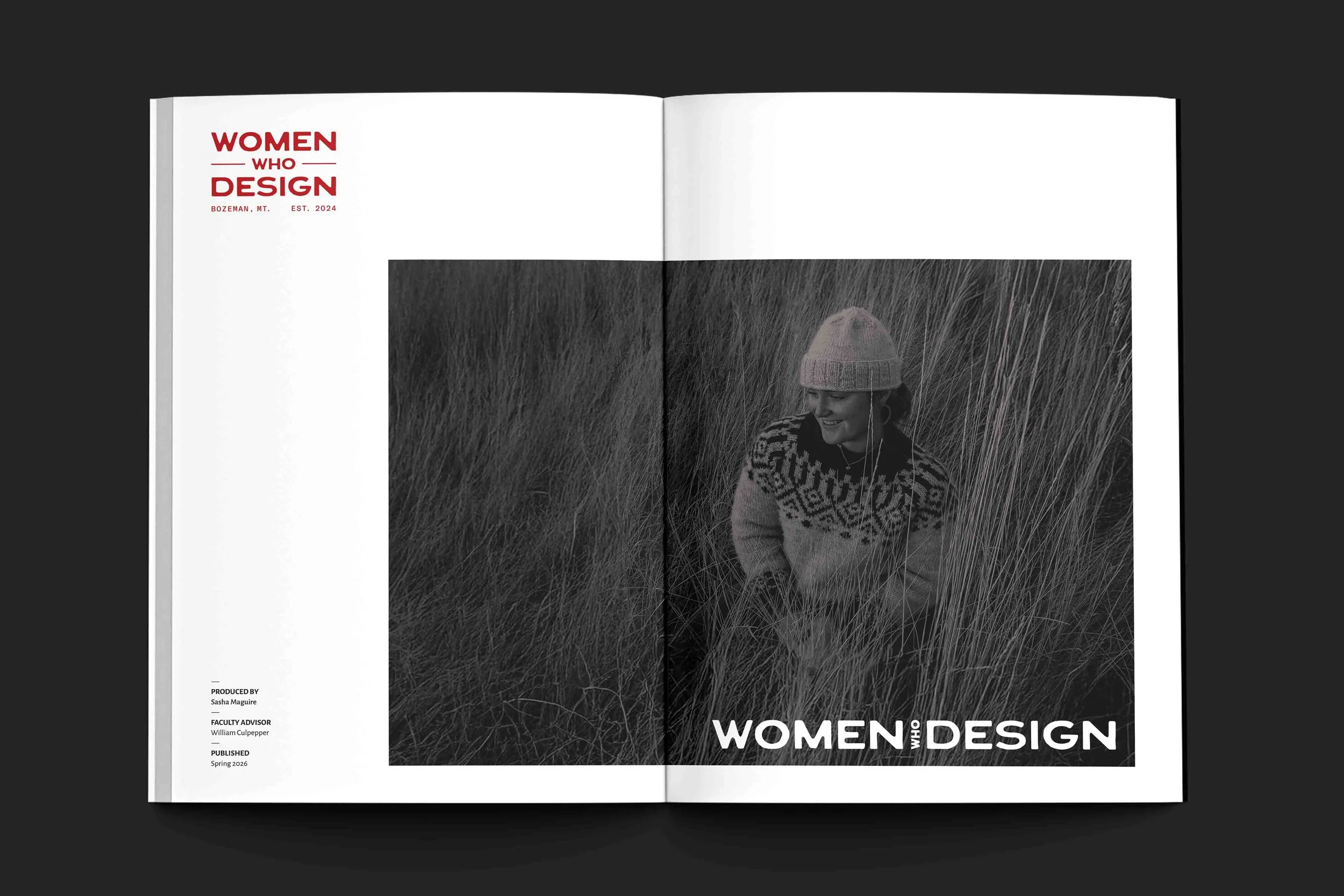
Grace Washko
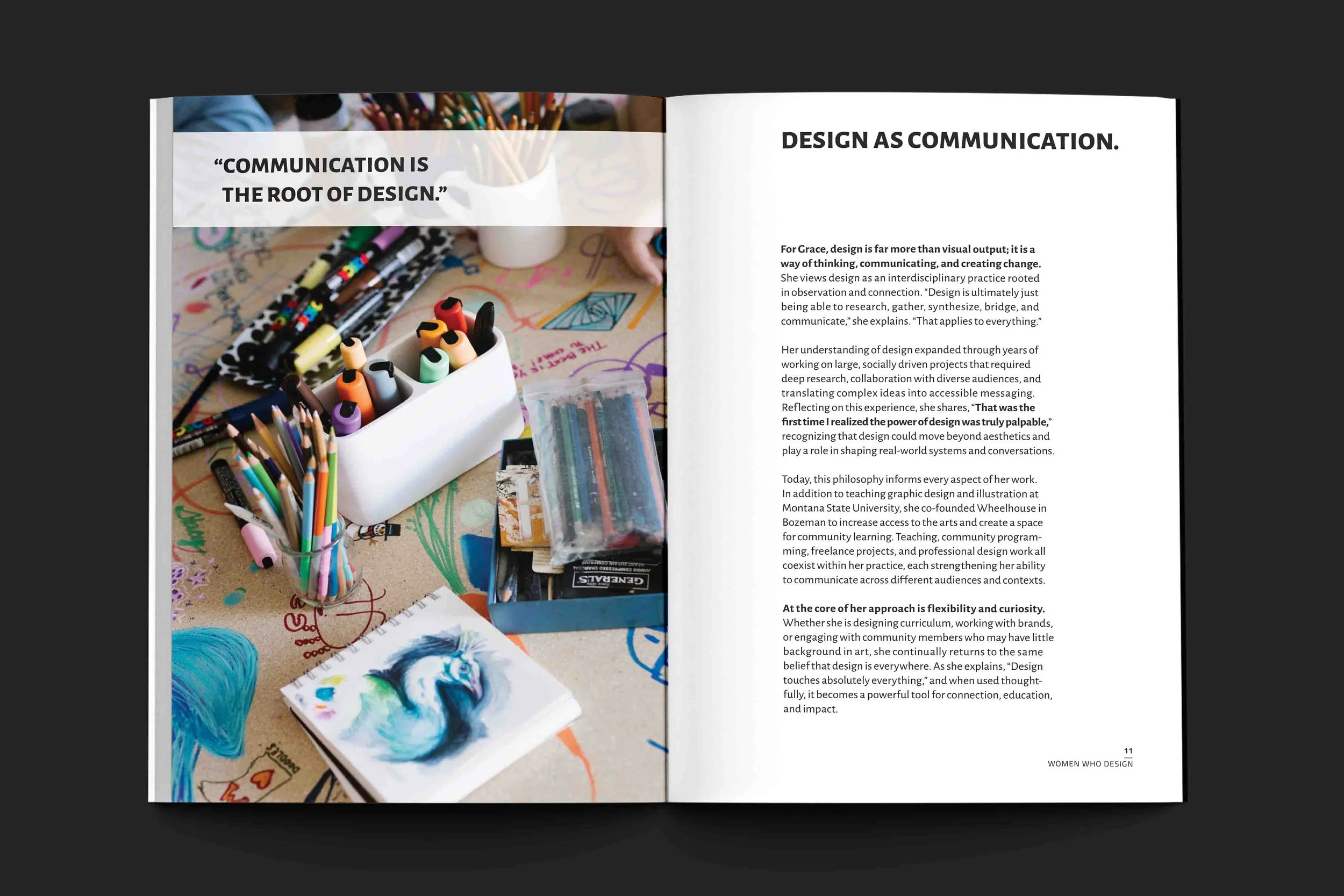
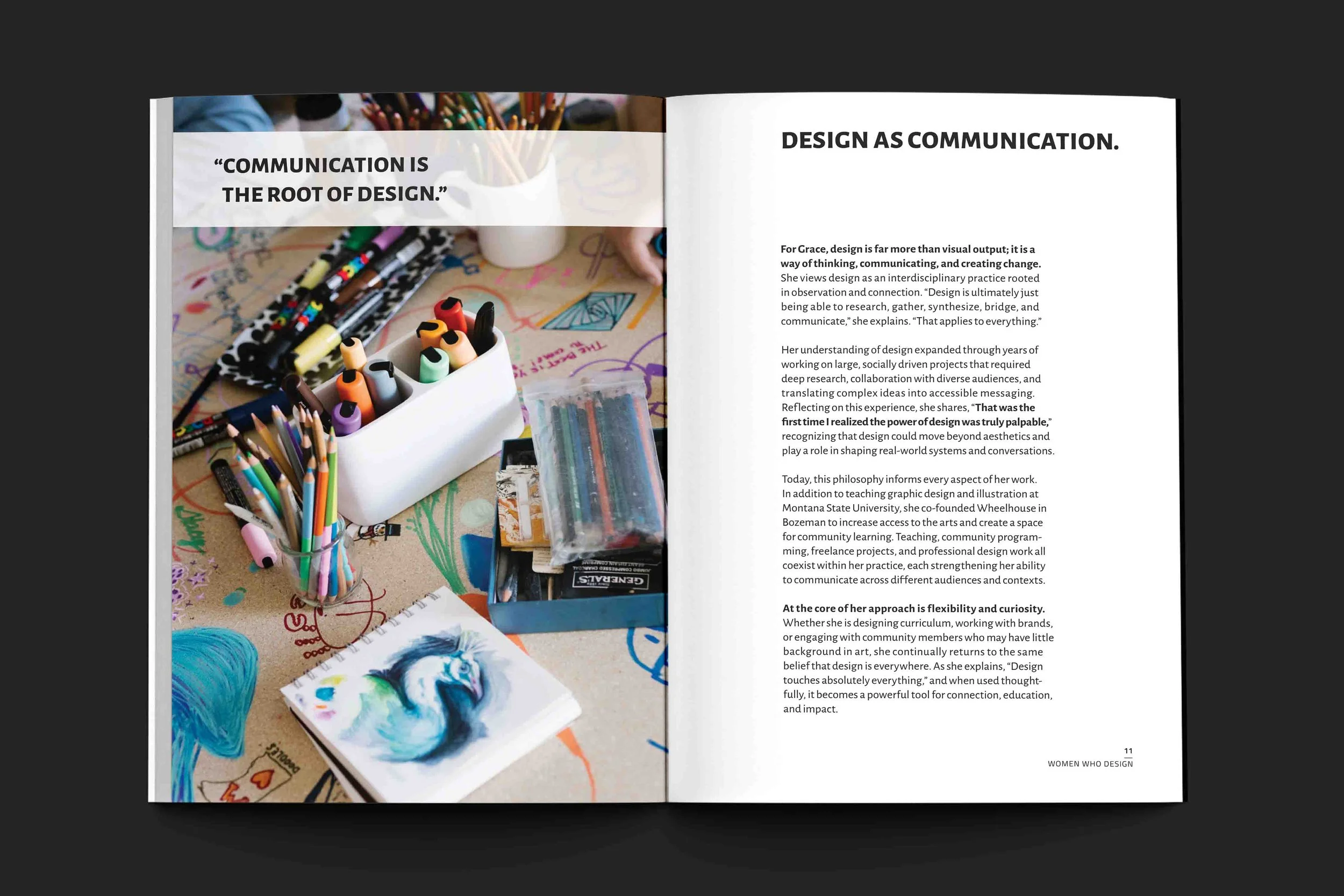
“Communication is the root of design.”
— Grace Washko
Can you share the journey that led you to become a designer?
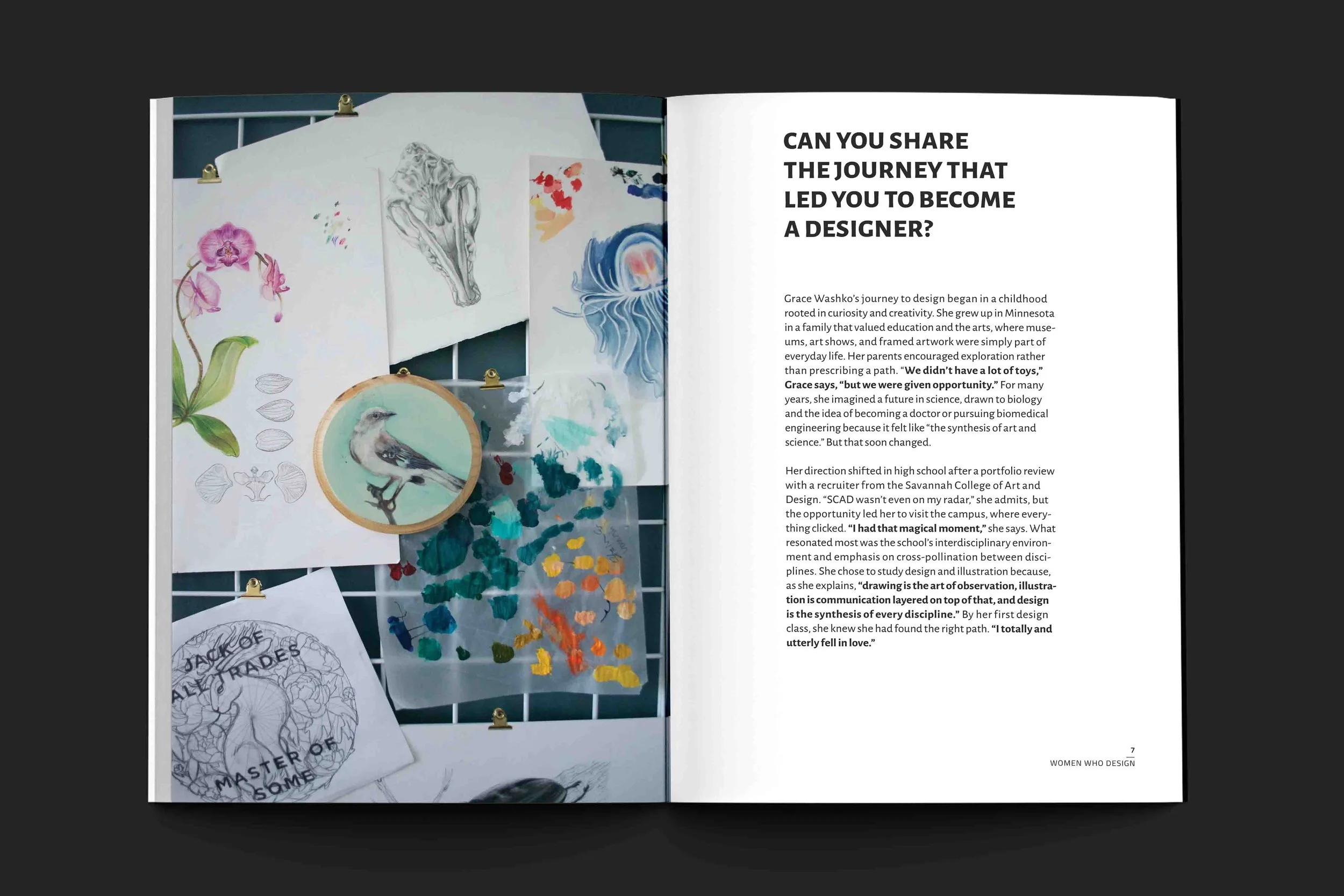
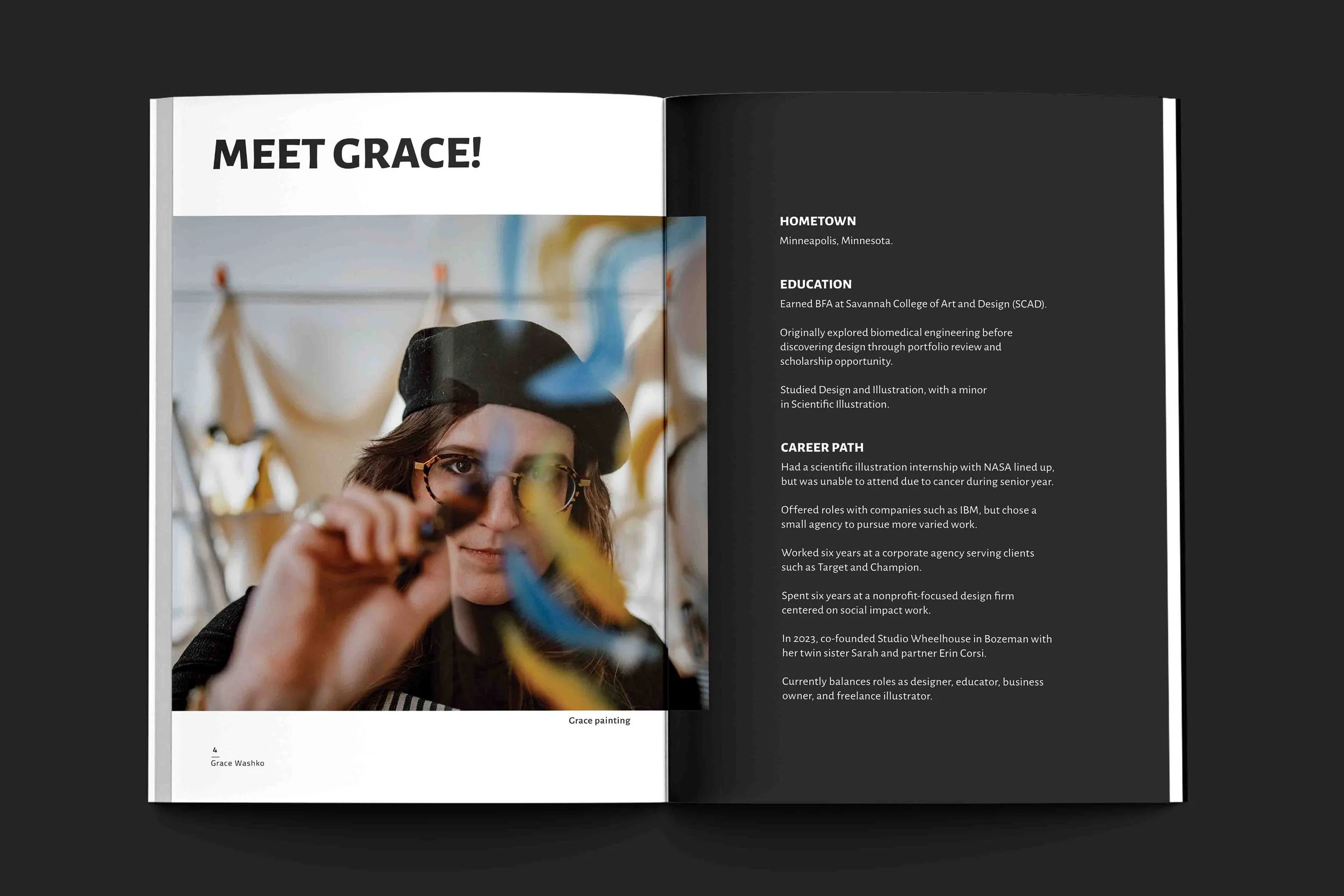
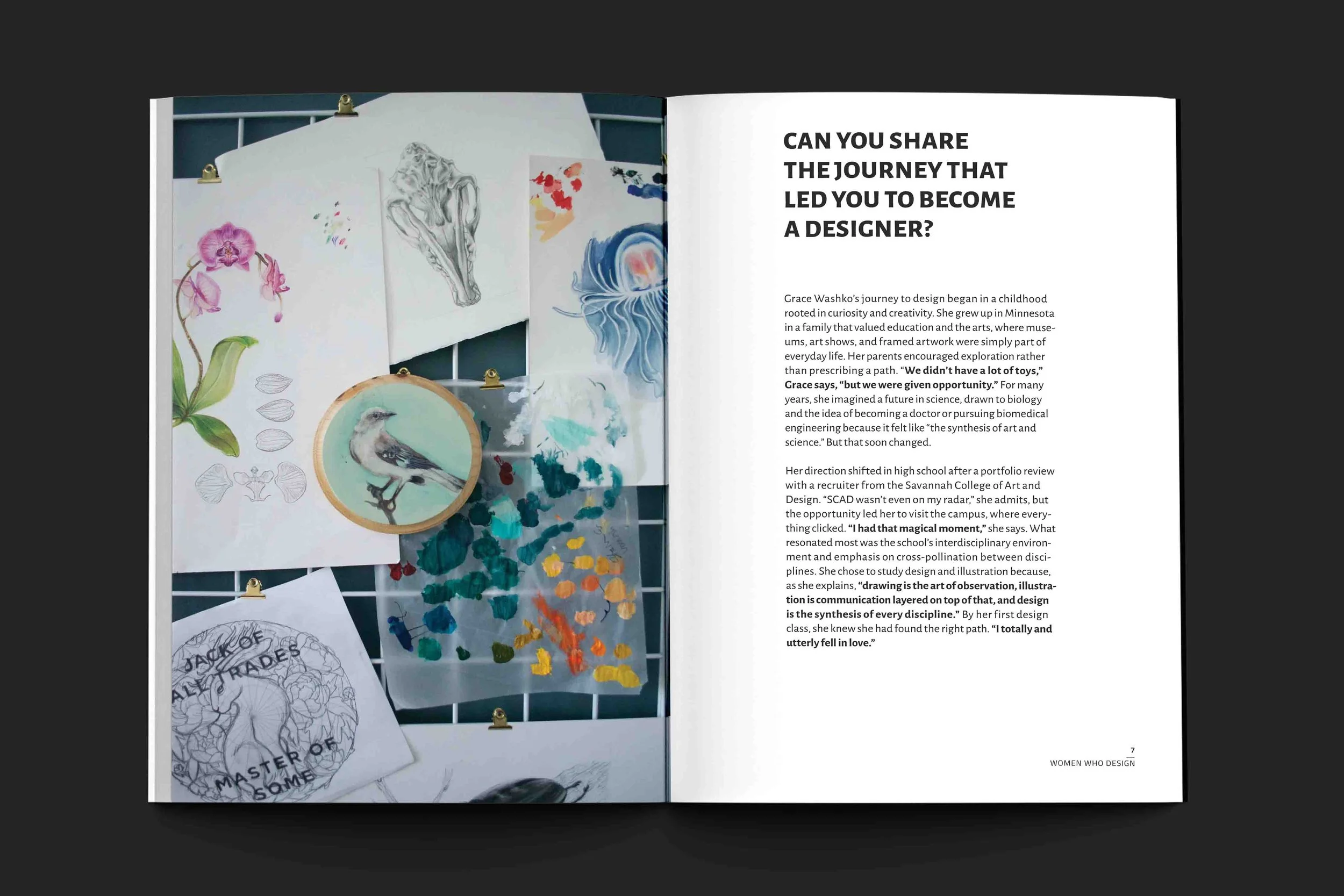
Grace Washko’s journey to design began in a childhood rooted in curiosity and creativity. She grew up in Minnesota in a family that valued education and the arts, where museums, art shows, and framed artwork were simply part of everyday life. Her parents encouraged exploration rather than prescribing a path. “We didn’t have a lot of toys,” Grace says, “but we were given opportunity.” For many years, she imagined a future in science, drawn to biology and the idea of becoming a doctor or pursuing biomedical engineering because it felt like “the synthesis of art and science.” But that soon changed.
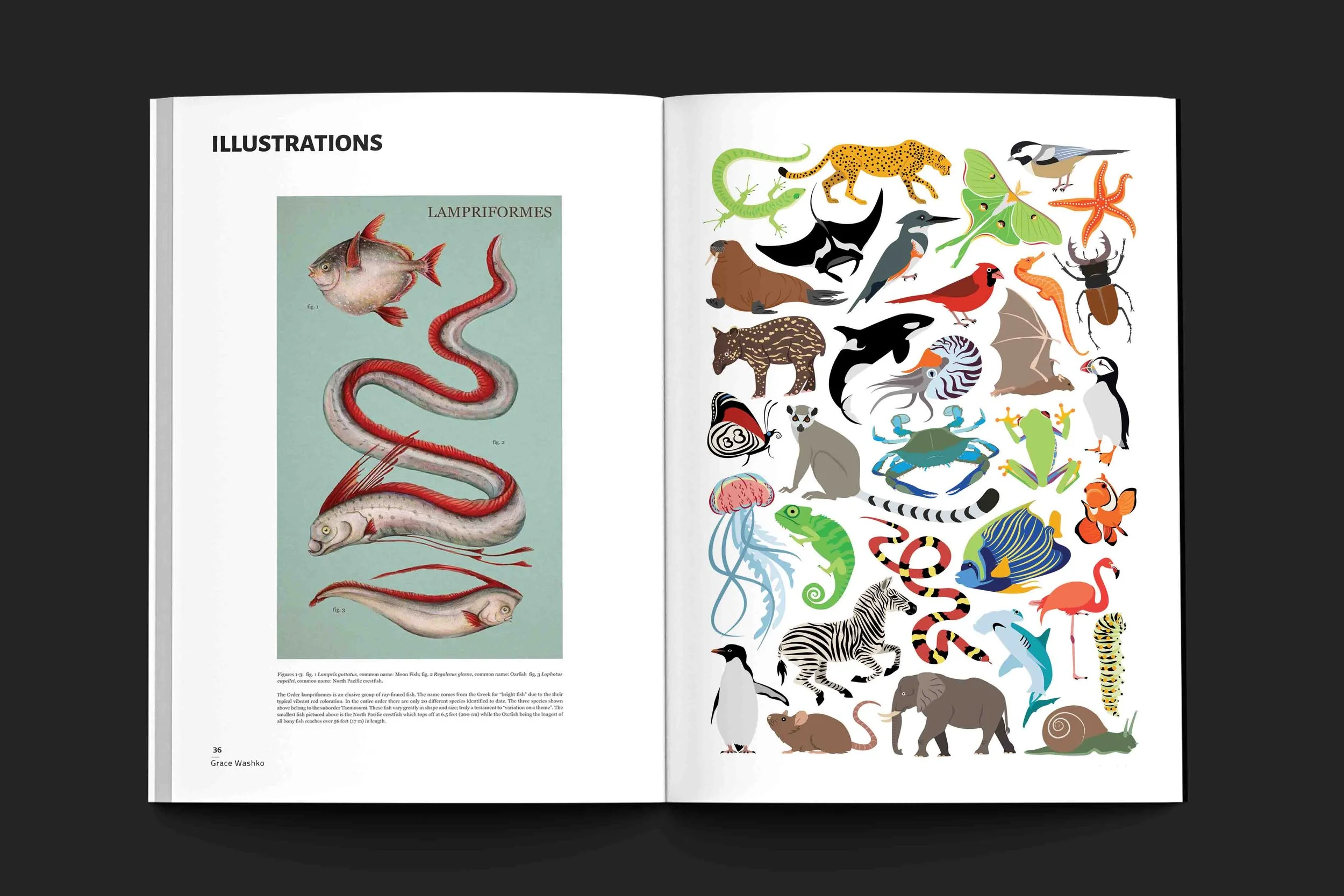
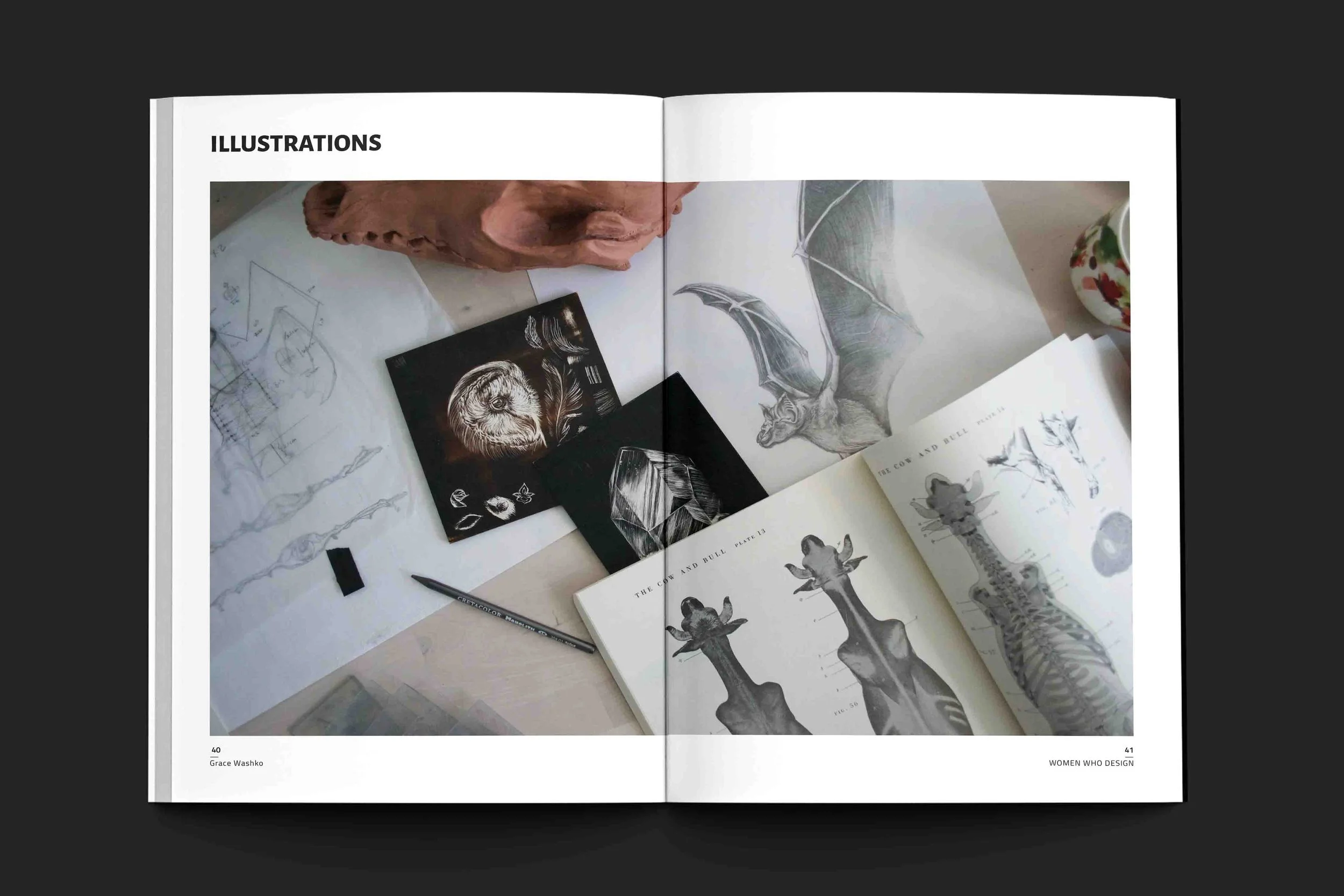
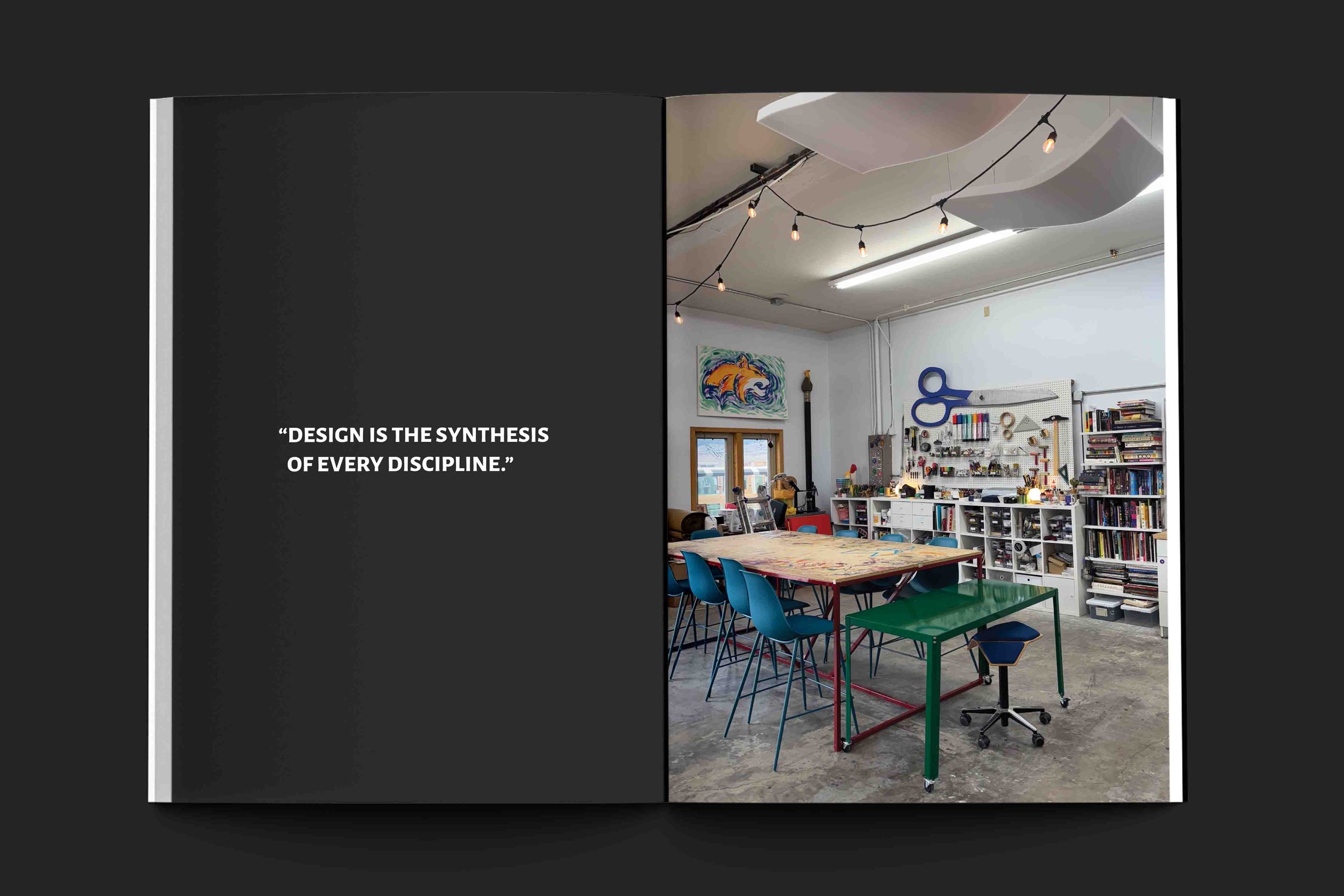
Her direction shifted in high school after a portfolio review with a recruiter from the Savannah College of Art and Design. “SCAD wasn’t even on my radar,” she admits, but the opportunity led her to visit the campus, where everything clicked. “I had that magical moment,” she says. What resonated most was the school’s interdisciplinary environment and emphasis on cross-pollination between disciplines. She chose to study design and illustration because, as she explains, “drawing is the art of observation, illustration is communication layered on top of that, and design is the synthesis of every discipline.” By her first design class, she knew she had found the right path. “I totally and utterly fell in love.”
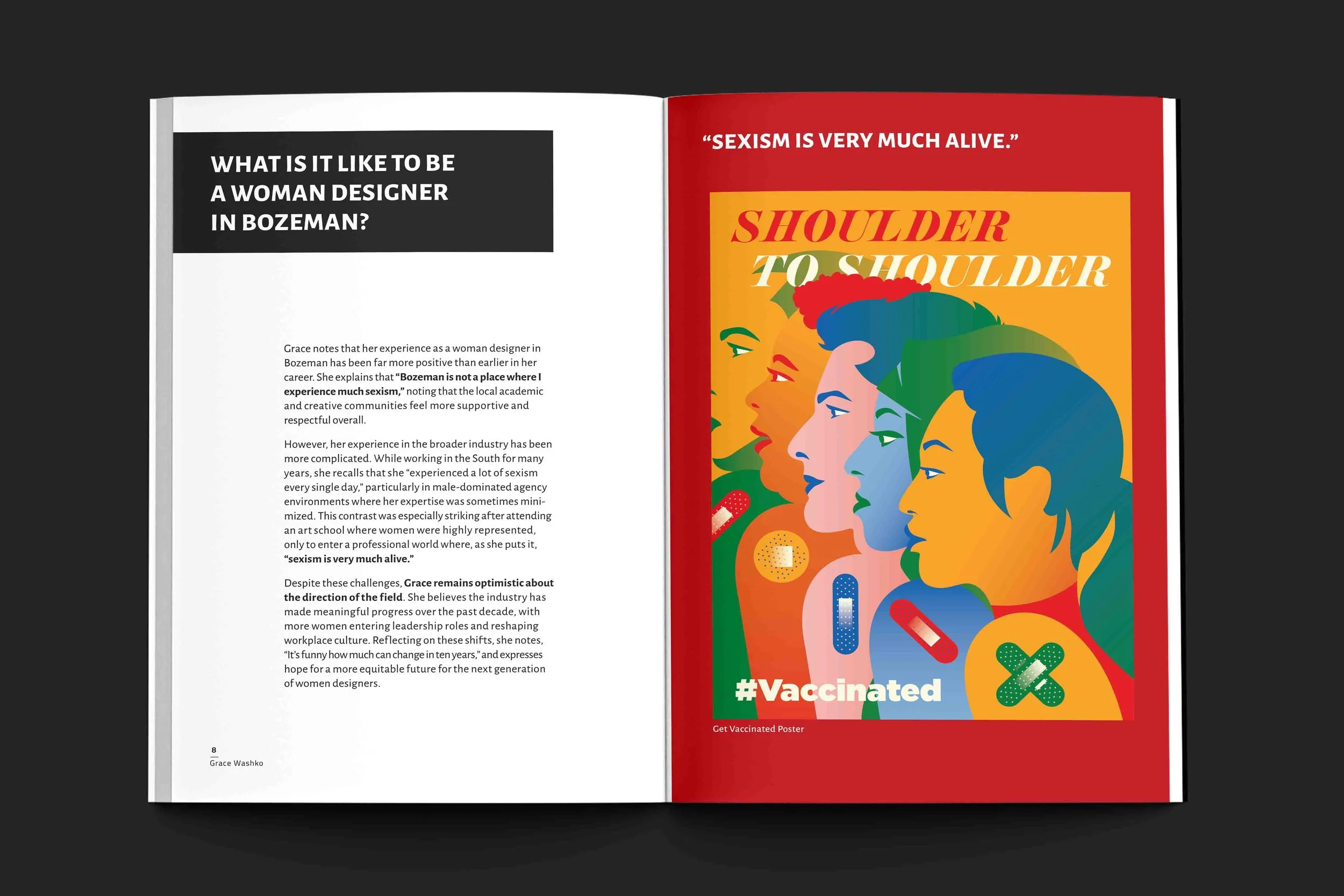
What is it like to be a woman designer in Bozeman?
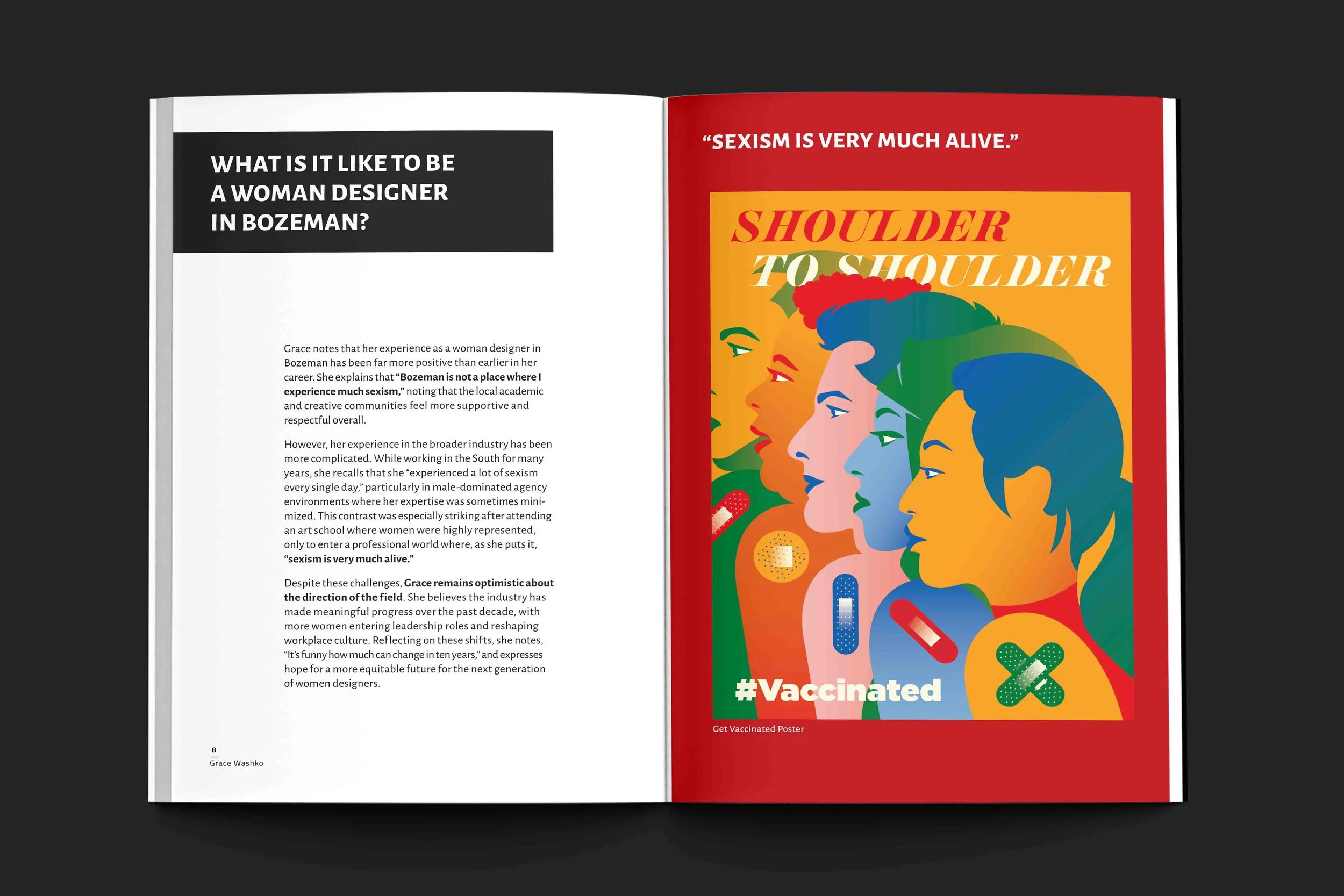
Grace notes that her experience as a woman designer in Bozeman has been far more positive than earlier in her career. She explains that “Bozeman is not a place where I experience much sexism,” noting that the local academic and creative communities feel more supportive and respectful overall.
However, her experience in the broader industry has been more complicated. While working in the South for many years, she recalls that she “experienced a lot of sexism every single day,” particularly in male-dominated agency environments where her expertise was sometimes minimized. This contrast was especially striking after attending an art school where women were highly represented, only to enter a professional world where, as she puts it, “sexism is very much alive.”
Despite these challenges, Grace remains optimistic about the direction of the field. She believes the industry has made meaningful progress over the past decade, with more women entering leadership roles and reshaping workplace culture. Reflecting on these shifts, she notes, “It’s funny how much can change in ten years,” and expresses hope for a more equitable future for the next generation of women designers
Design as communication.
For Grace, design is far more than visual output; it is a way of thinking, communicating, and creating change. She views design as an interdisciplinary practice rooted in observation and connection. “Design is ultimately just being able to research, gather, synthesize, bridge, and
communicate,” she explains. “That applies to everything.”
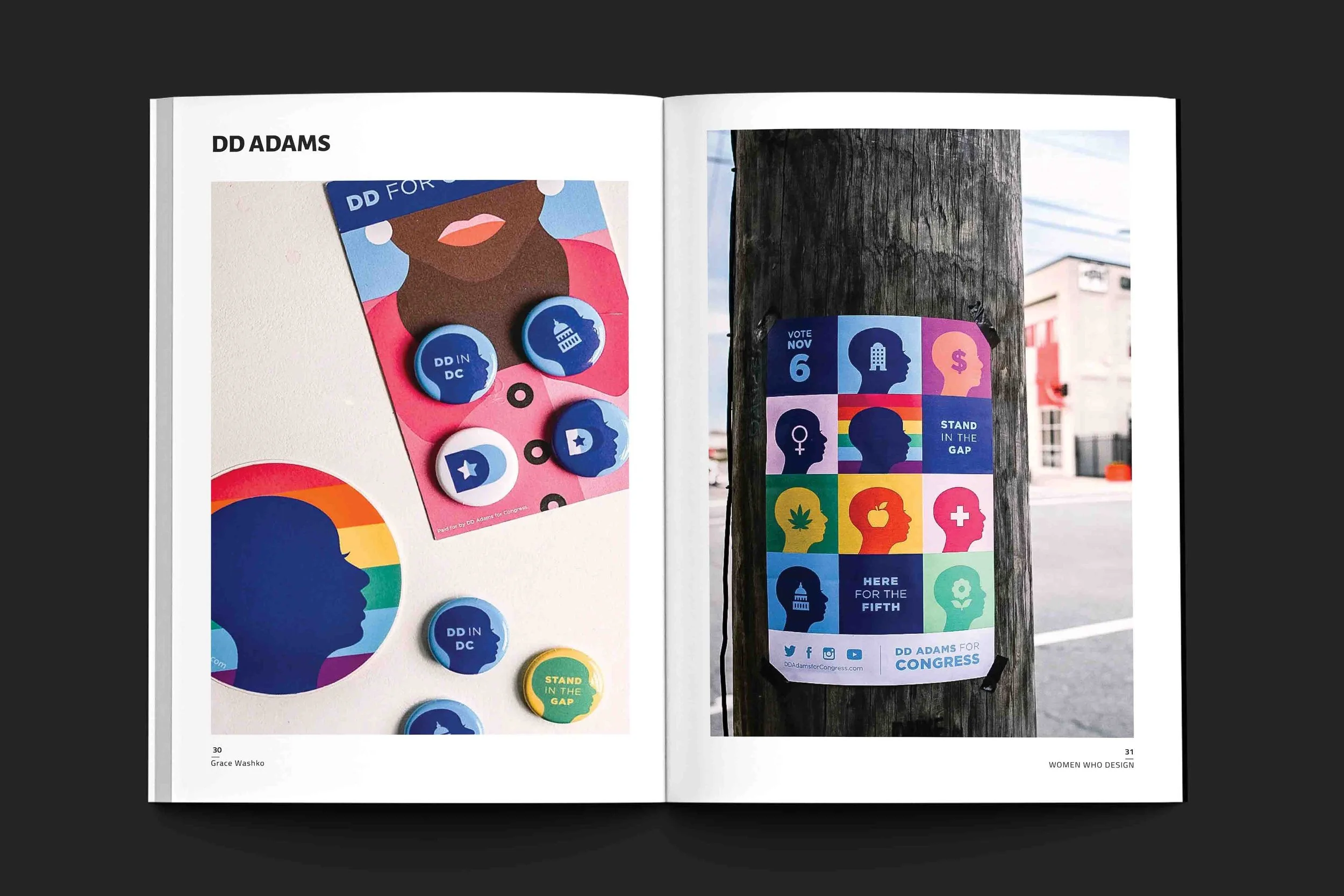
Her understanding of design expanded through years of working on large, socially driven projects that required deep research, collaboration with diverse audiences, and translating complex ideas into accessible messaging. Reflecting on this experience, she shares, “That was the first time I realized the power of design was truly palpable,” recognizing that design could move beyond aesthetics and play a role in shaping real-world systems and conversations.
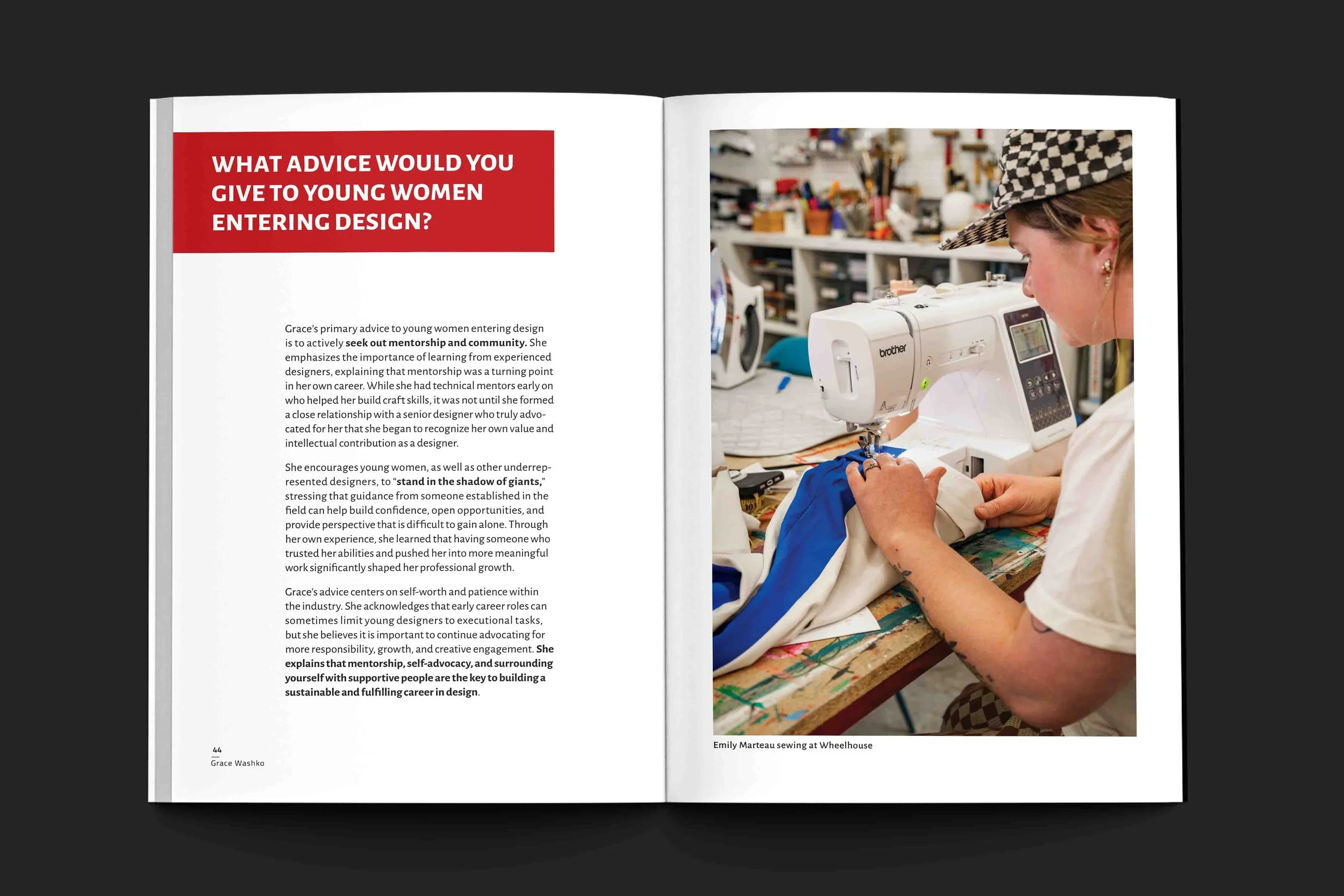
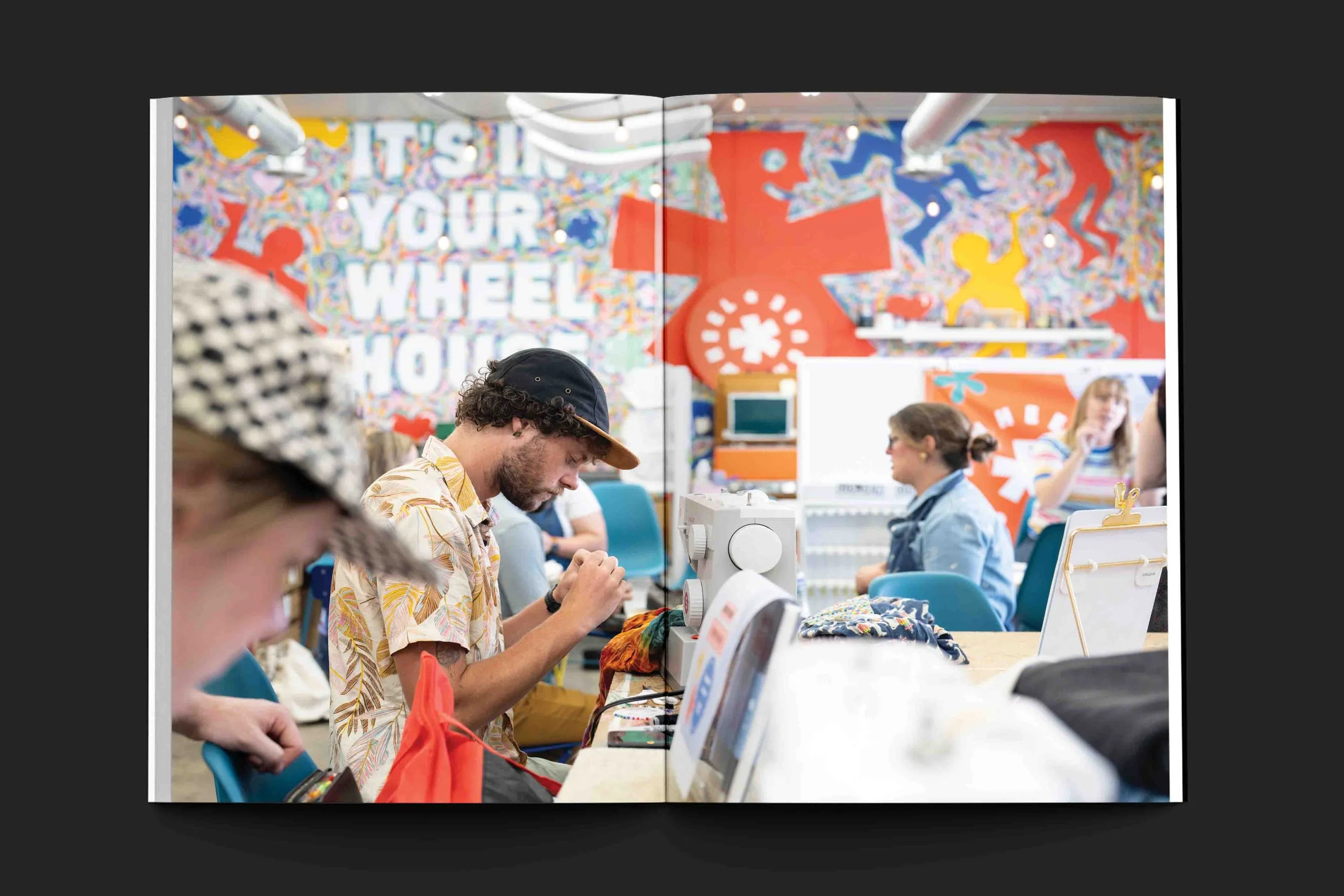
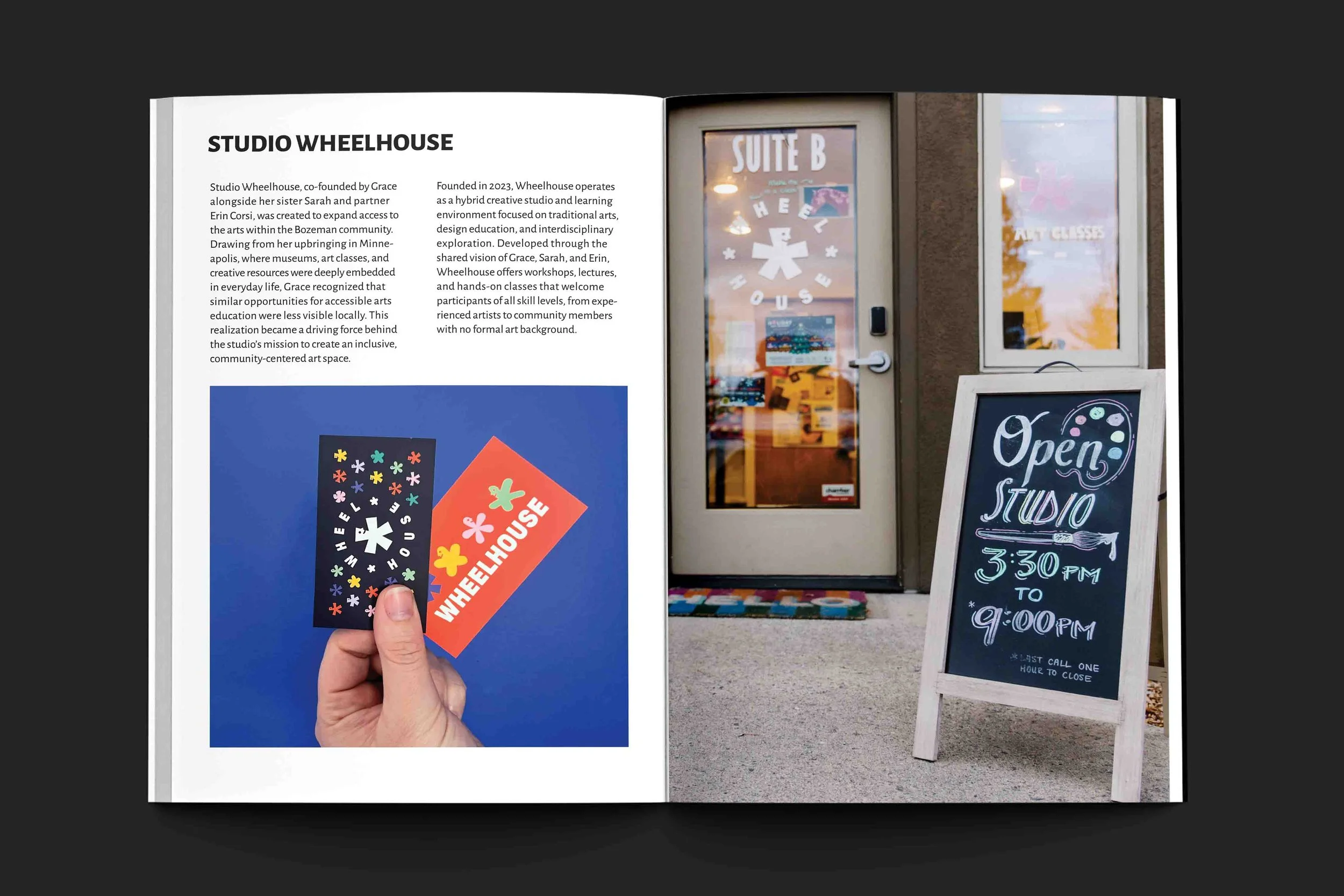
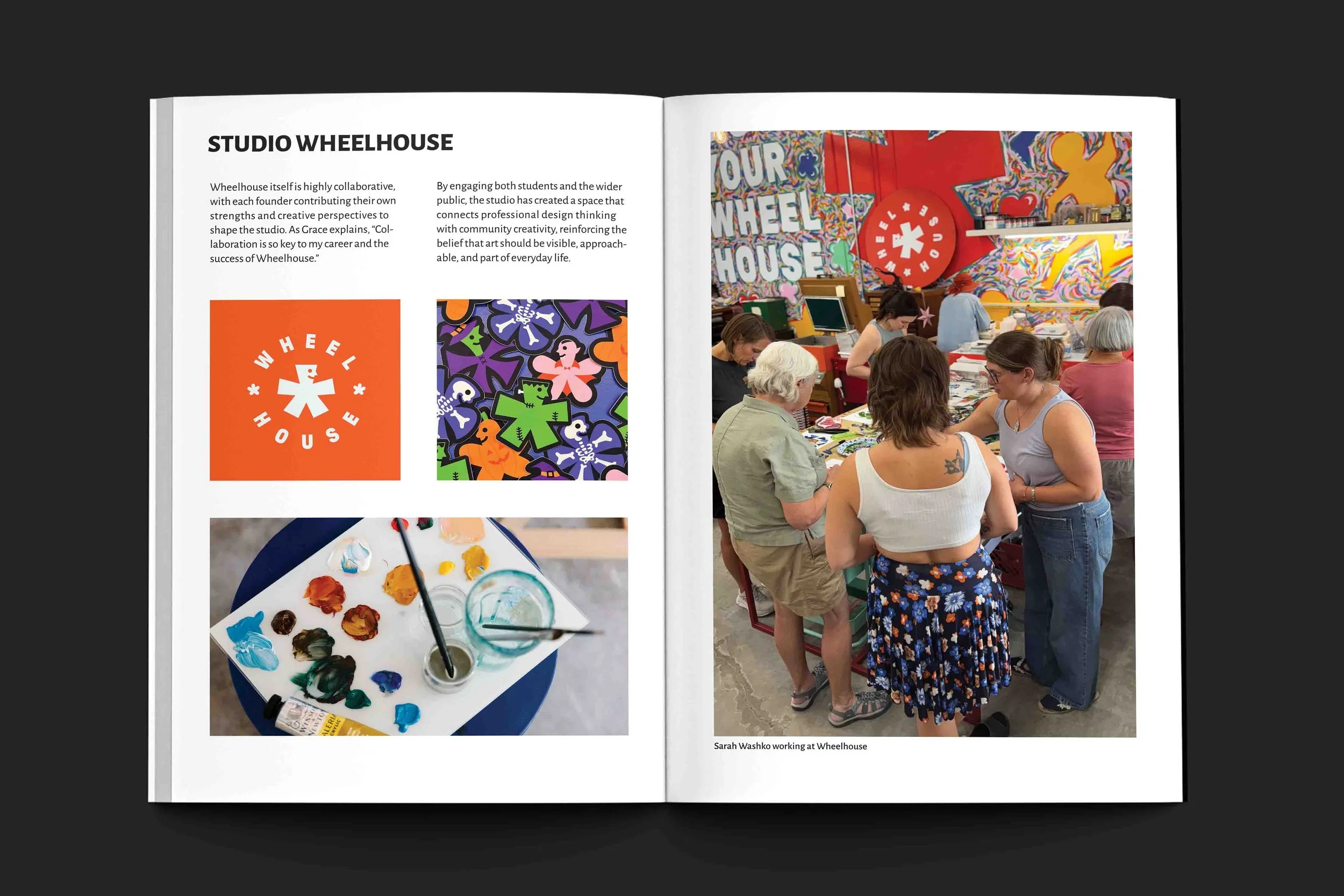
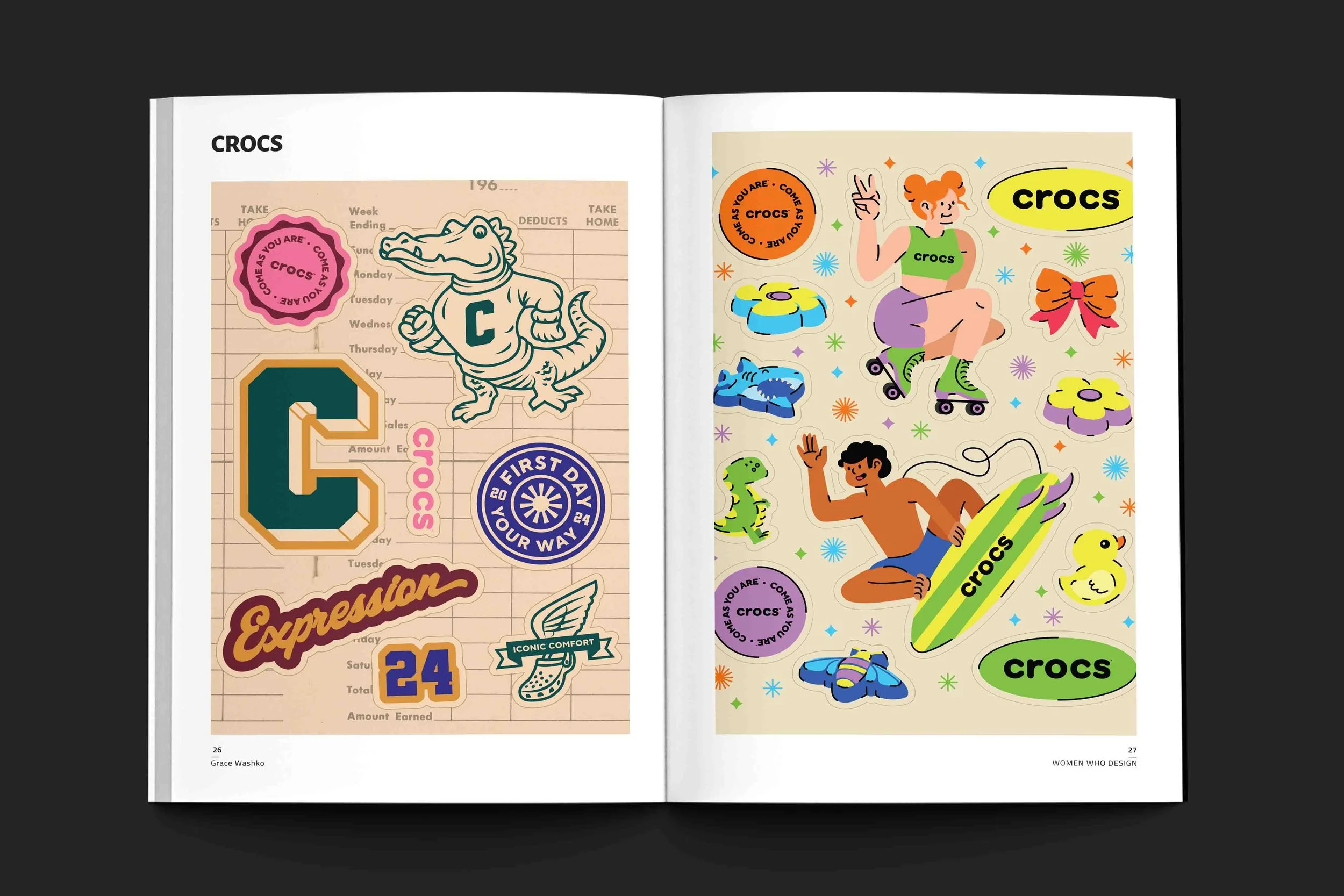
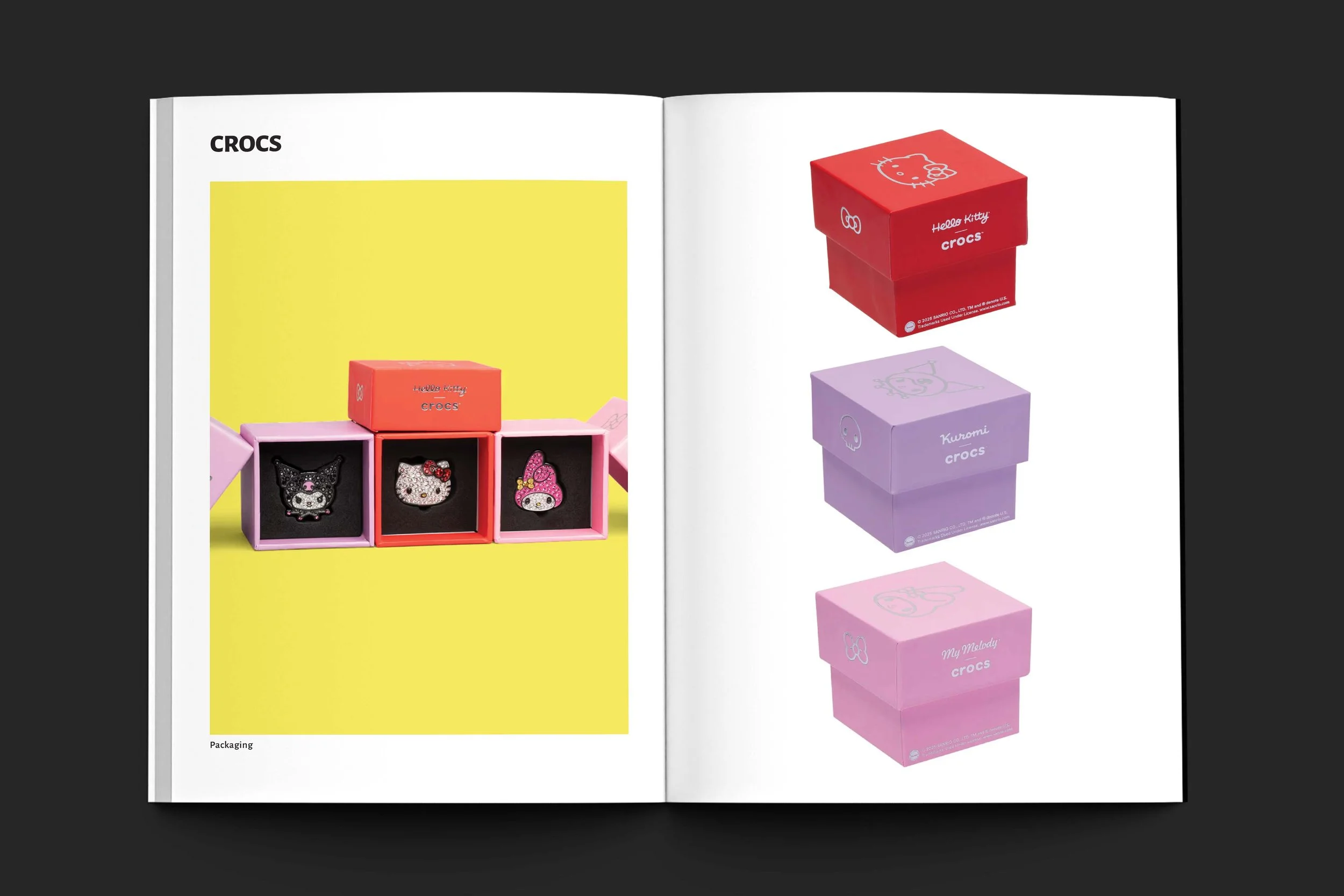
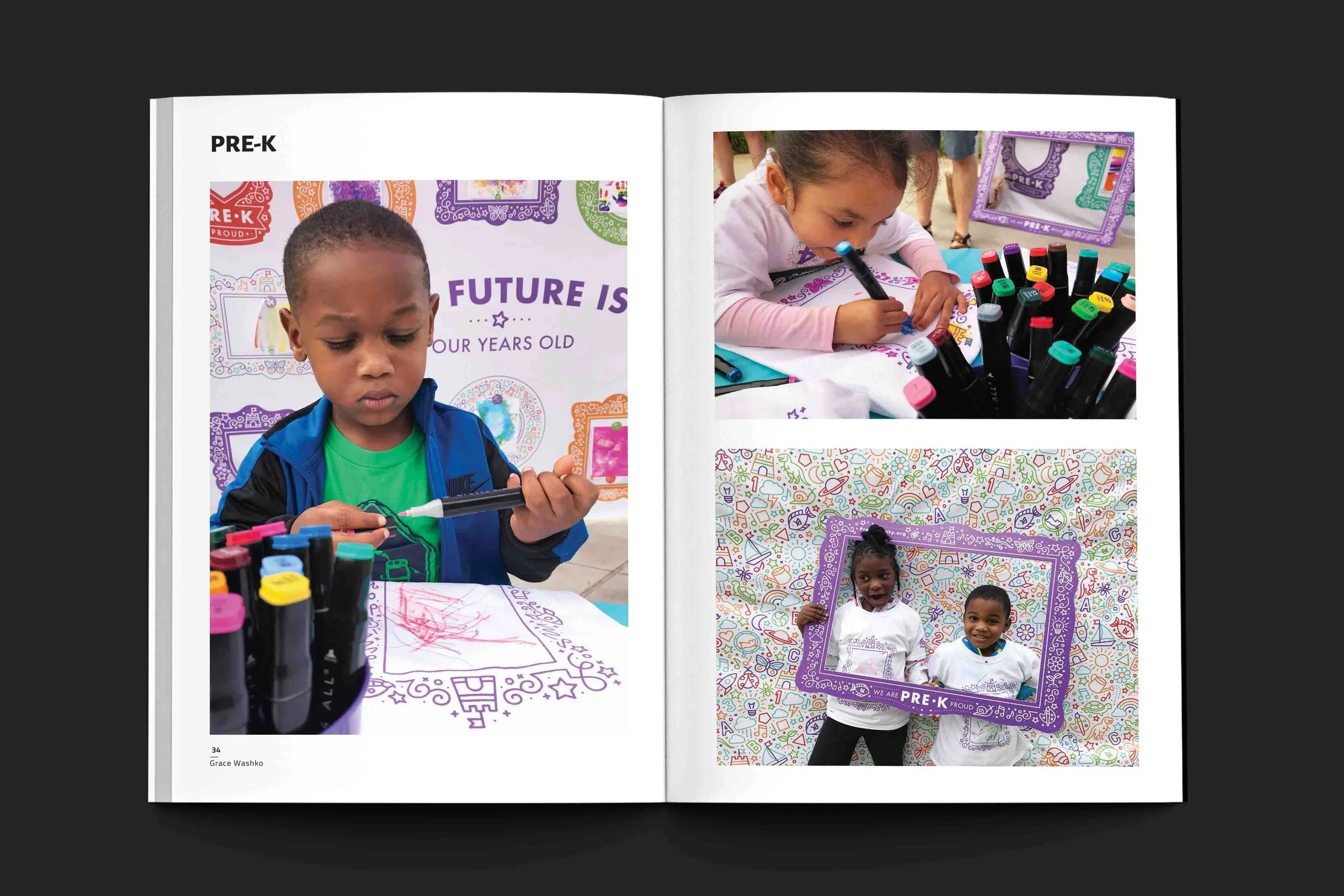
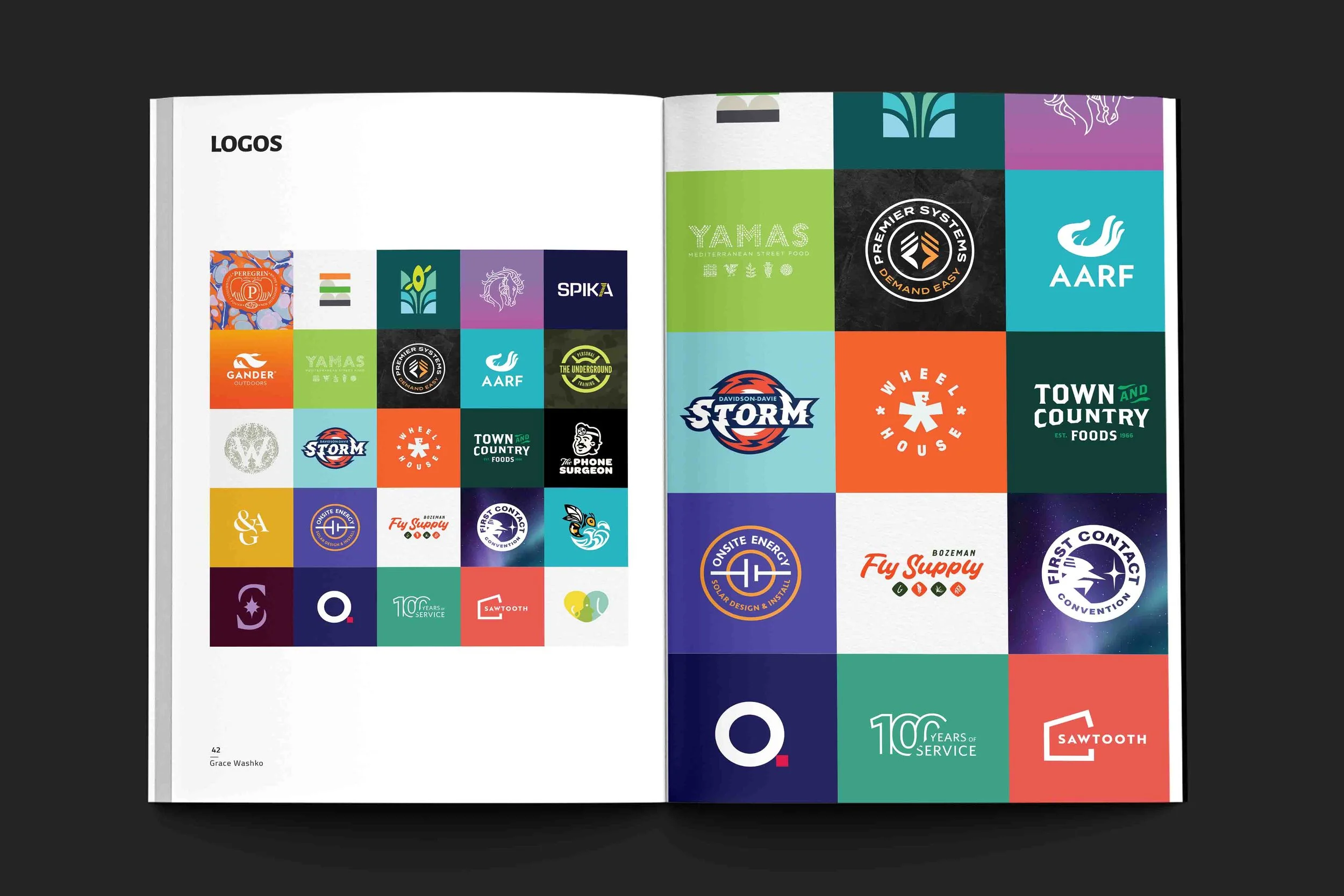
Today, this philosophy informs every aspect of her work. In addition to teaching graphic design and illustration at Montana State University, she co-founded Wheelhouse in Bozeman to increase access to the arts and create a space for community learning. Teaching, community programming, freelance projects, and professional design work all coexist within her practice, each strengthening her ability to communicate across different audiences and contexts.
At the core of her approach is flexibility and curiosity. Whether she is designing curriculum, working with brands, or engaging with community members who may have little background in art, she continually returns to the same belief that design is everywhere. As she explains, “Design touches absolutely everything,” and when used thoughtfully, it becomes a powerful tool for connection, education, and impact.That long-term thinking also shaped her decision to rebrand from her personal name to Suede Studio, a move rooted in the idea of creating a business that could evolve beyond her individual identity. For Jennifer, the work is no longer just about projects, but about sustainability, mentorship, and creating a studio built on intention.
What advice would you give to young women entering design?
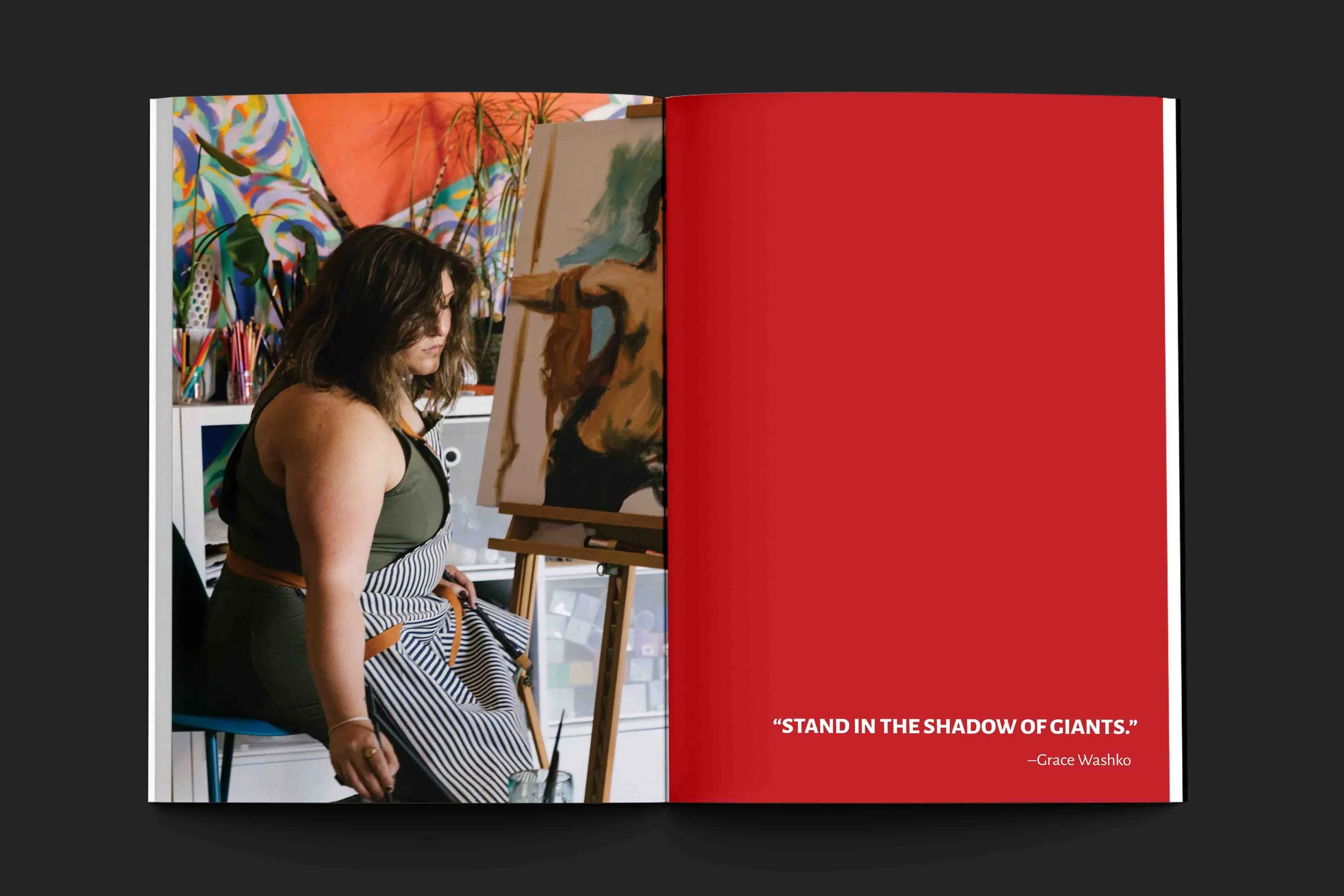
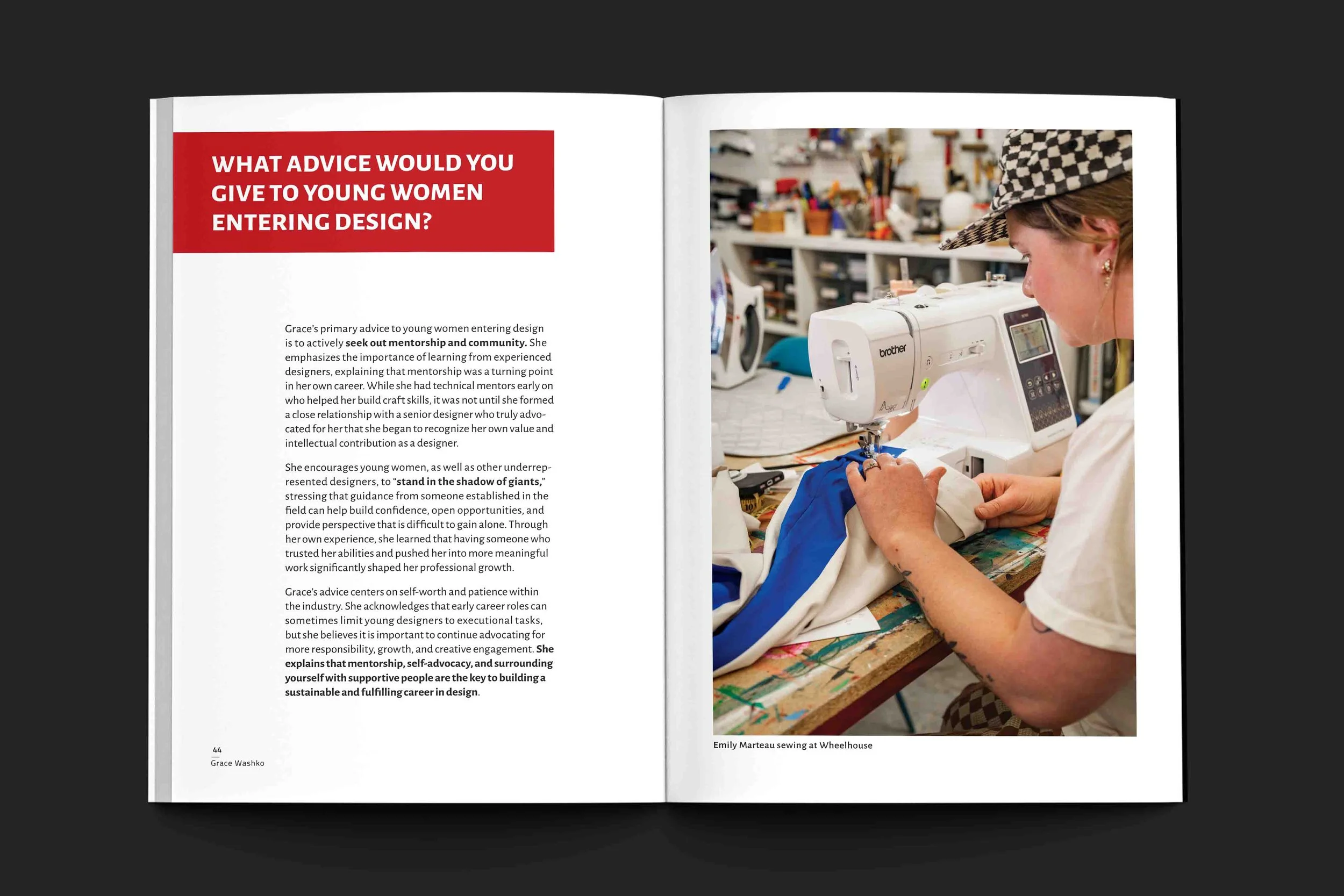
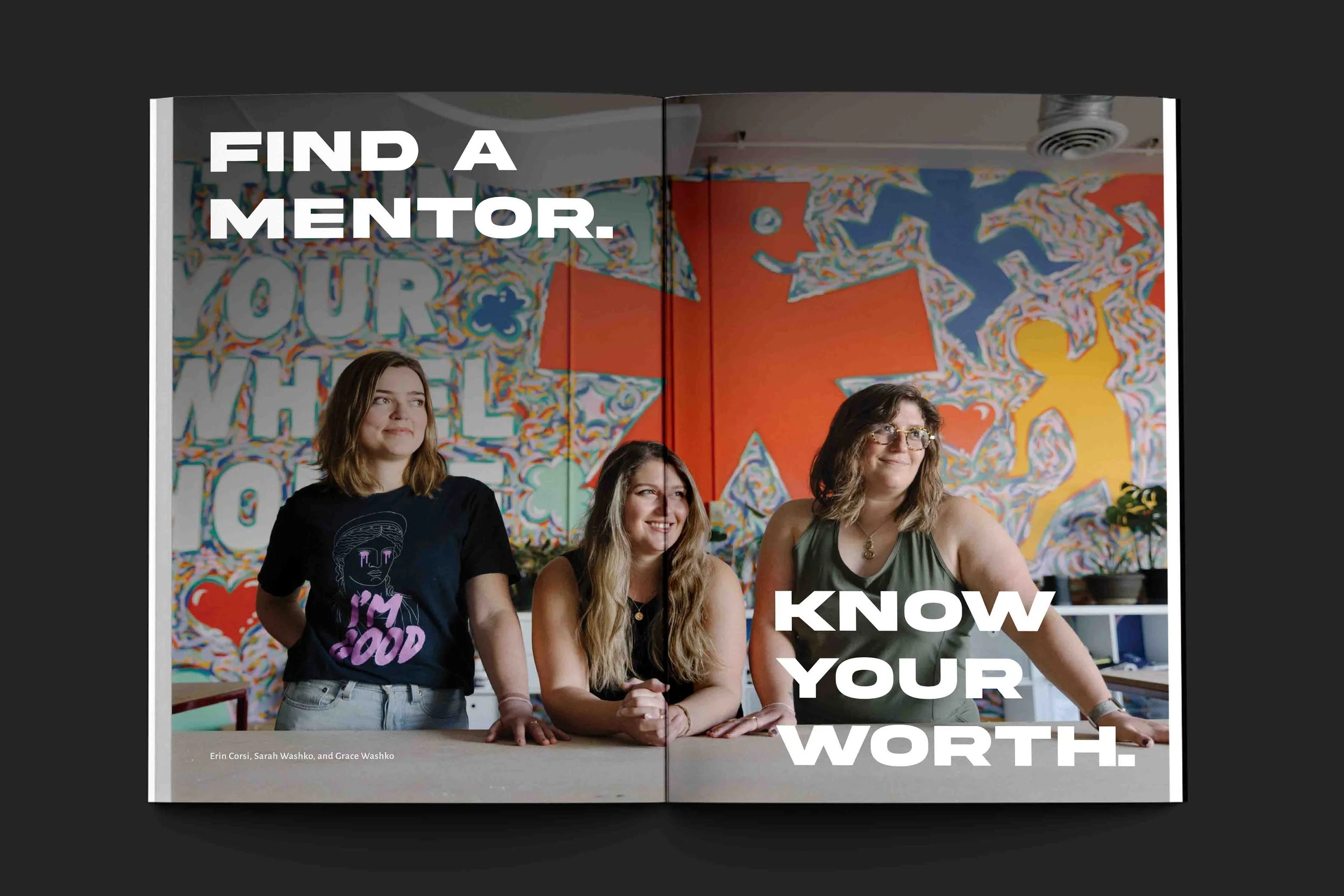
Grace’s primary advice to young women entering design is to actively seek out mentorship and community. She emphasizes the importance of learning from experienced designers, explaining that mentorship was a turning point in her own career. While she had technical mentors early on who helped her build craft skills, it was not until she formed a close relationship with a senior designer who truly advocated for her that she began to recognize her own value and intellectual contribution as a designer.
She encourages young women, as well as other underrepresented designers, to “stand in the shadow of giants,” stressing that guidance from someone established in the field can help build confidence, open opportunities, and provide perspective that is difficult to gain alone. Through her own experience, she learned that having someone who trusted her abilities and pushed her into more meaningful work significantly shaped her professional growth.
Grace’s advice centers on self-worth and patience within the industry. She acknowledges that early career roles can sometimes limit young designers to executional tasks, but she believes it is important to continue advocating for more responsibility, growth, and creative engagement. She explains that mentorship, self-advocacy, and surrounding yourself with supportive people are the key to building a sustainable and fulfilling career in design.







“Design is the synthesis
of every discipline.”
— Grace Washko