

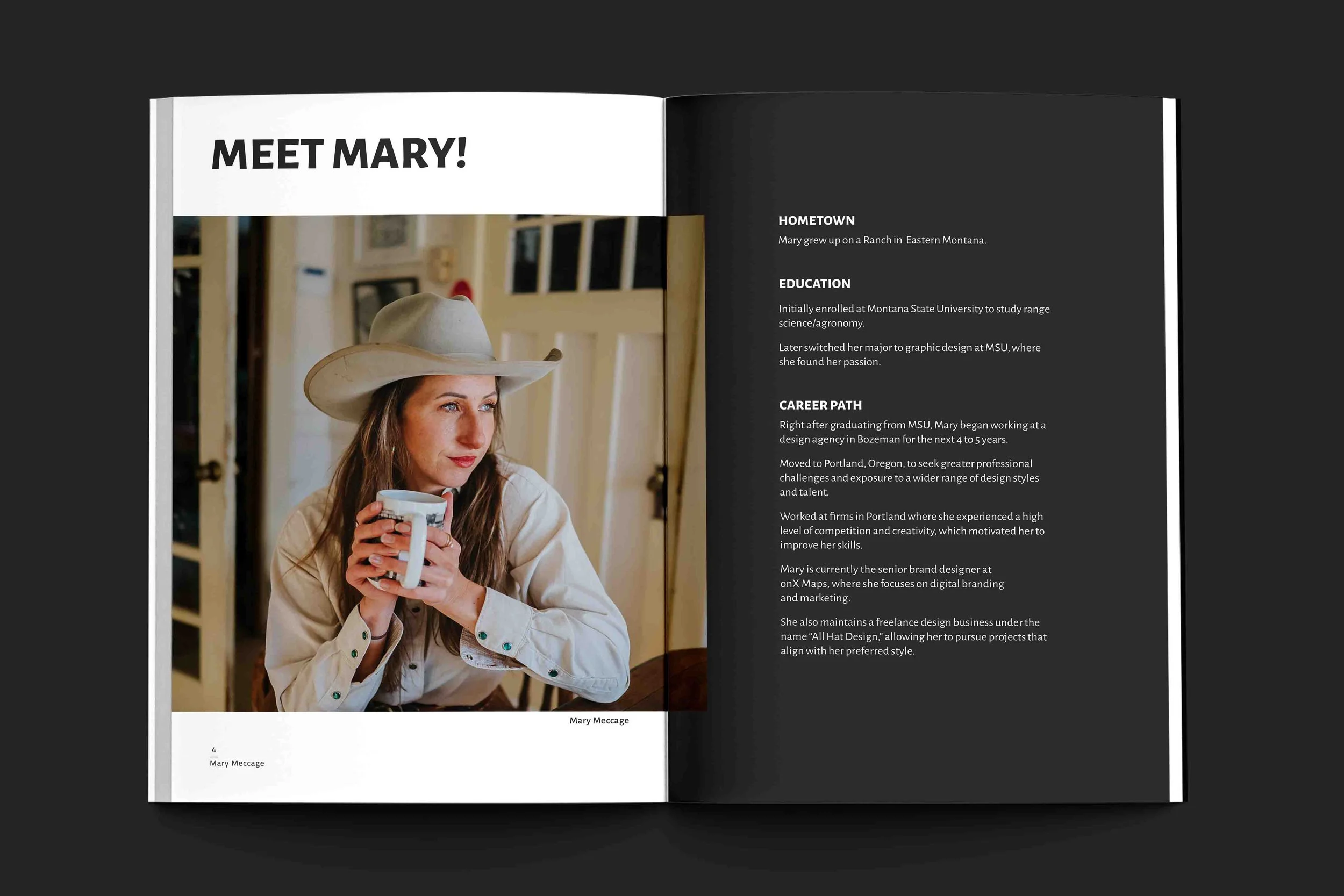
Mary Meccage
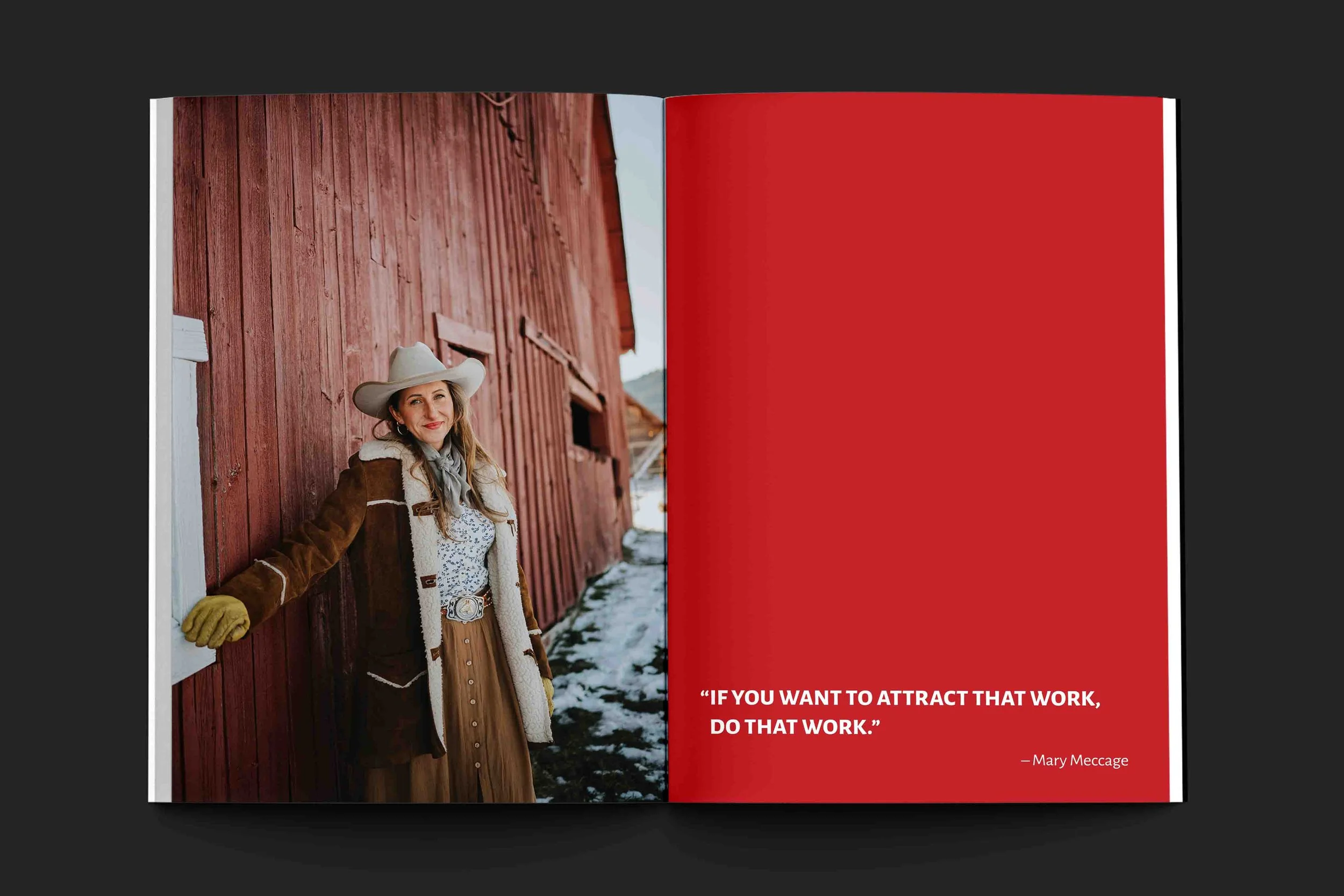
“If you want to attract that work, do that work.”
— Mary Meccage
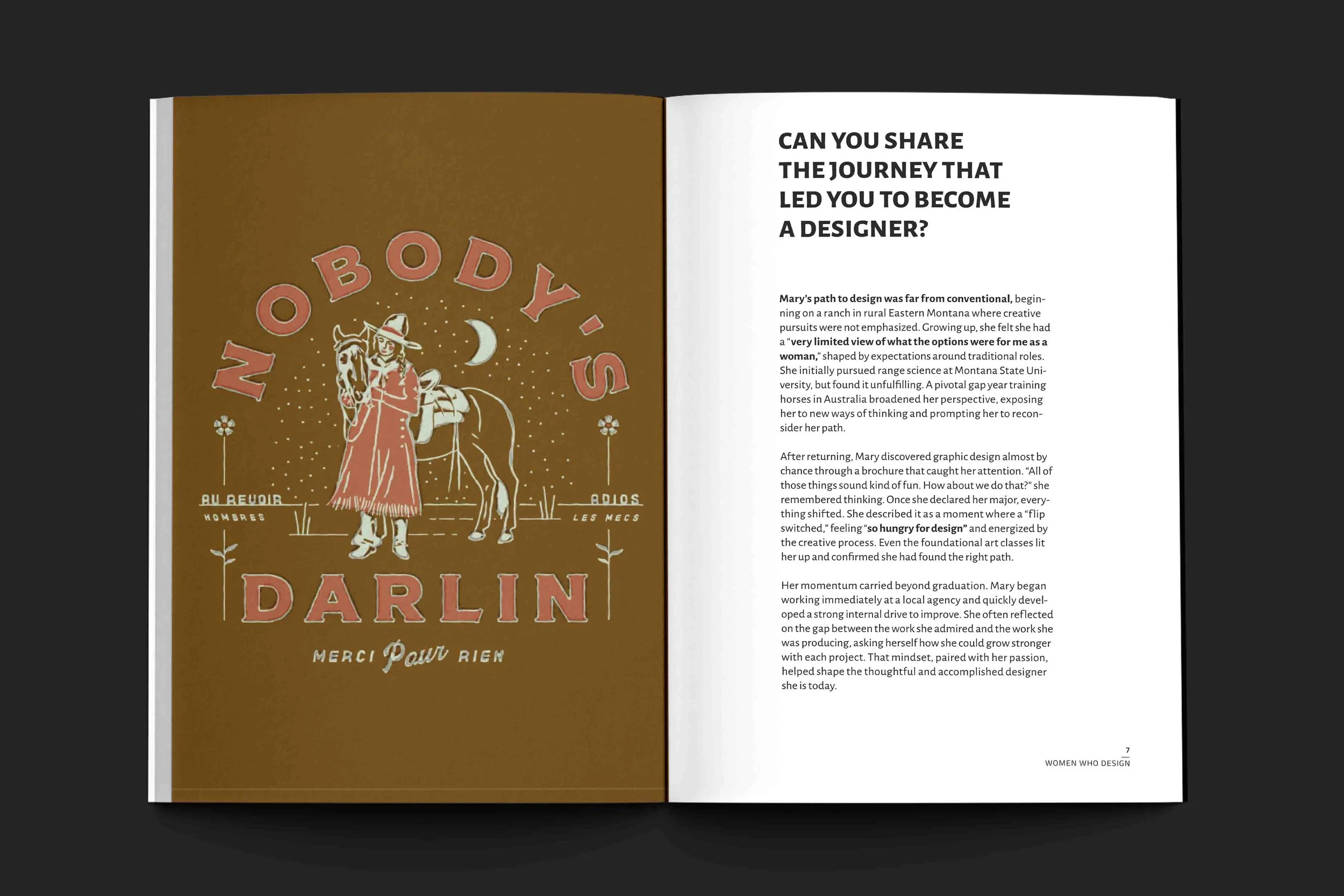
Can you share the journey that led you to become a designer?
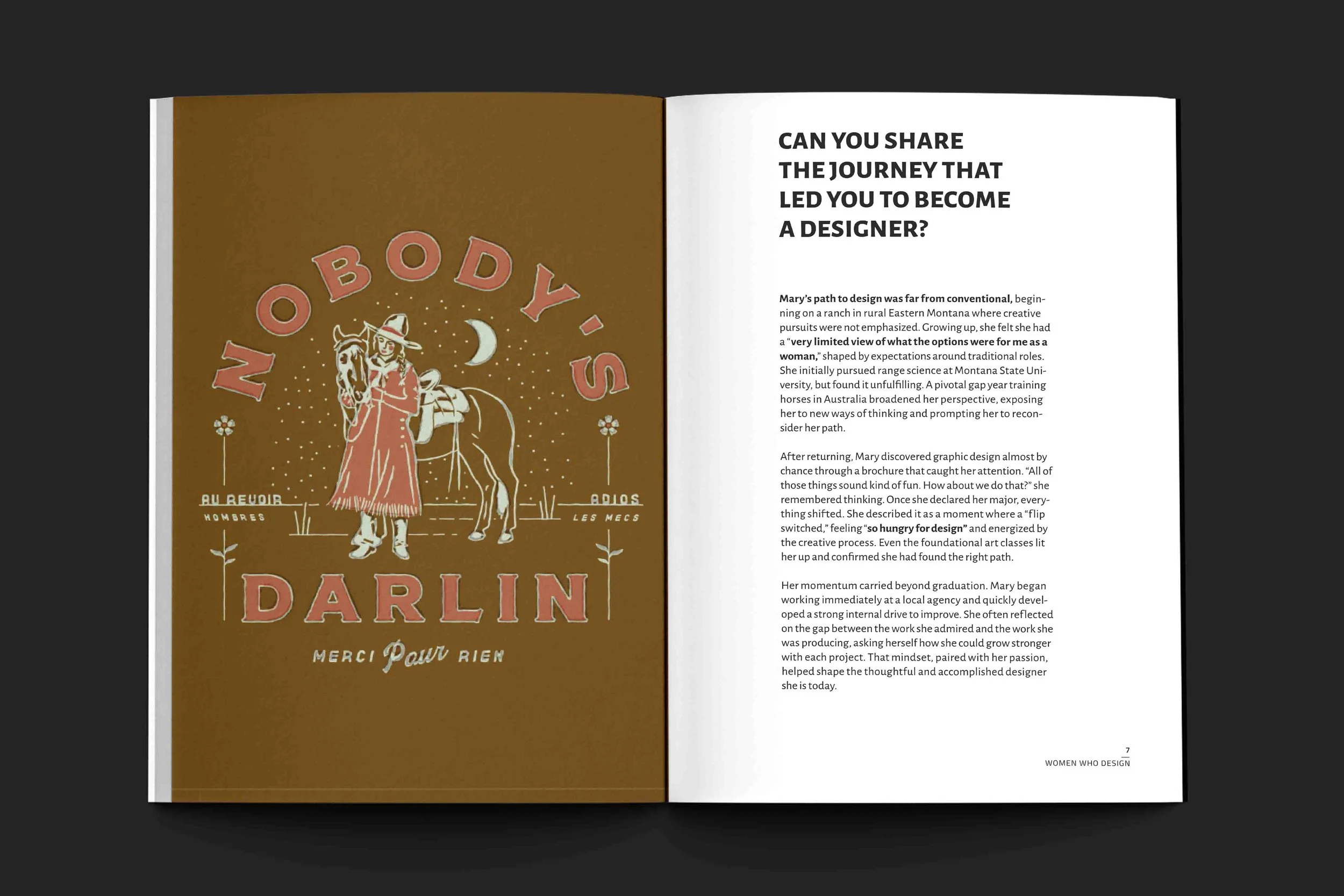
Mary’s path to design was far from conventional, beginning on a ranch in rural Eastern Montana where creative pursuits were not emphasized. Growing up, she felt she had a “very limited view of what the options were for me as a woman,” shaped by expectations around traditional roles. She initially pursued range science at Montana State University, but found it unfulfilling. A pivotal gap year training horses in Australia broadened her perspective, exposing her to new ways of thinking and prompting her to reconsider her path.
After returning, Mary discovered graphic design almost by chance through a brochure that caught her attention. “All of those things sound kind of fun. How about we do that?” she remembered thinking. Once she declared her major, everything shifted. She described it as a moment where a “flip switched,” feeling “so hungry for design” and energized by the creative process. Even the foundational art classes lit her up and confirmed she had found the right path.
Her momentum carried beyond graduation. Mary began working immediately at a local agency and quickly developed a strong internal drive to improve. She often reflected on the gap between the work she admired and the work she was producing, asking herself how she could grow stronger with each project. That mindset, paired with her passion, helped shape the thoughtful and accomplished designer she is today.
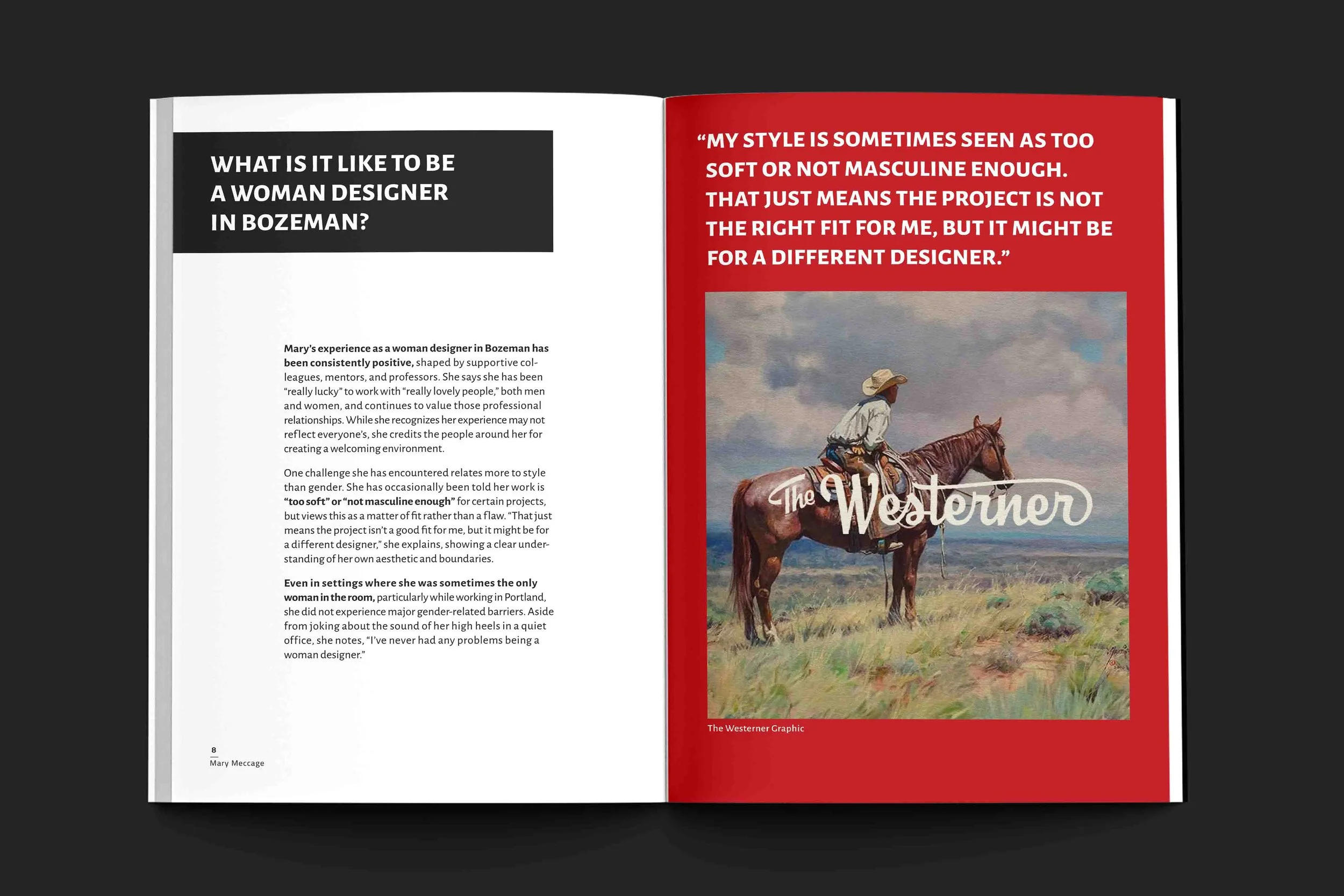
What is it like to be a woman designer in Bozeman?
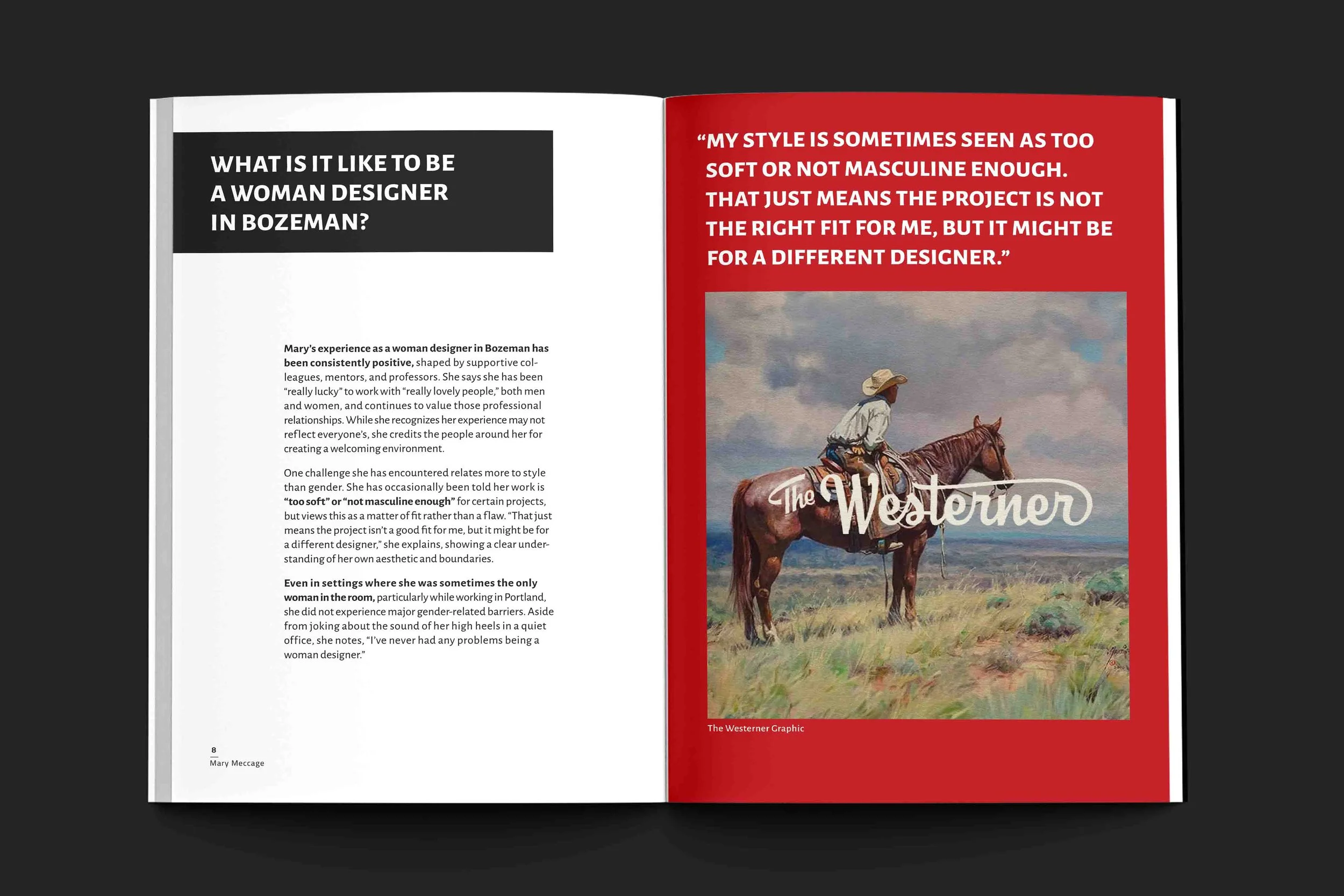
Mary’s experience as a woman designer in Bozeman has been consistently positive, shaped by supportive colleagues, mentors, and professors. She says she has been “really lucky” to work with “really lovely people,” both men and women, and continues to value those professional relationships. While she recognizes her experience may not reflect everyone’s, she credits the people around her for creating a welcoming environment.
One challenge she has encountered relates more to style than gender. She has occasionally been told her work is “too soft” or “not masculine enough” for certain projects, but views this as a matter of fit rather than a flaw. “That just means the project isn’t a good fit for me, but it might be for a different designer,” she explains, showing a clear understanding of her own aesthetic and boundaries.
Even in settings where she was sometimes the only woman in the room, particularly while working in Portland, she did not experience major gender-related barriers. Aside from joking about the sound of her high heels in a quiet office, she notes, “I’ve never had any problems being a woman designer.”
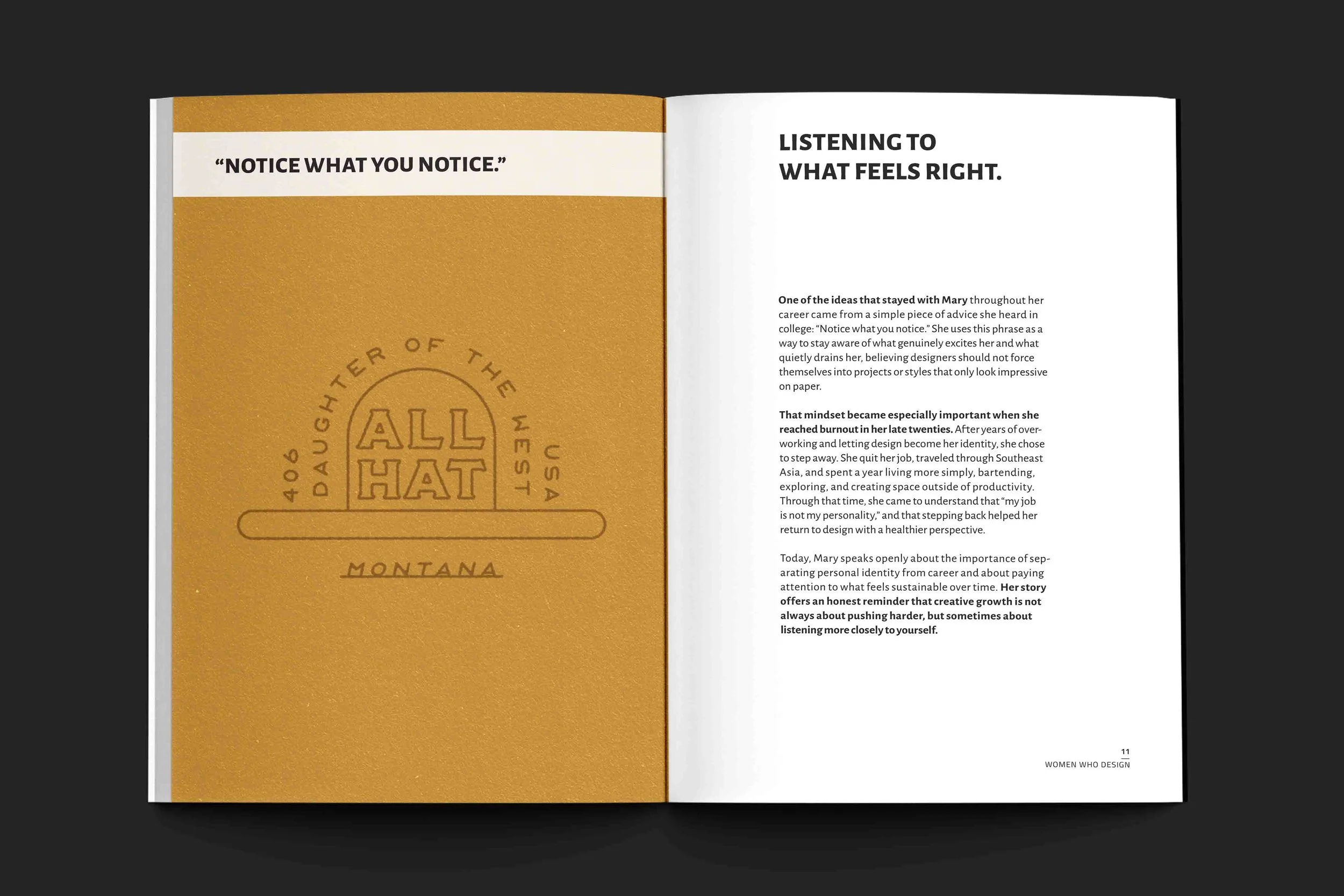
Listening to what feels right.
One of the ideas that stayed with Mary throughout her career came from a simple piece of advice she heard in college: “Notice what you notice.” She uses this phrase as a way to stay aware of what genuinely excites her and what quietly drains her, believing designers should not force themselves into projects or styles that only look impressive on paper.
That mindset became especially important when she reached burnout in her late twenties. After years of overworking and letting design become her identity, she chose to step away. She quit her job, traveled through Southeast Asia, and spent a year living more simply, bartending, exploring, and creating space outside of productivity. Through that time, she came to understand that “my job is not my personality,” and that stepping back helped her return to design with a healthier perspective.
Today, Mary speaks openly about the importance of separating personal identity from career and about paying attention to what feels sustainable over time. Her story offers an honest reminder that creative growth is not always about pushing harder, but sometimes about
listening more closely to yourself.
What advice would you give to young women entering design?
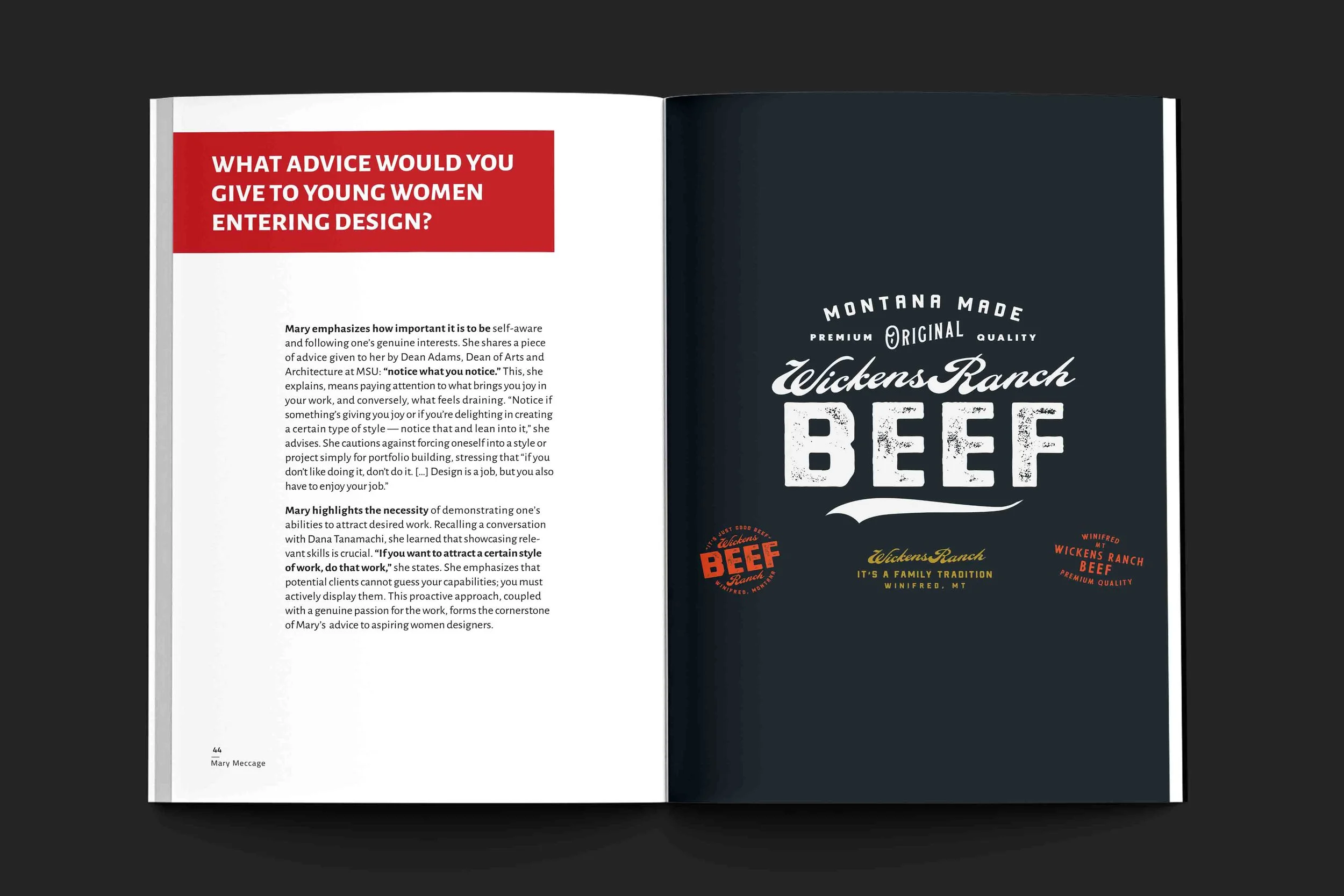
Mary emphasizes how important it is to be self-aware and following one’s genuine interests. She shares a piece of advice given to her by Dean Adams, Dean of Arts and Architecture at MSU: “notice what you notice.” This, she explains, means paying attention to what brings you joy in your work, and conversely, what feels draining. “Notice if something’s giving you joy or if you’re delighting in creating a certain type of style — notice that and lean into it,” she advises. She cautions against forcing oneself into a style or project simply for portfolio building, stressing that “if you don’t like doing it, don’t do it. […] Design is a job, but you also have to enjoy your job.”
Mary highlights the necessity of demonstrating one’s abilities to attract desired work. Recalling a conversation with Dana Tanamachi, she learned that showcasing relevant skills is crucial. “If you want to attract a certain style of work, do that work,” she states. She emphasizes that potential clients cannot guess your capabilities; you must actively display them. This proactive approach, coupled with a genuine passion for the work, forms the cornerstone of Mary’s advice to aspiring women designers.

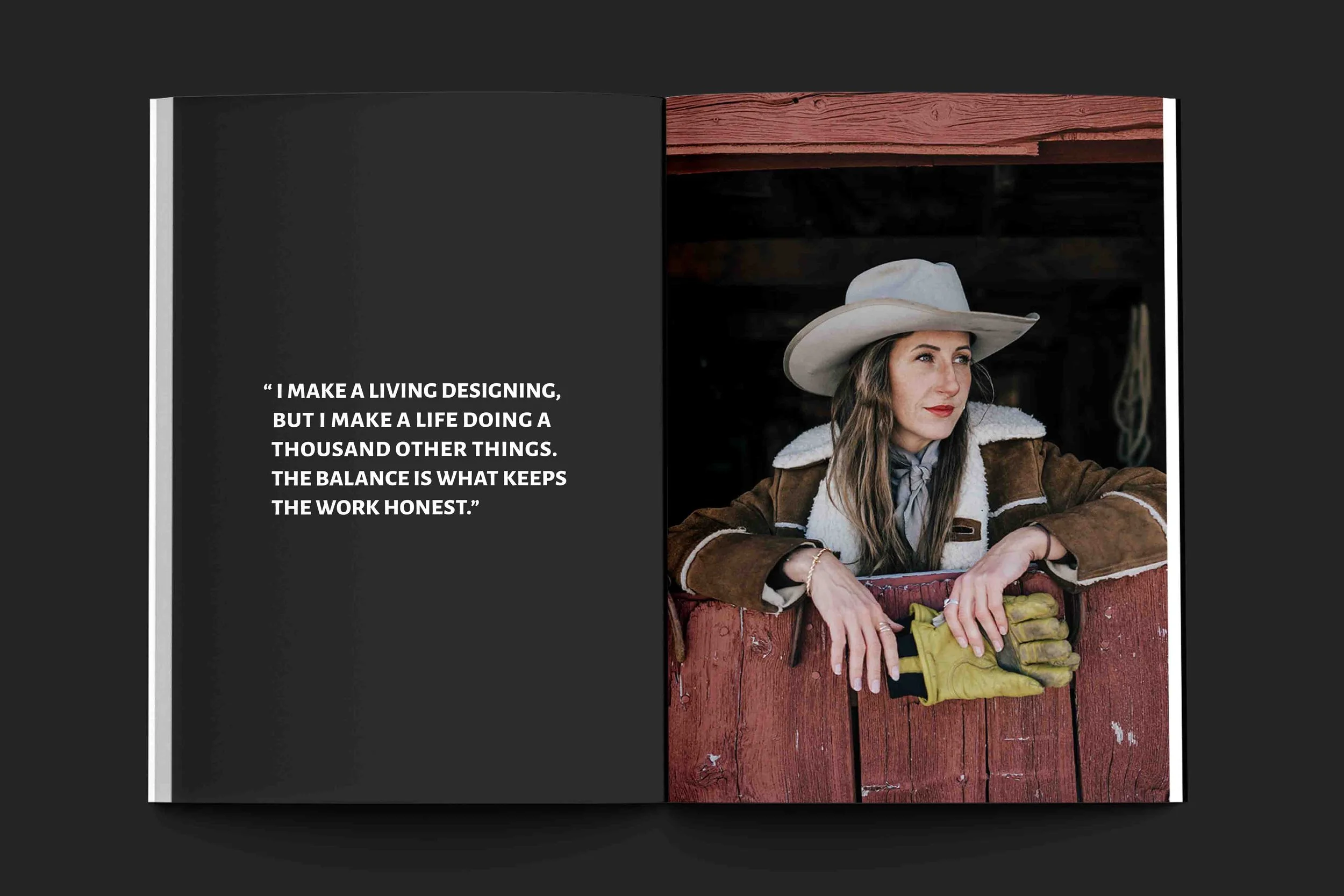

““ I make a living designing, but I make a life doing a thousand other things. The balance is what keeps the work honest.”
— Mary Meccage