

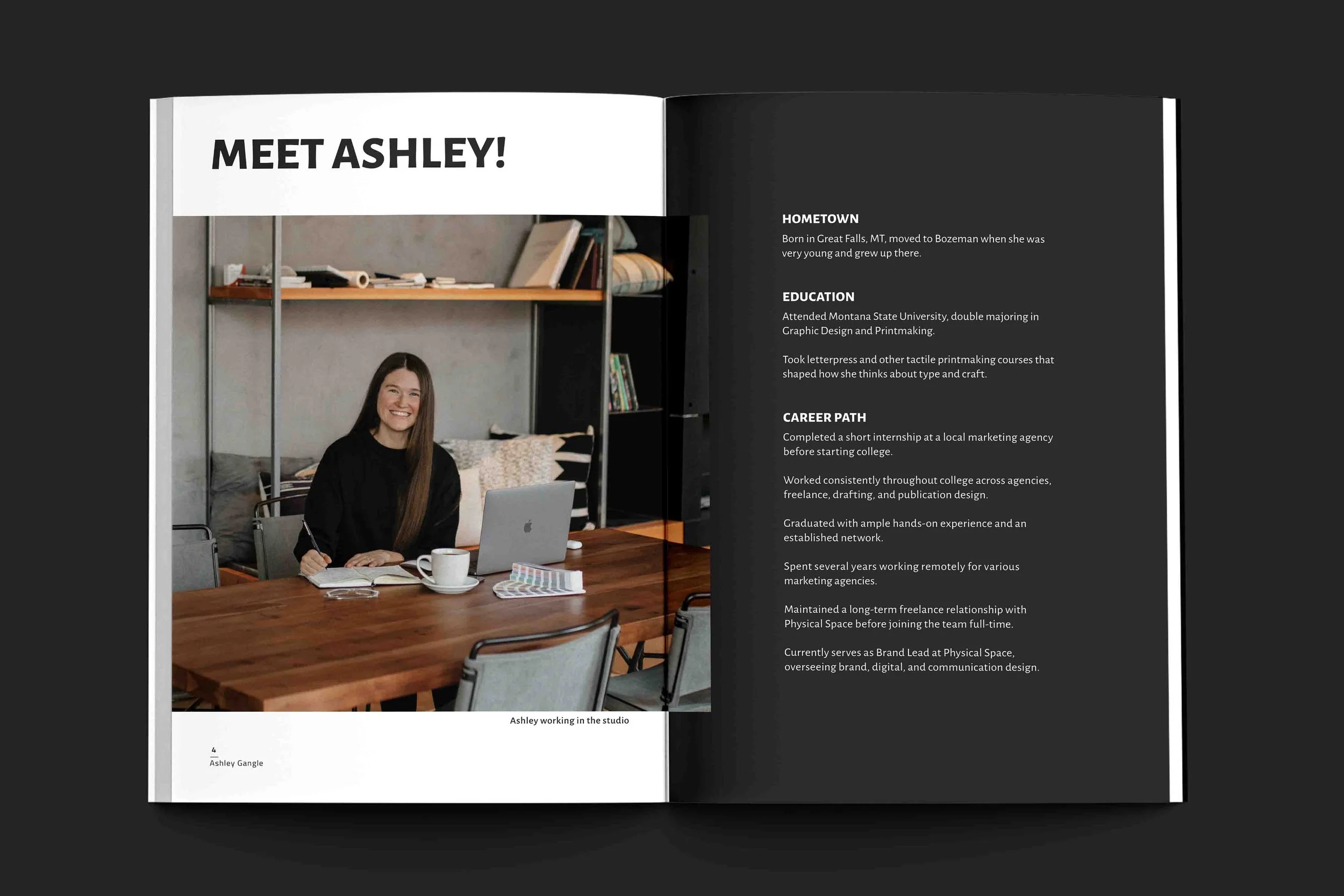
Ashley Gangle
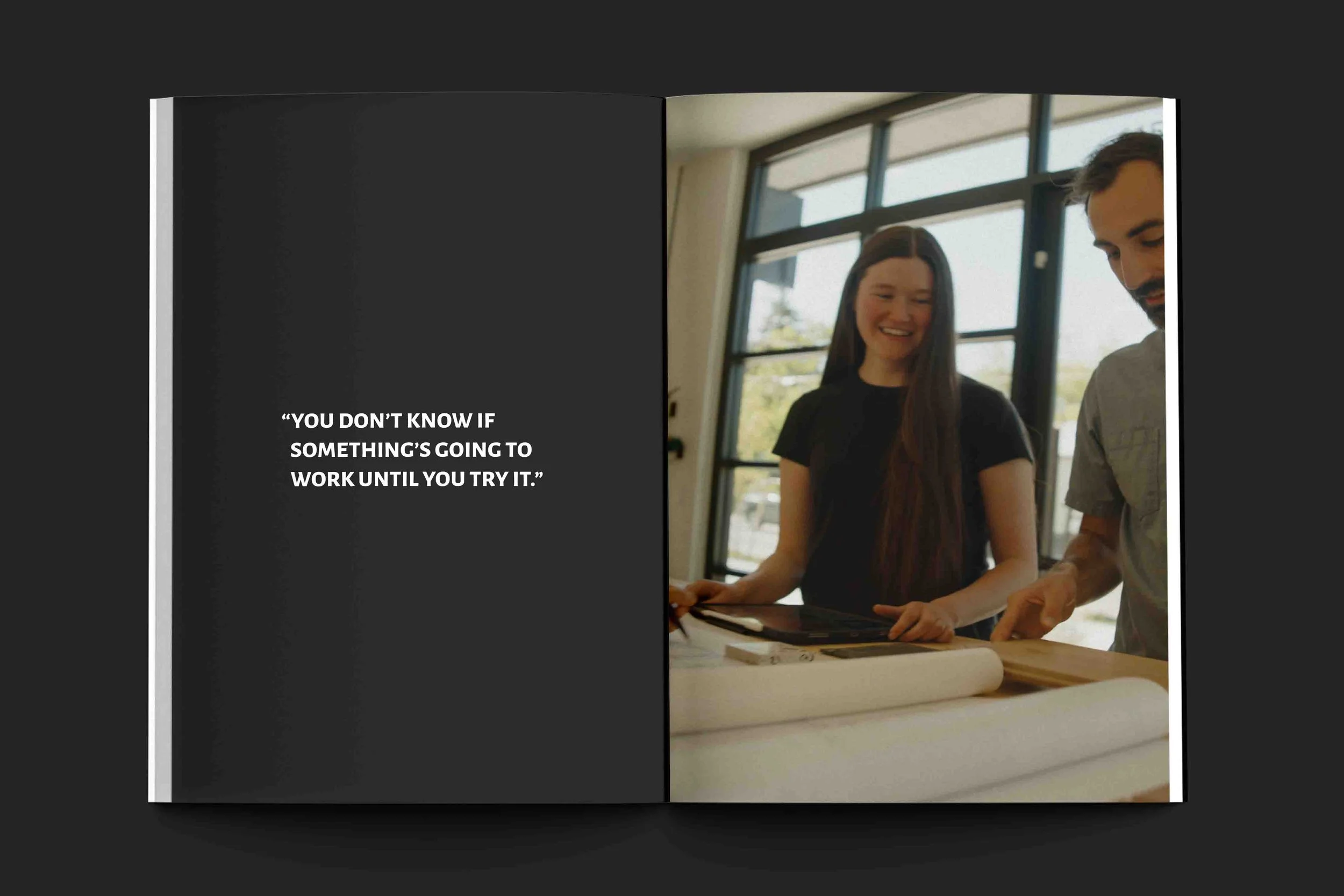
“You don’t know if something’s going to work until you try it.”
— Ashley Gangle
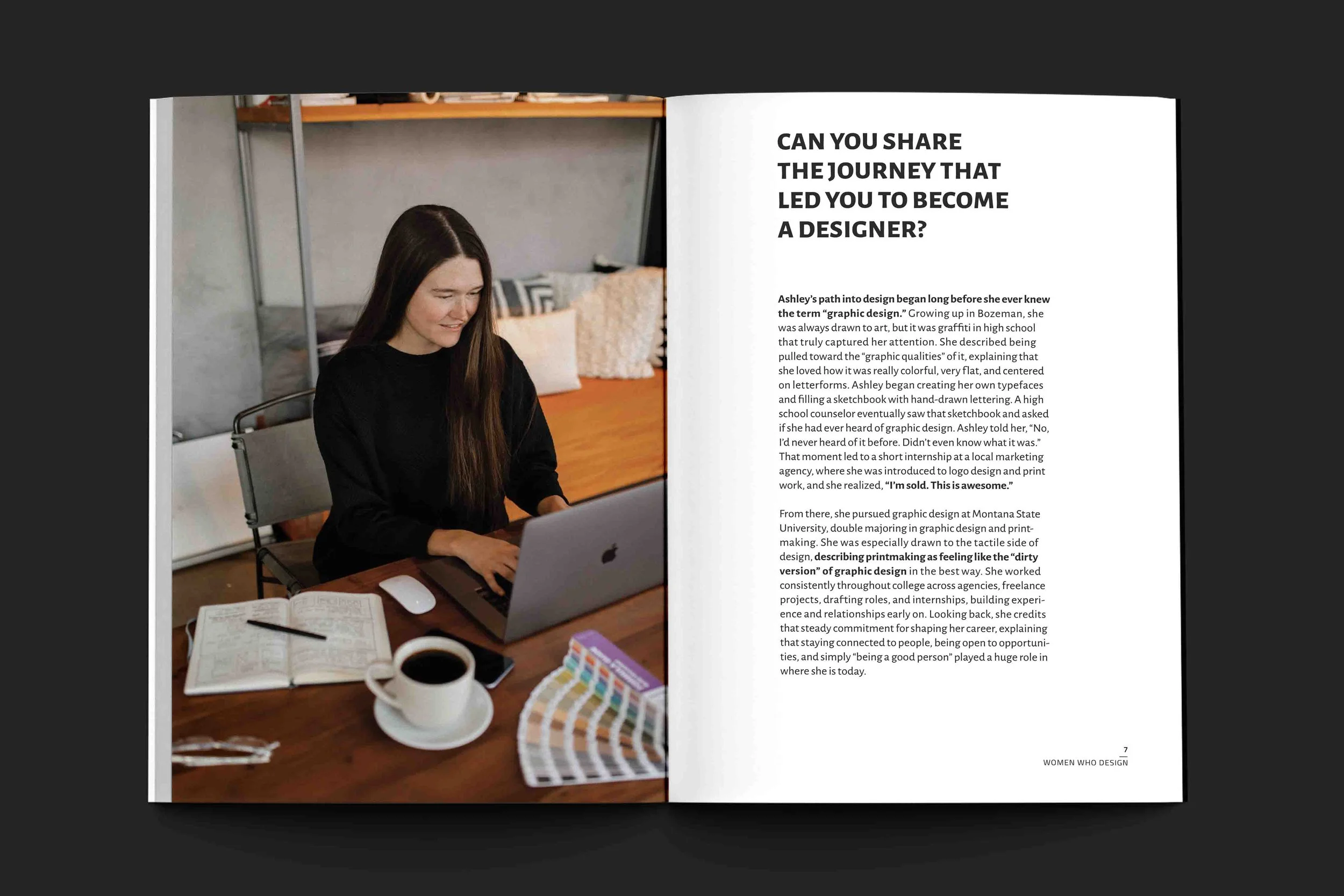
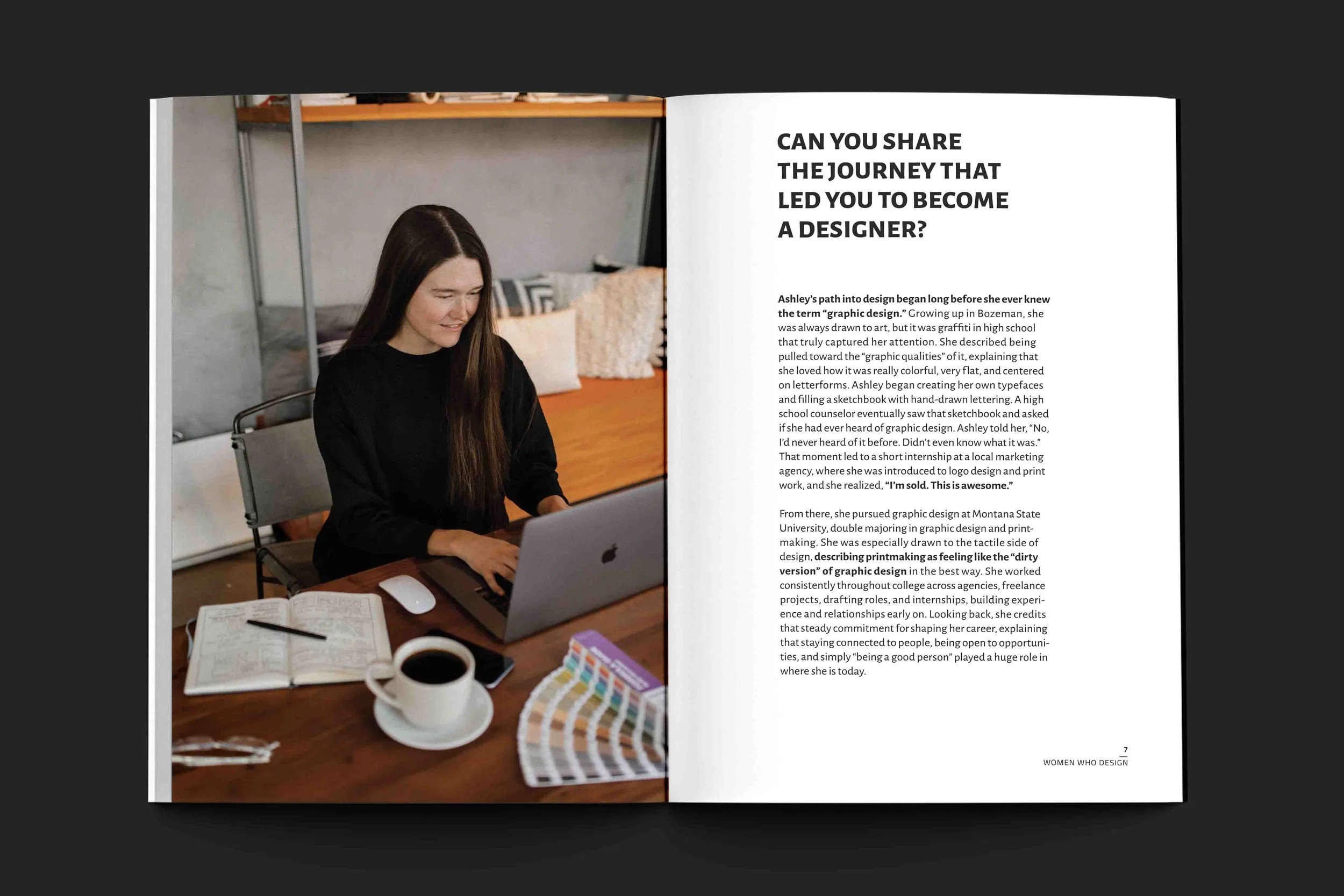
Can you share the journey that led you to become a designer?
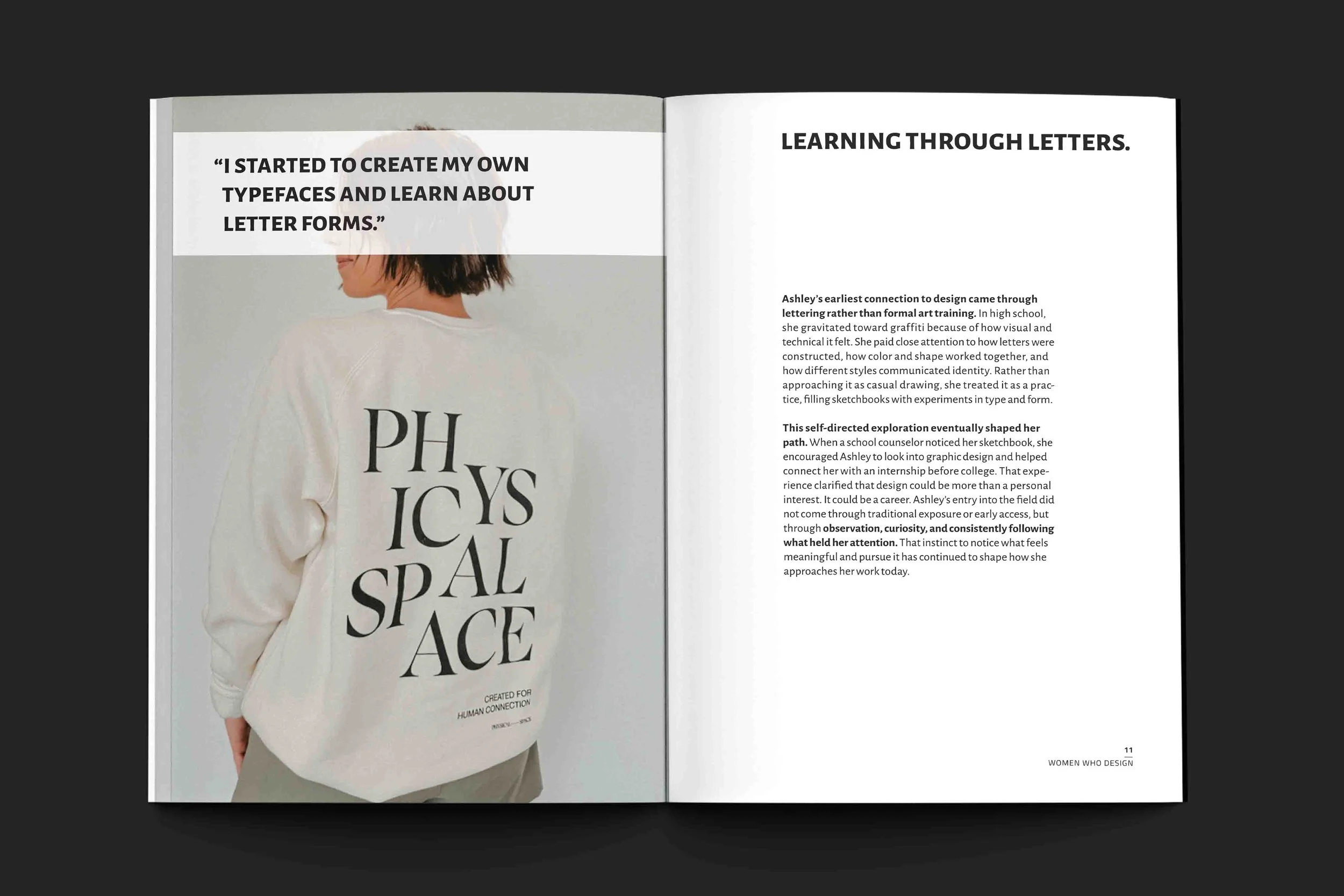
Ashley’s path into design began long before she ever knew the term “graphic design.” Growing up in Bozeman, she was always drawn to art, but it was graffiti in high school that truly captured her attention. She described being pulled toward the “graphic qualities” of it, explaining that she loved how it was really colorful, very flat, and centered on letterforms. Ashley began creating her own typefaces and filling a sketchbook with hand-drawn lettering. A high school counselor eventually saw that sketchbook and asked if she had ever heard of graphic design. Ashley told her, “No, I’d never heard of it before. Didn’t even know what it was.” That moment led to a short internship at a local marketing agency, where she was introduced to logo design and print work, and she realized, “I’m sold. This is awesome.”
From there, she pursued graphic design at Montana State University, double majoring in graphic design and printmaking. She was especially drawn to the tactile side of design, describing printmaking as feeling like the “dirty version” of graphic design in the best way. She worked consistently throughout college across agencies, freelance projects, drafting roles, and internships, building experience and relationships early on. Looking back, she credits that steady commitment for shaping her career, explaining that staying connected to people, being open to opportunities, and simply “being a good person” played a huge role in where she is today.
What is it like to be a woman designer in Bozeman?
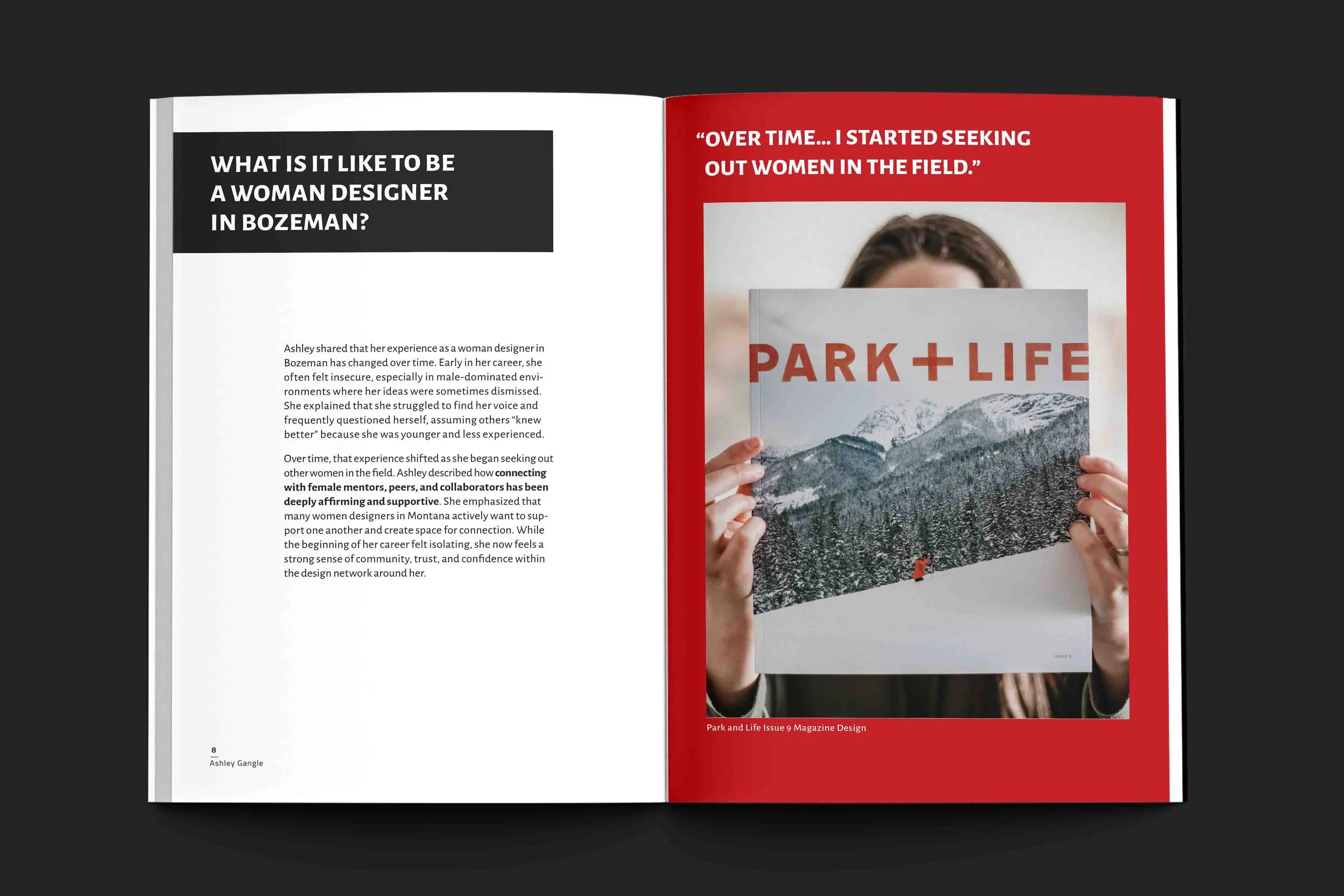
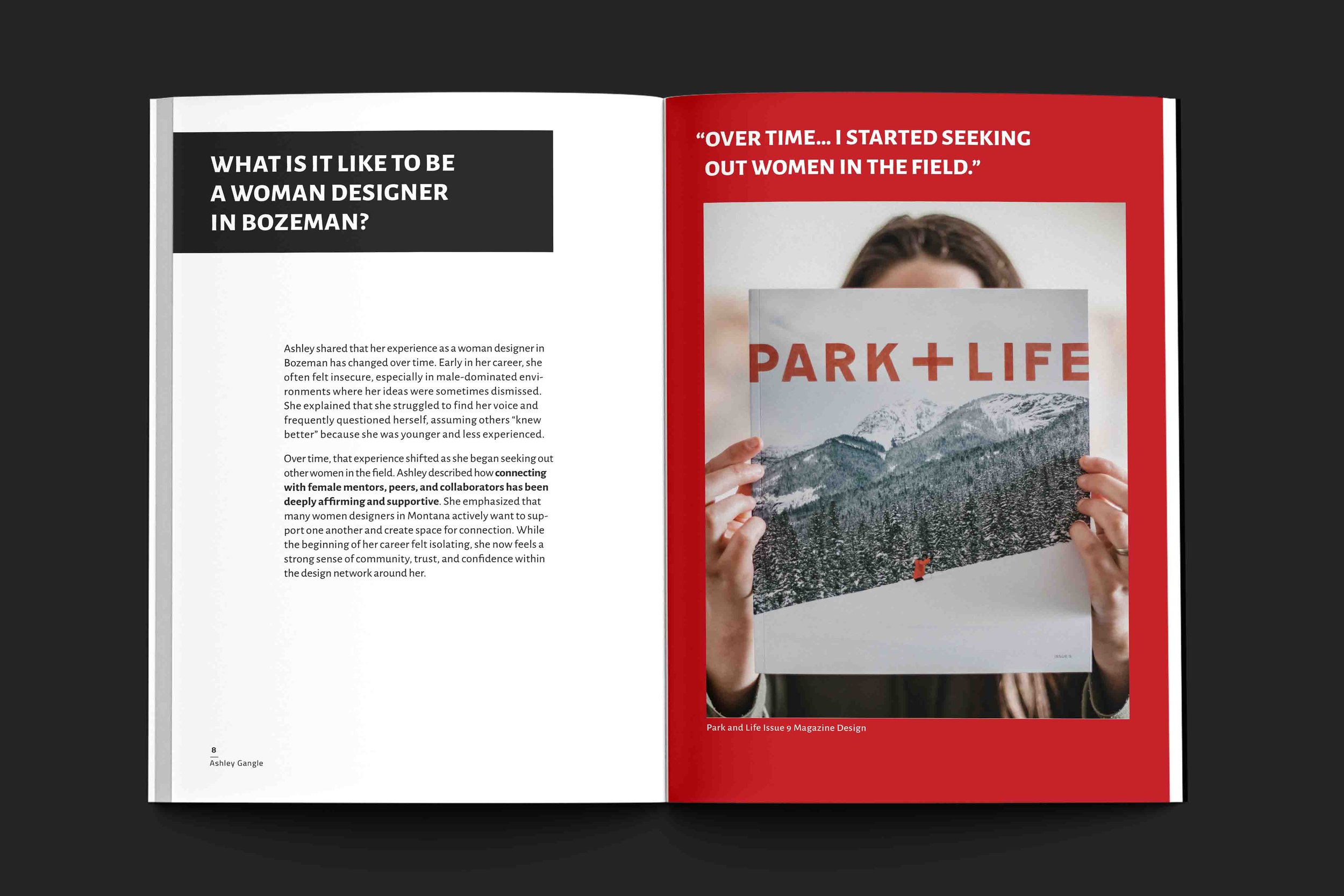
Ashley shared that her experience as a woman designer in Bozeman has changed over time. Early in her career, she often felt insecure, especially in male-dominated environments where her ideas were sometimes dismissed. She explained that she struggled to find her voice and frequently questioned herself, assuming others “knew better” because she was younger and less experienced.
Over time, that experience shifted as she began seeking out other women in the field. Ashley described how connecting with female mentors, peers, and collaborators has been deeply affirming and supportive. She emphasized that many women designers in Montana actively want to support one another and create space for connection. While the beginning of her career felt isolating, she now feels a strong sense of community, trust, and confidence within the design network around her.
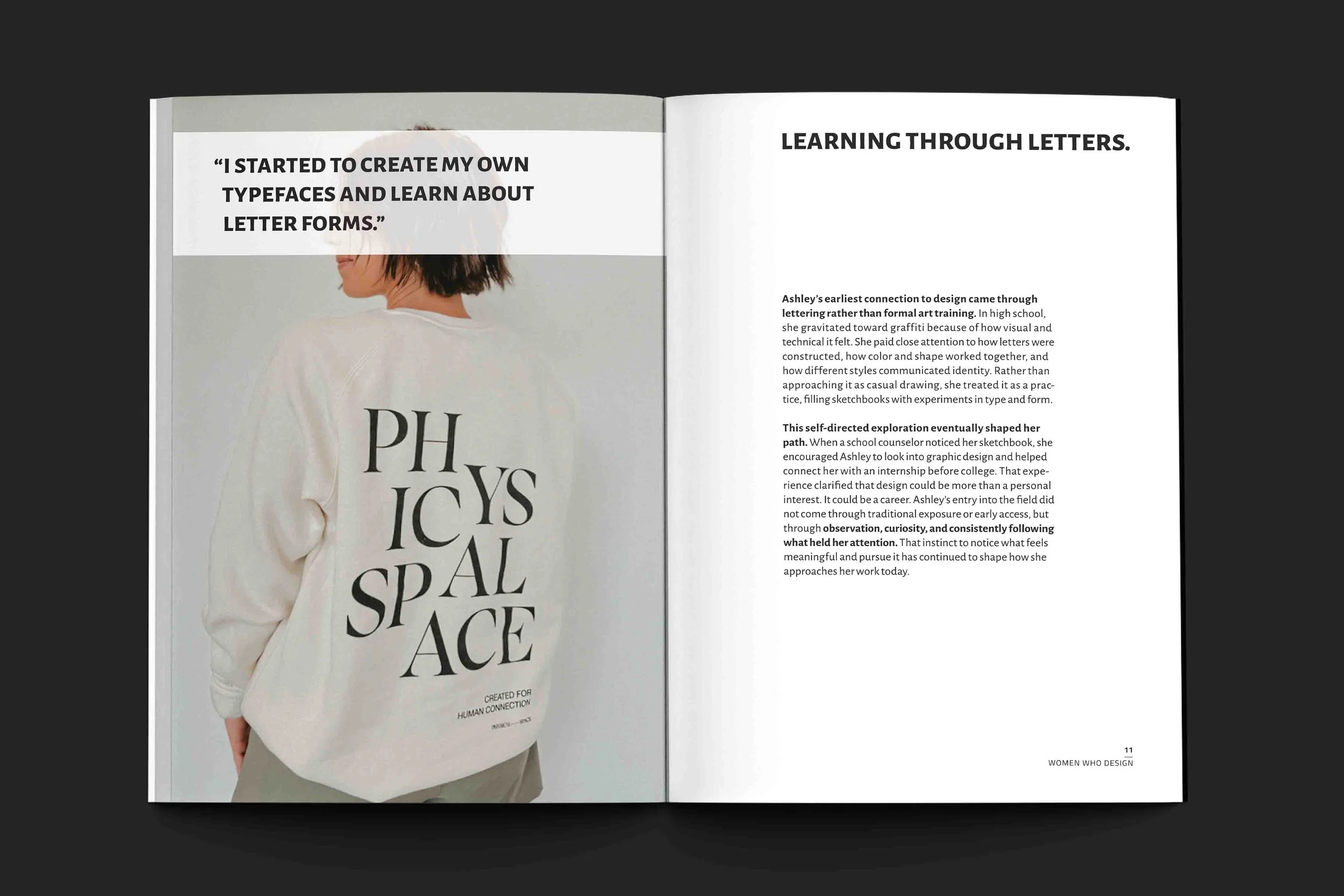
Learning through letters.
Ashley’s earliest connection to design came through lettering rather than formal art training. In high school, she gravitated toward graffiti because of how visual and technical it felt. She paid close attention to how letters were constructed, how color and shape worked together, and how different styles communicated identity. Rather than approaching it as casual drawing, she treated it as a practice, filling sketchbooks with experiments in type and form.
This self-directed exploration eventually shaped her path. When a school counselor noticed her sketchbook, she encouraged Ashley to look into graphic design and helped connect her with an internship before college. That experience clarified that design could be more than a personal interest. It could be a career. Ashley’s entry into the field did not come through traditional exposure or early access, but through observation, curiosity, and consistently following what held her attention. That instinct to notice what feels meaningful and pursue it has continued to shape how she approaches her work today.
What advice would you give to young women entering design?
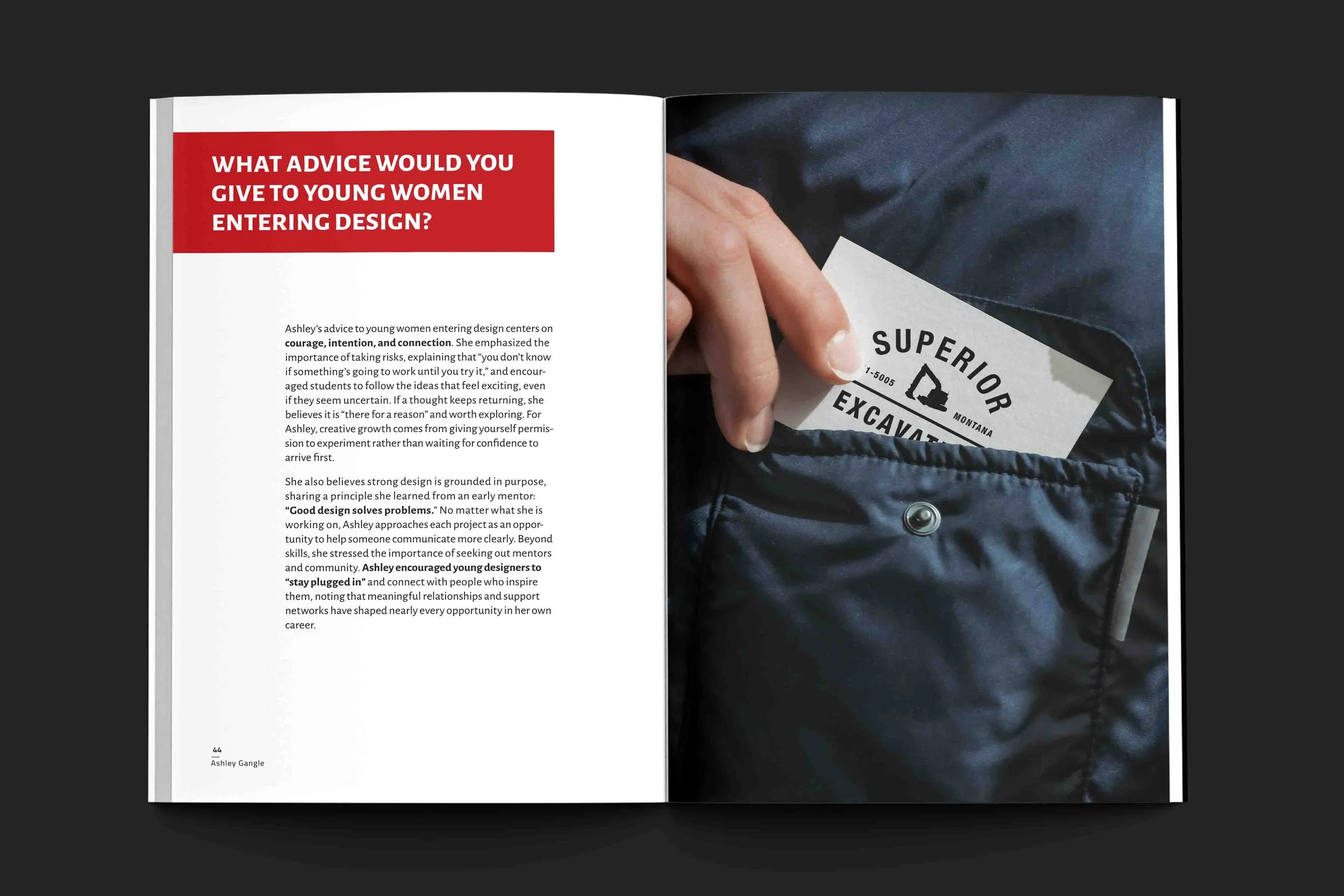
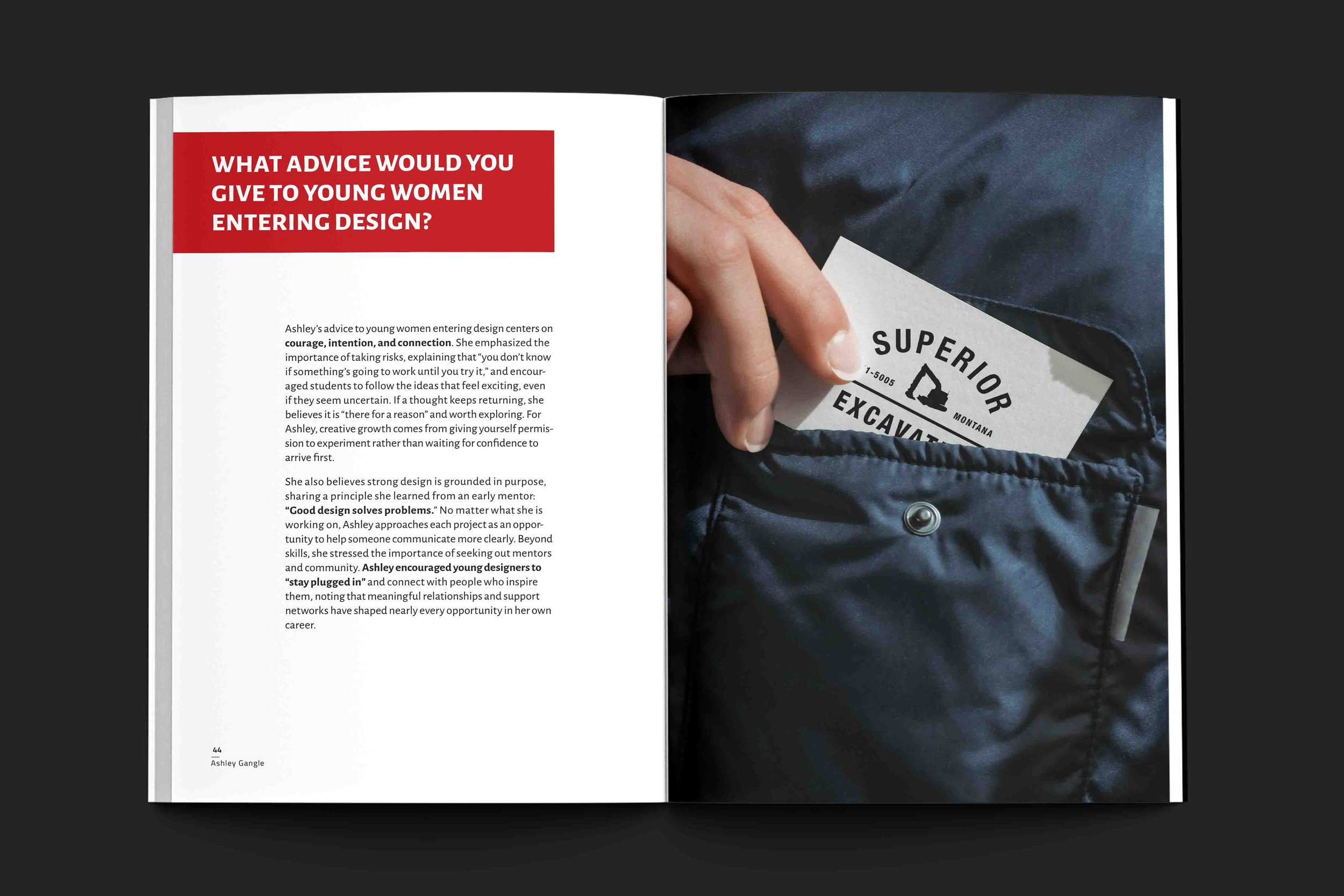
Ashley’s advice to young women entering design centers on courage, intention, and connection. She emphasized the importance of taking risks, explaining that “you don’t know if something’s going to work until you try it,” and encouraged students to follow the ideas that feel exciting, even if they seem uncertain. If a thought keeps returning, she believes it is “there for a reason” and worth exploring. For Ashley, creative growth comes from giving yourself permission to experiment rather than waiting for confidence to arrive first.
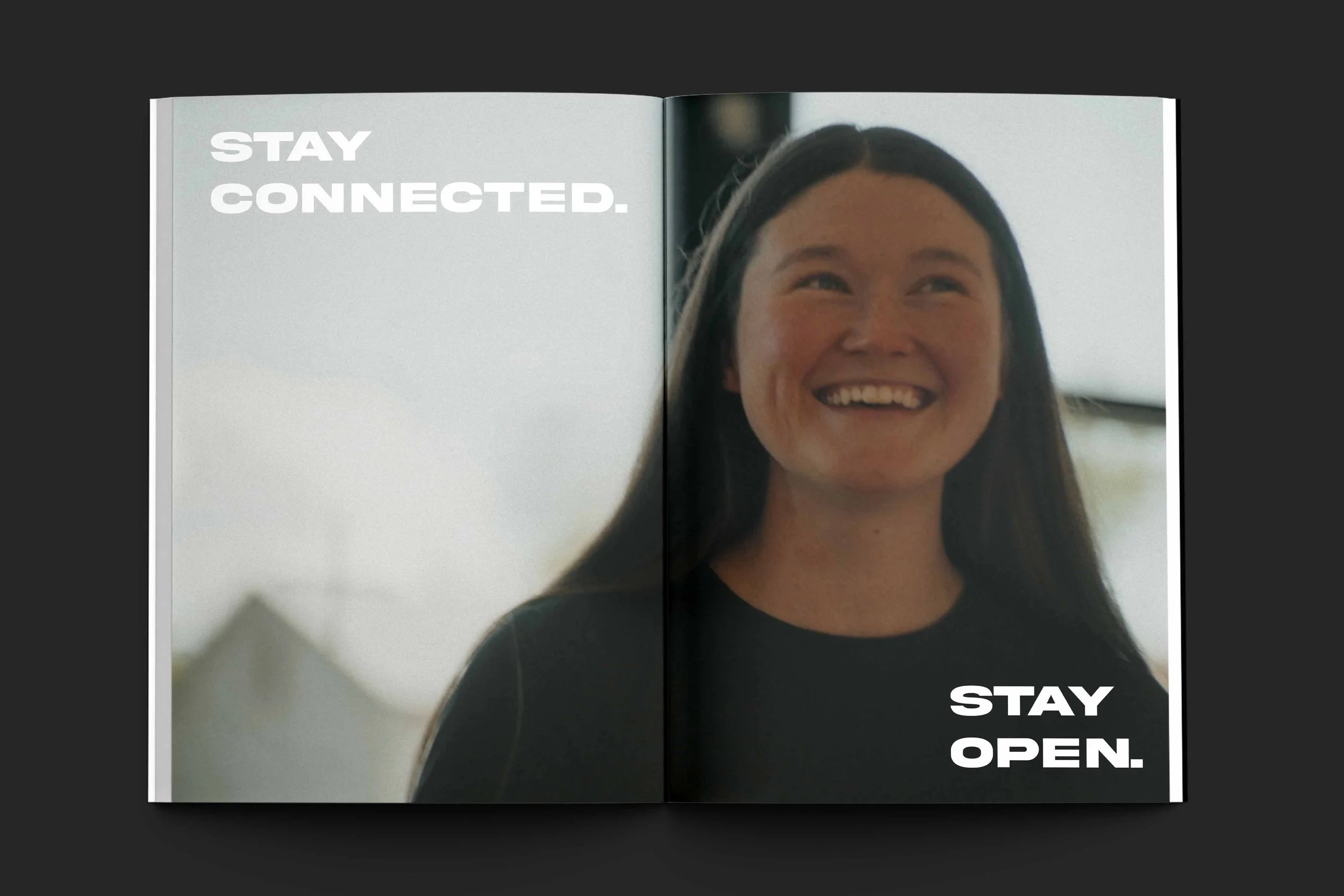
She also believes strong design is grounded in purpose, sharing a principle she learned from an early mentor: “Good design solves problems.” No matter what she is working on, Ashley approaches each project as an opportunity to help someone communicate more clearly. Beyond skills, she stressed the importance of seeking out mentors and community. Ashley encouraged young designers to “stay plugged in” and connect with people who inspire them, noting that meaningful relationships and support networks have shaped nearly every opportunity in her own career.
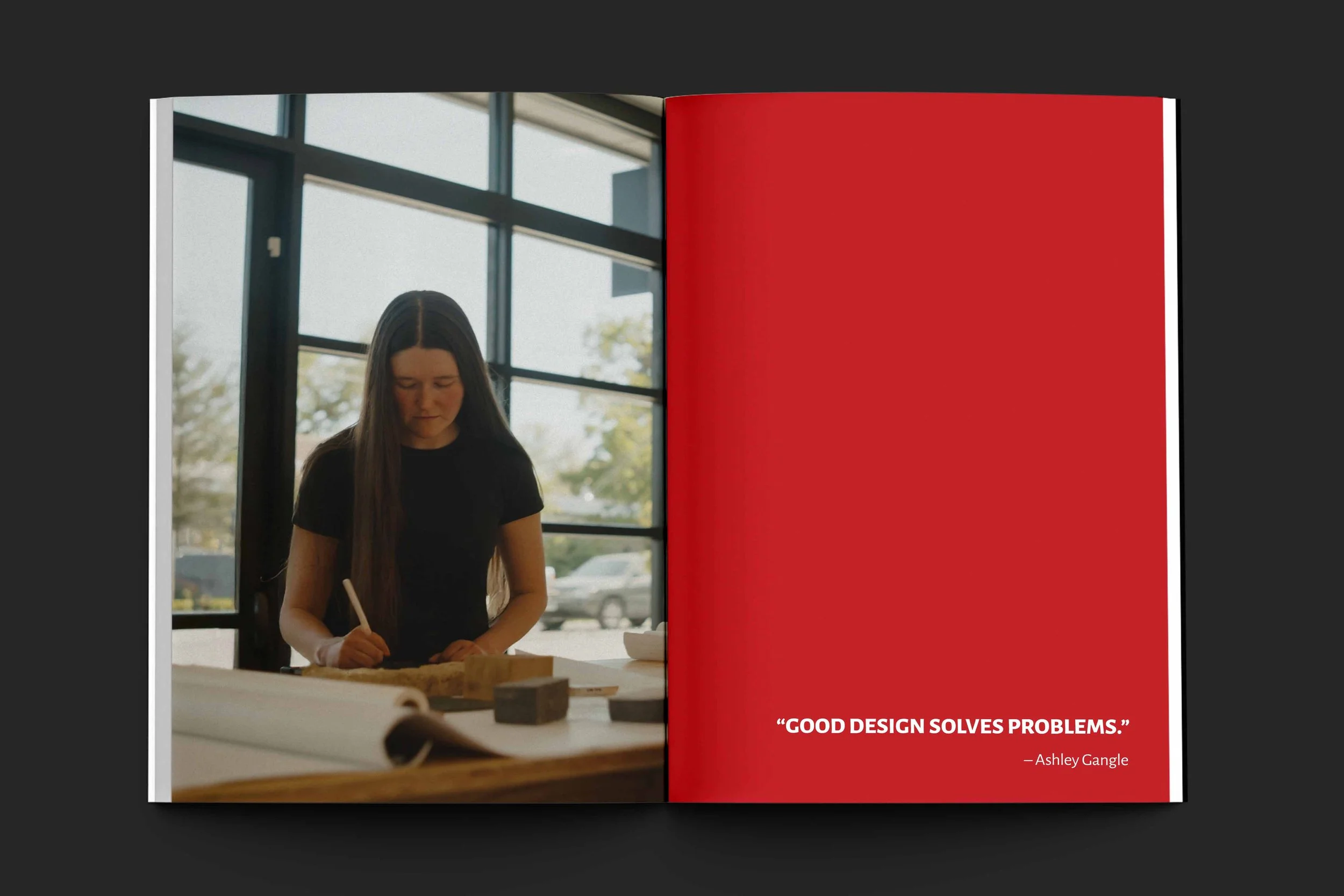
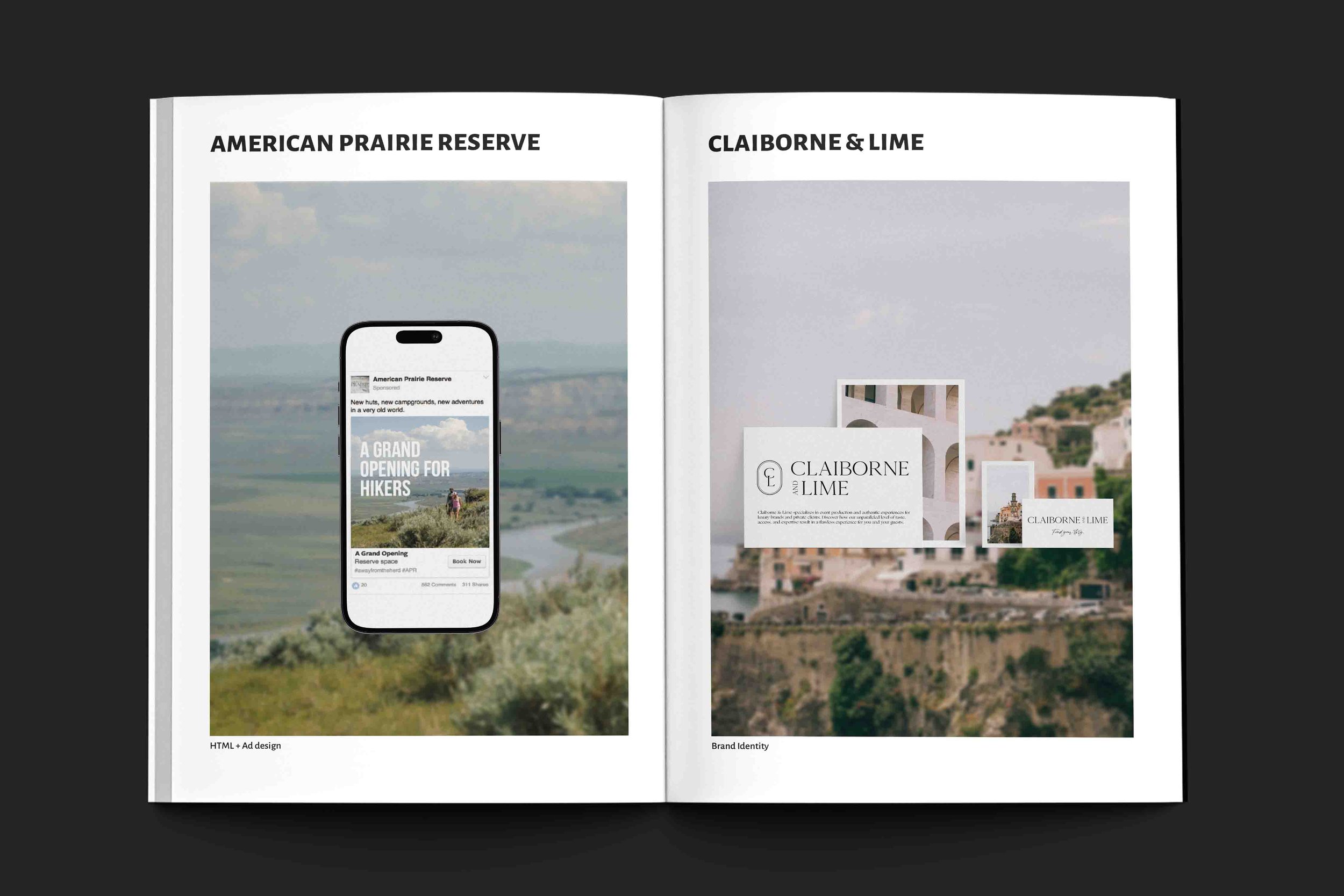
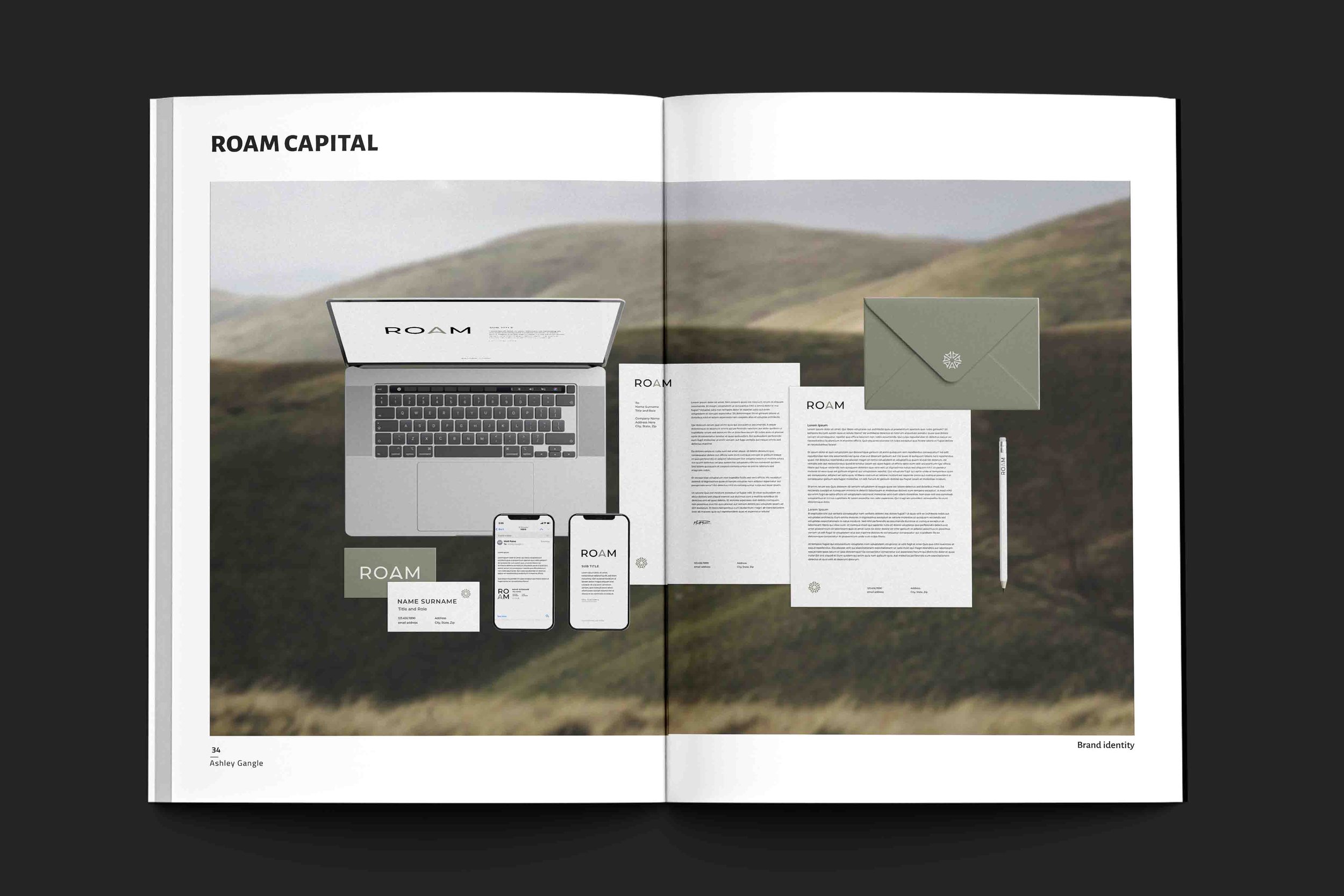
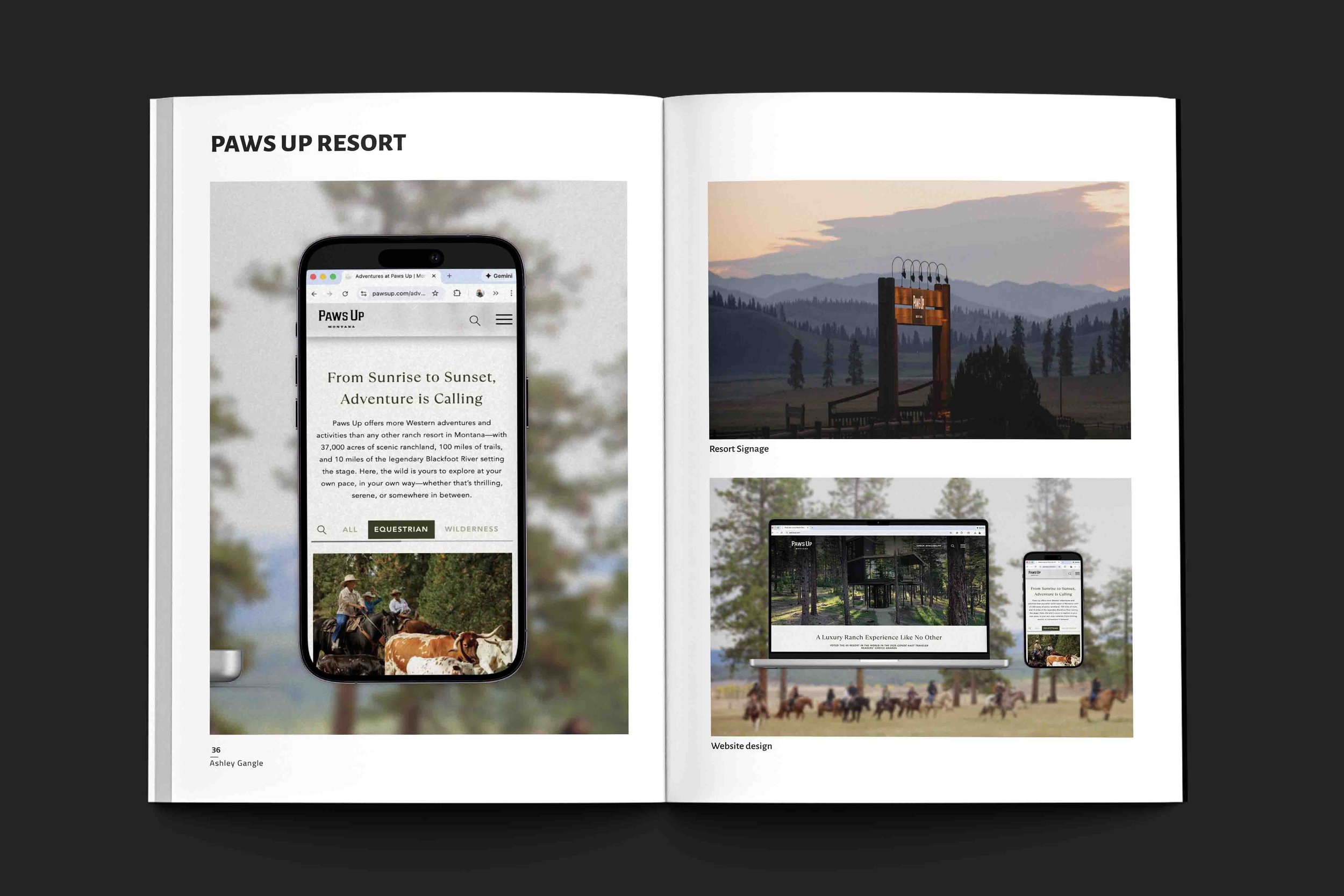
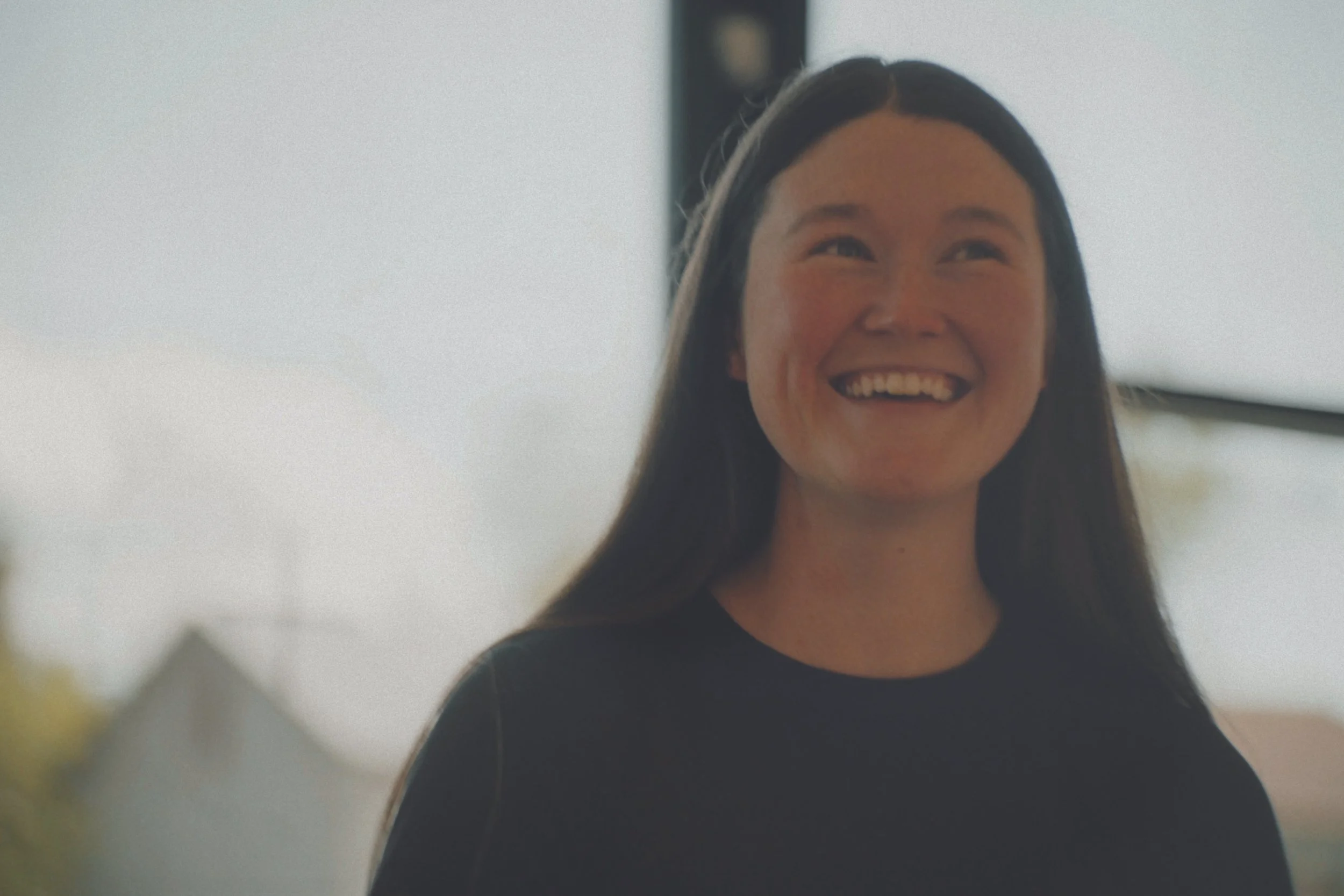
“Good design solves problems.”
— Ashley Gangle