
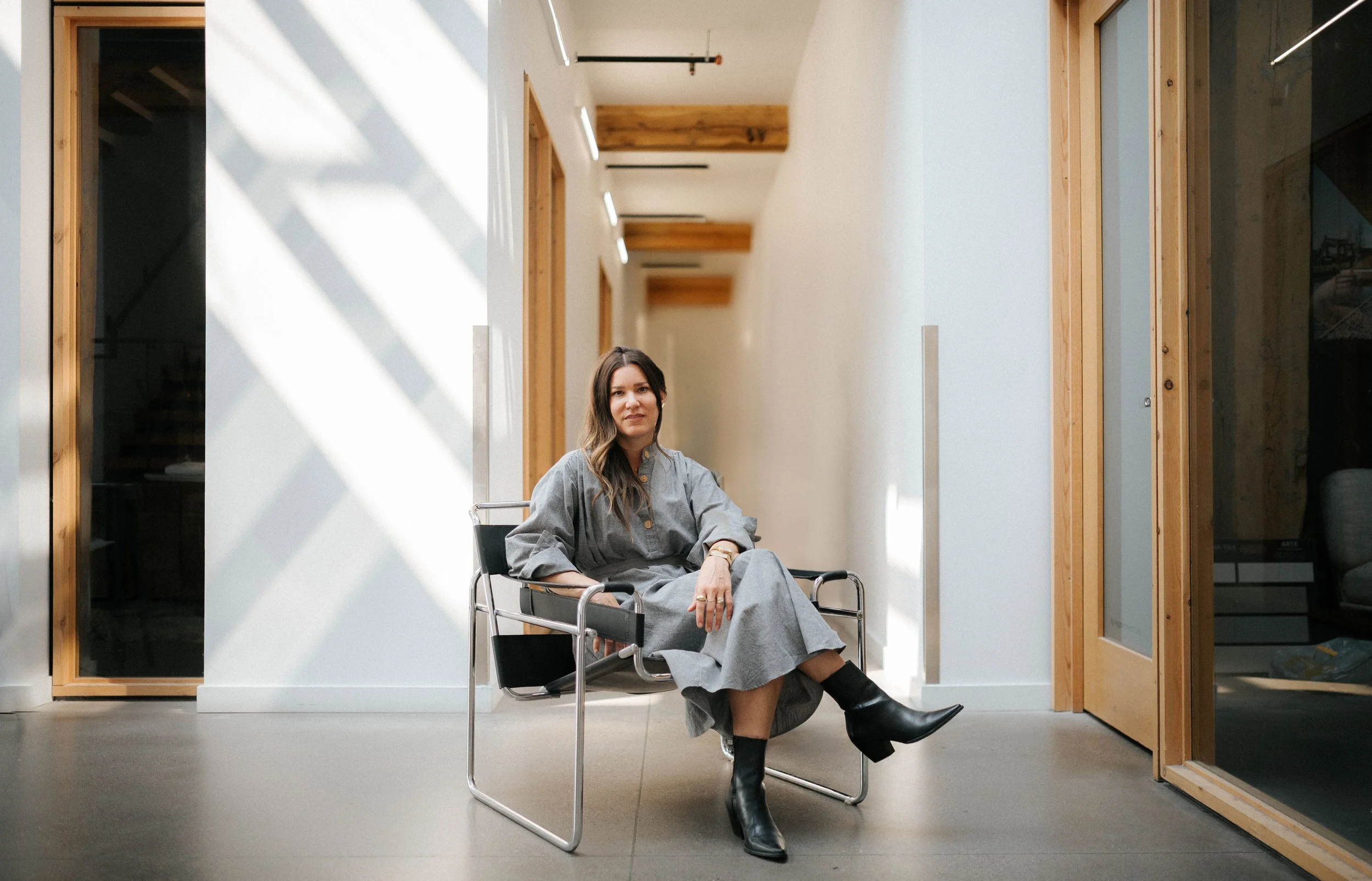
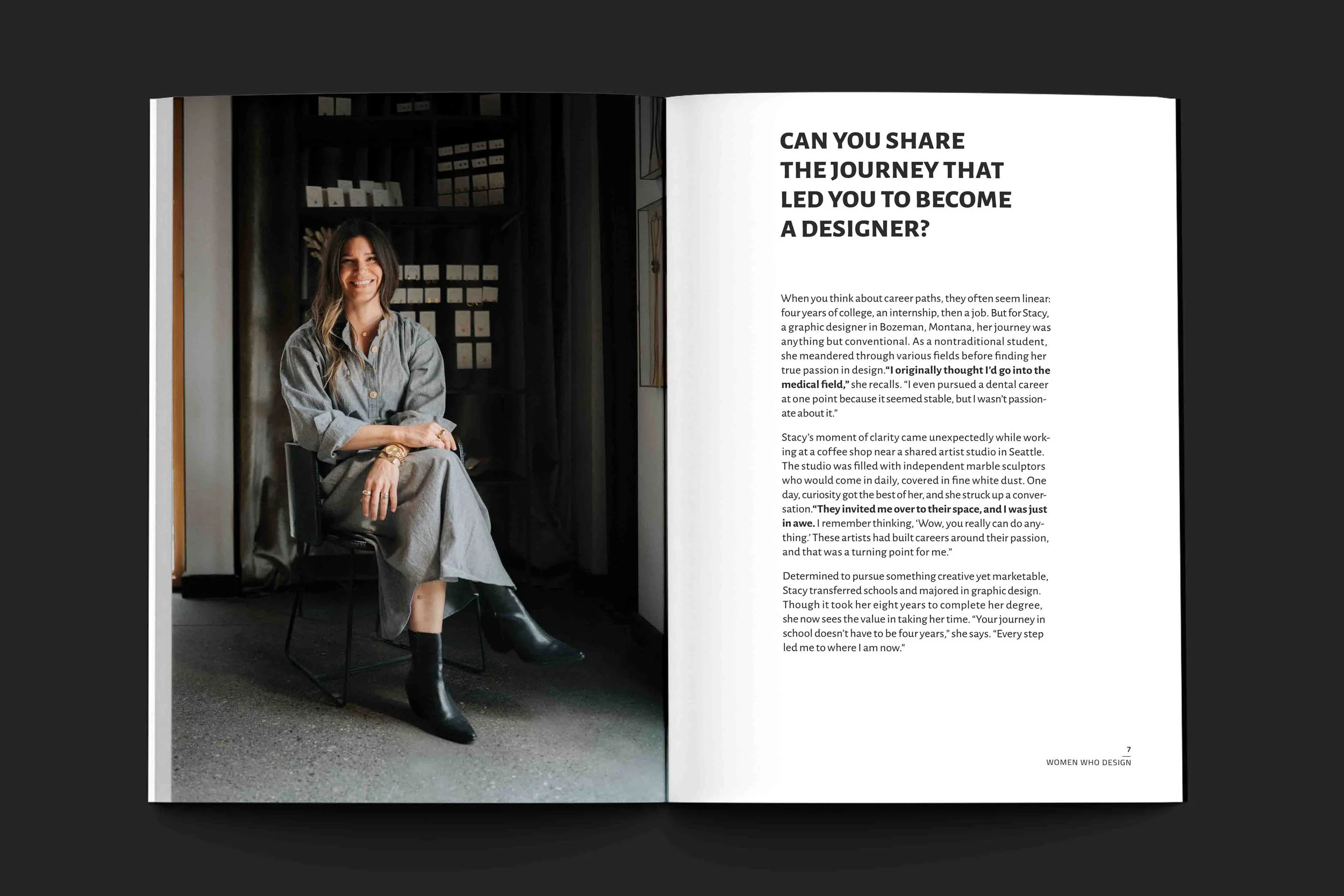
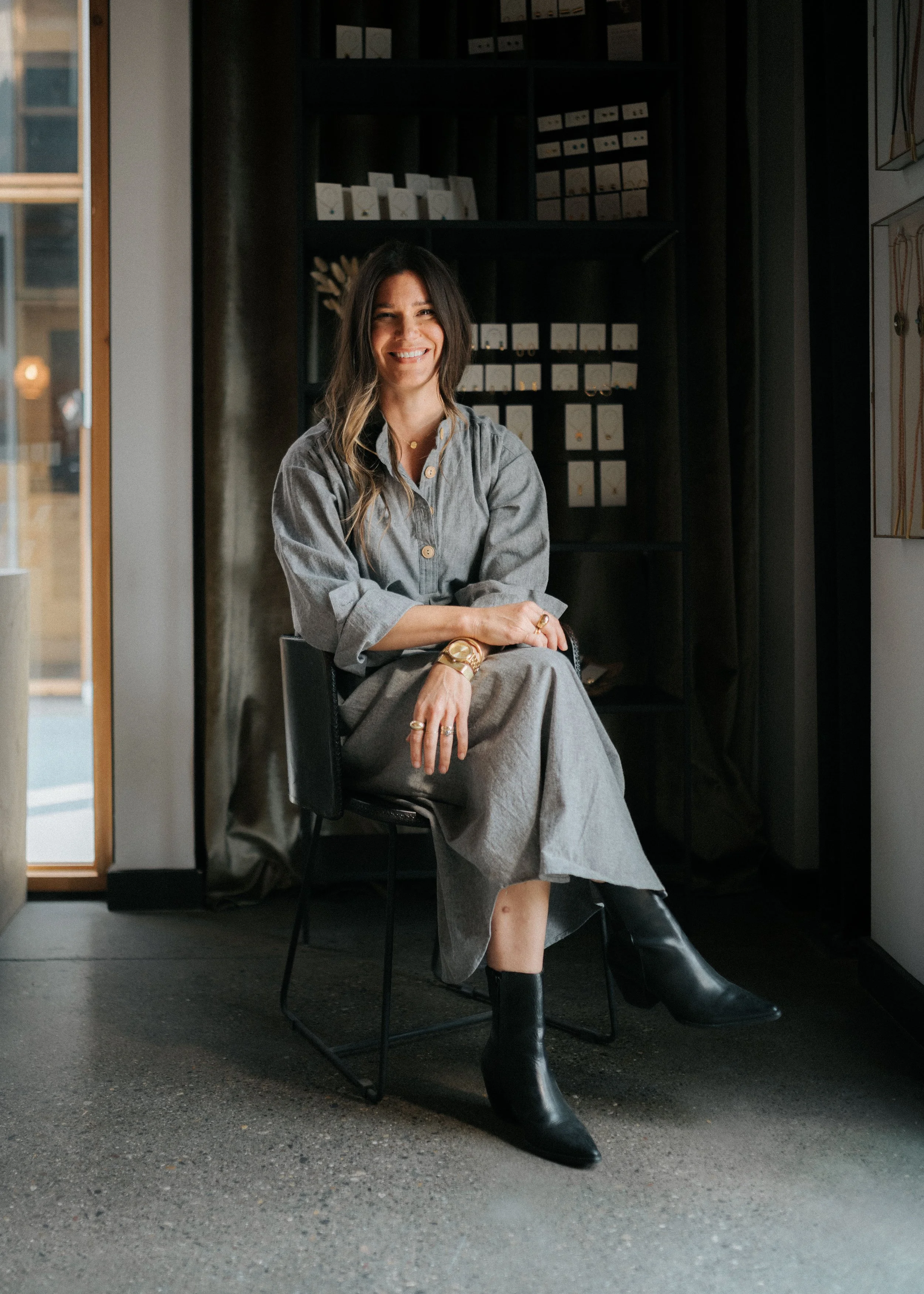
Stacy Townsend
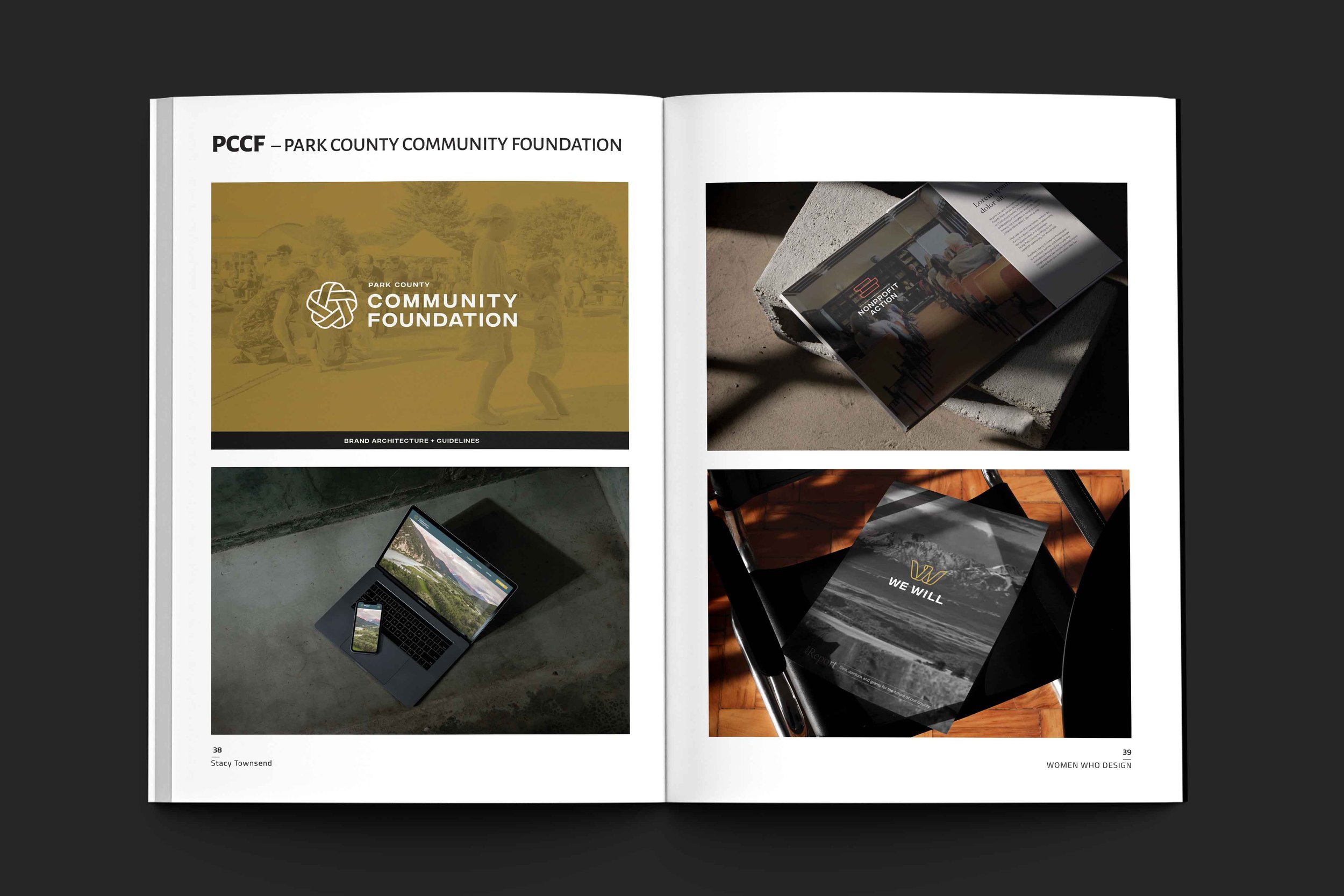
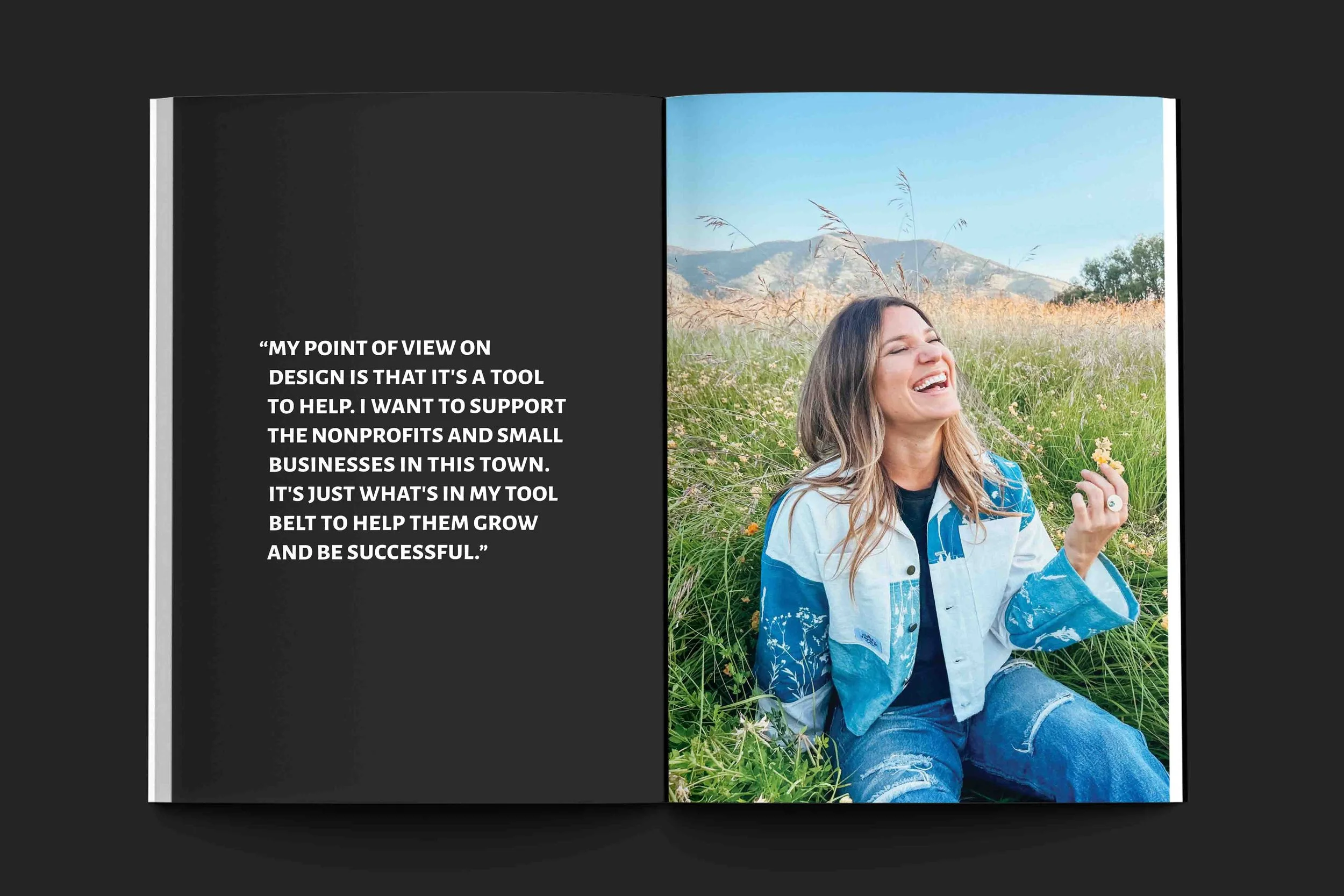
“My point of view on design is that it's a tool to help. I want to support the nonprofits and small businesses in this town. It's just what's in my tool belt to help them grow
and be successful.”
— Stacy Townsend
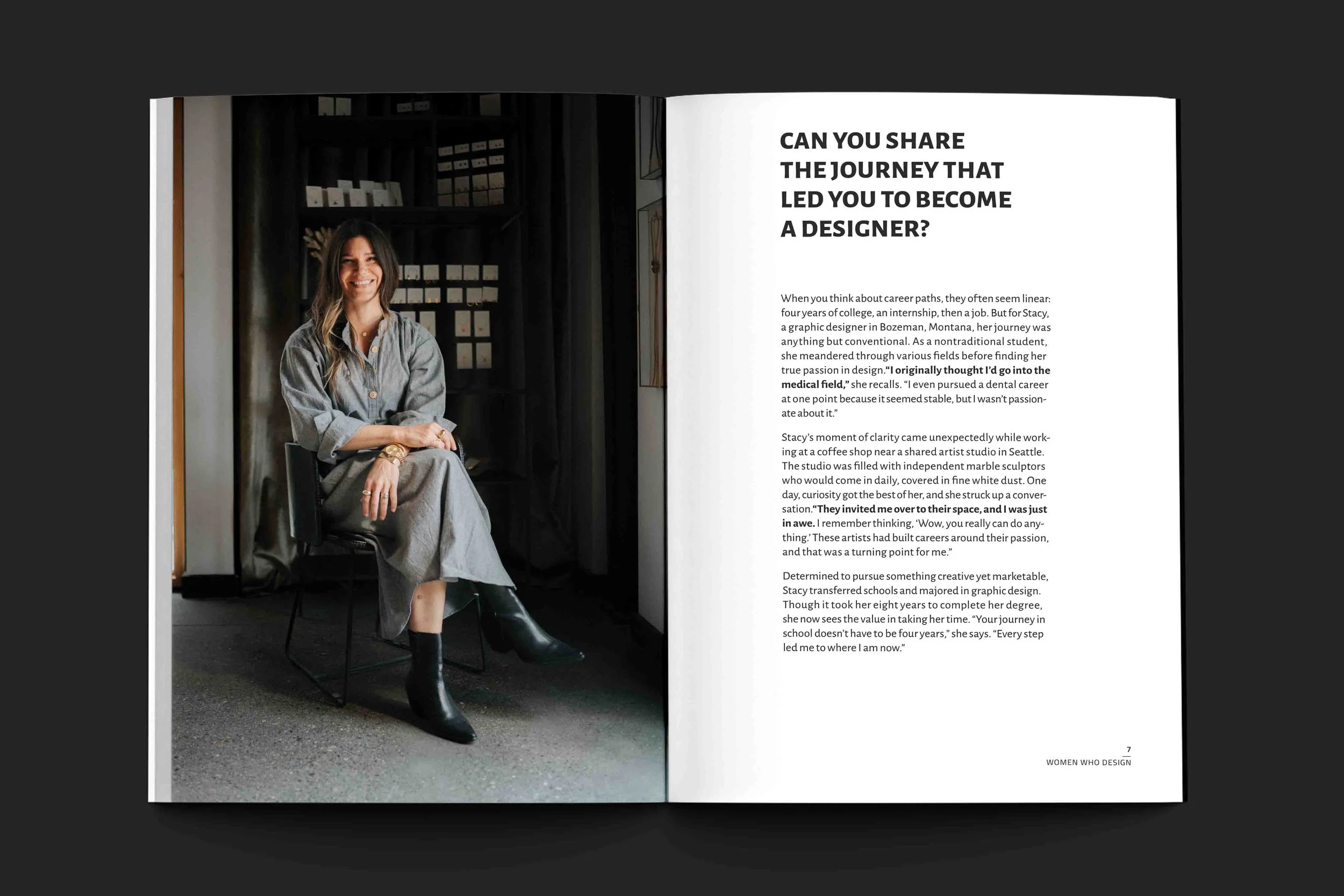
Can you share the journey that led you to become a designer?
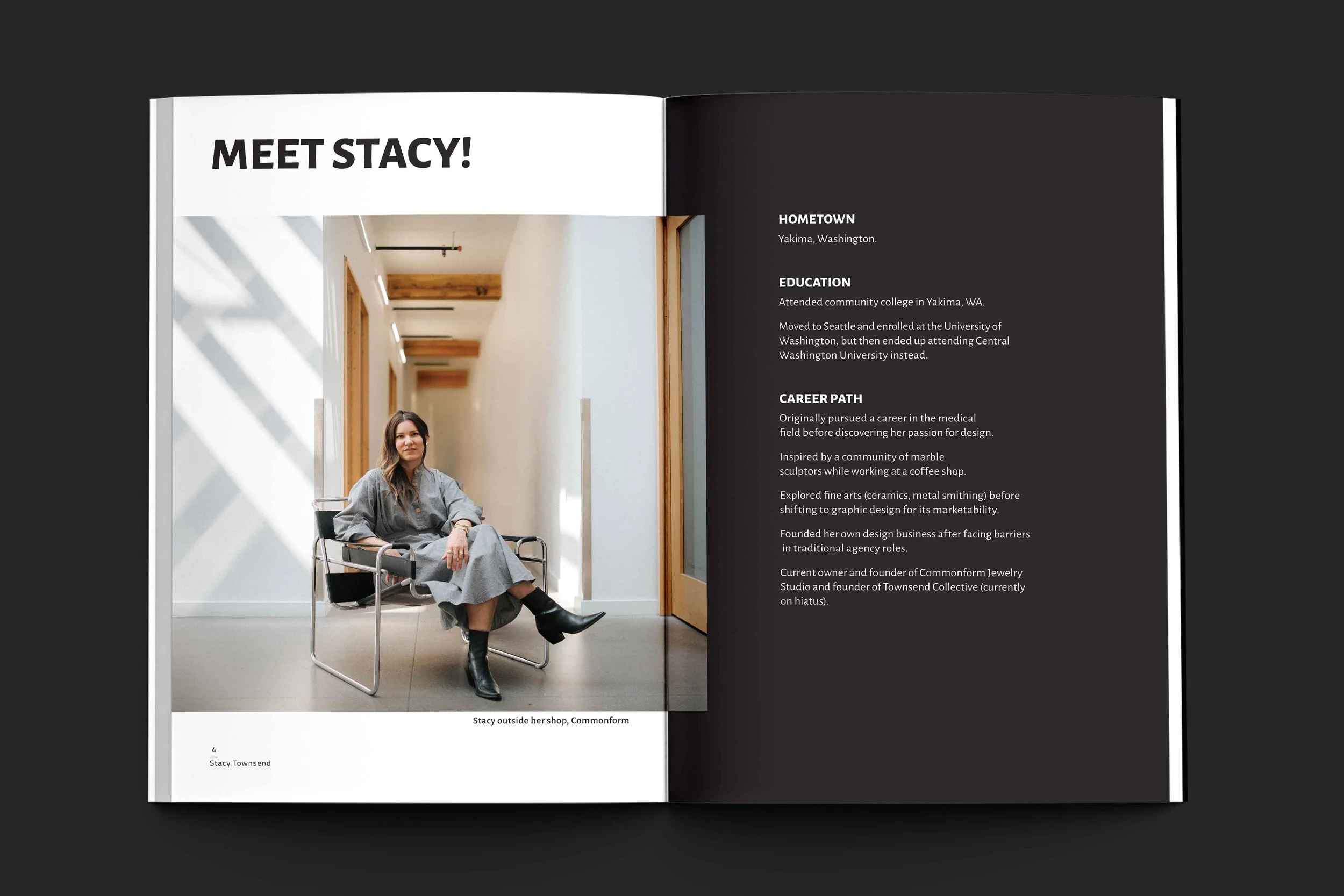
When you think about career paths, they often seem linear: four years of college, an internship, then a job. But for Stacy, a graphic designer in Bozeman, Montana, her journey was anything but conventional. As a nontraditional student, she meandered through various fields before finding her true passion in design.“I originally thought I’d go into the medical field,” she recalls. “I even pursued a dental career at one point because it seemed stable, but I wasn’t passionate about it.”
Stacy’s moment of clarity came unexpectedly while working at a coffee shop near a shared artist studio in Seattle. The studio was filled with independent marble sculptors who would come in daily, covered in fine white dust. One day, curiosity got the best of her, and she struck up a conversation.“They invited me over to their space, and I was just in awe. I remember thinking, ‘Wow, you really can do anything.’ These artists had built careers around their passion, and that was a turning point for me.”
Determined to pursue something creative yet marketable, Stacy transferred schools and majored in graphic design. Though it took her eight years to complete her degree, she now sees the value in taking her time. “Your journey in school doesn’t have to be four years,” she says. “Every step led me to where I am now.”
What is it like to be a woman designer in Bozeman?
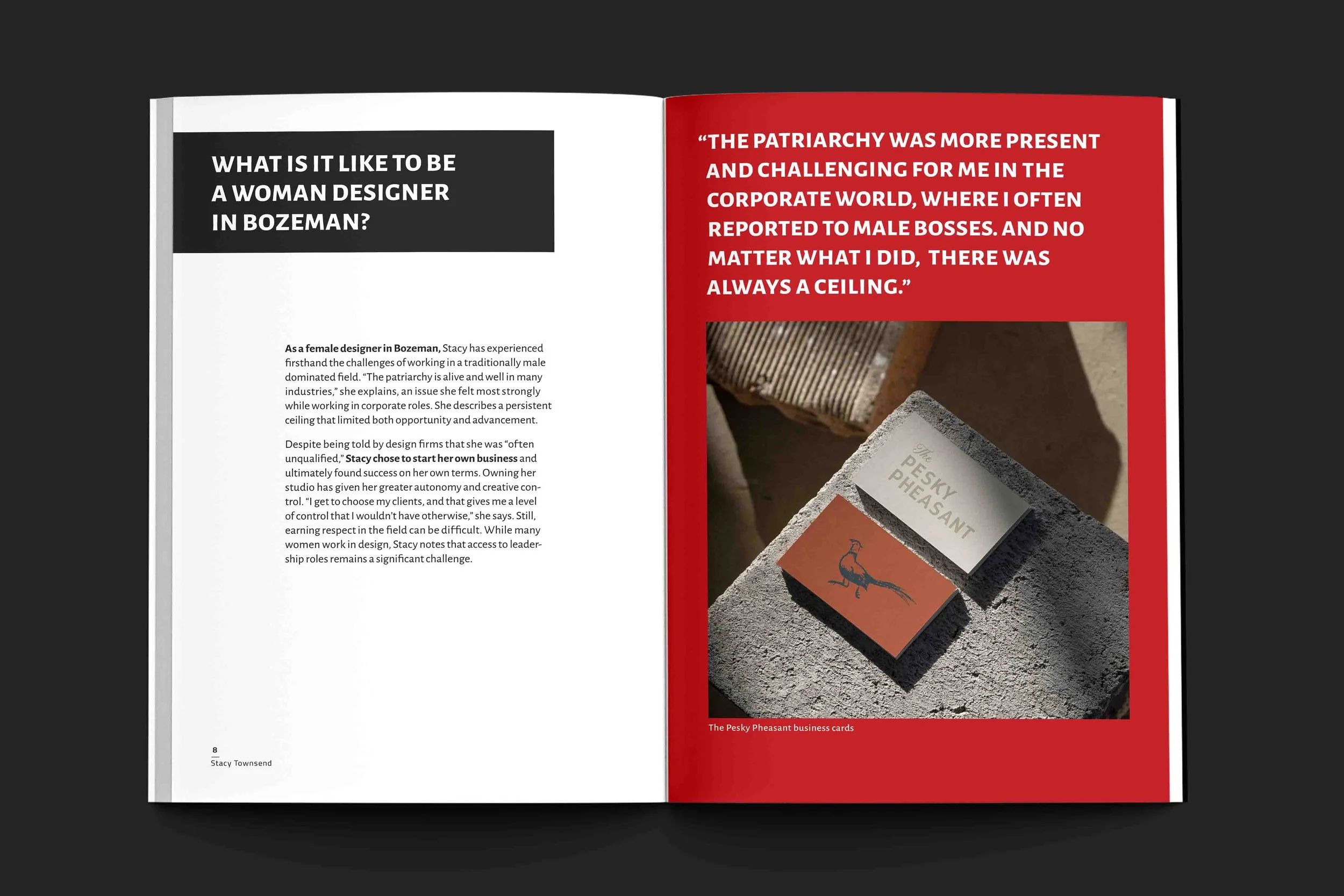
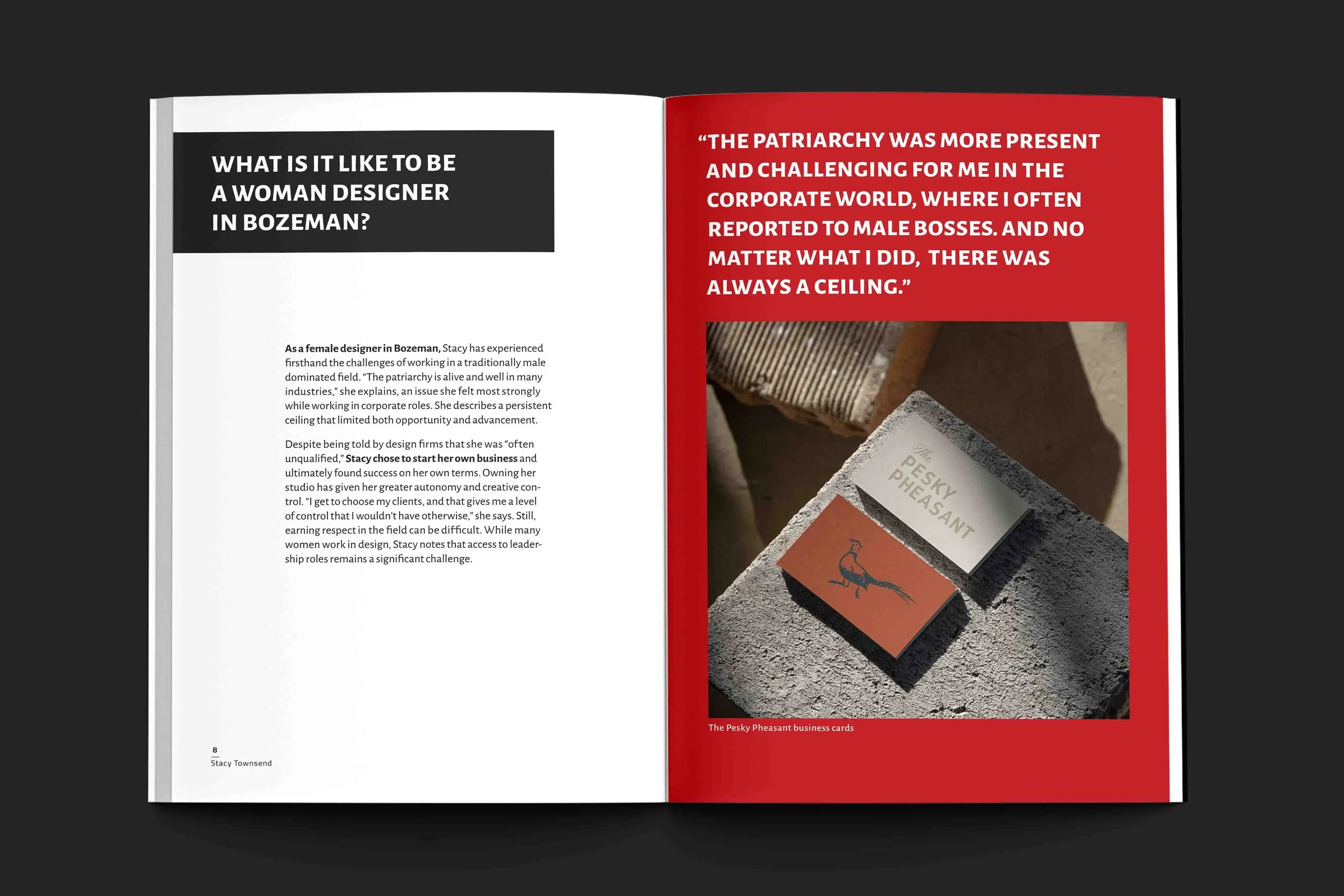
As a female designer in Bozeman, Stacy has experienced firsthand the challenges of working in a traditionally male dominated field. “The patriarchy is alive and well in many industries,” she explains, an issue she felt most strongly while working in corporate roles. She describes a persistent ceiling that limited both opportunity and advancement.
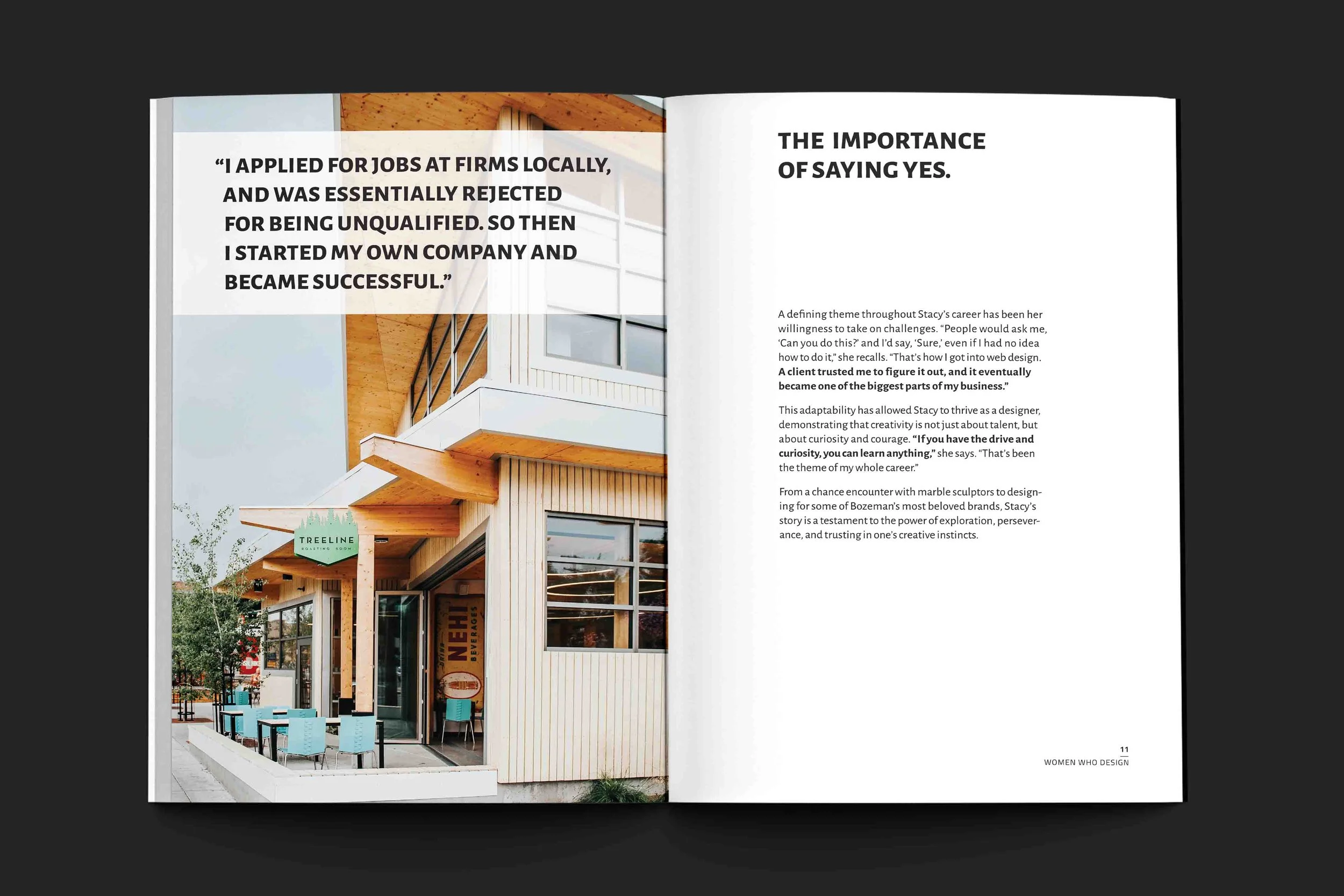
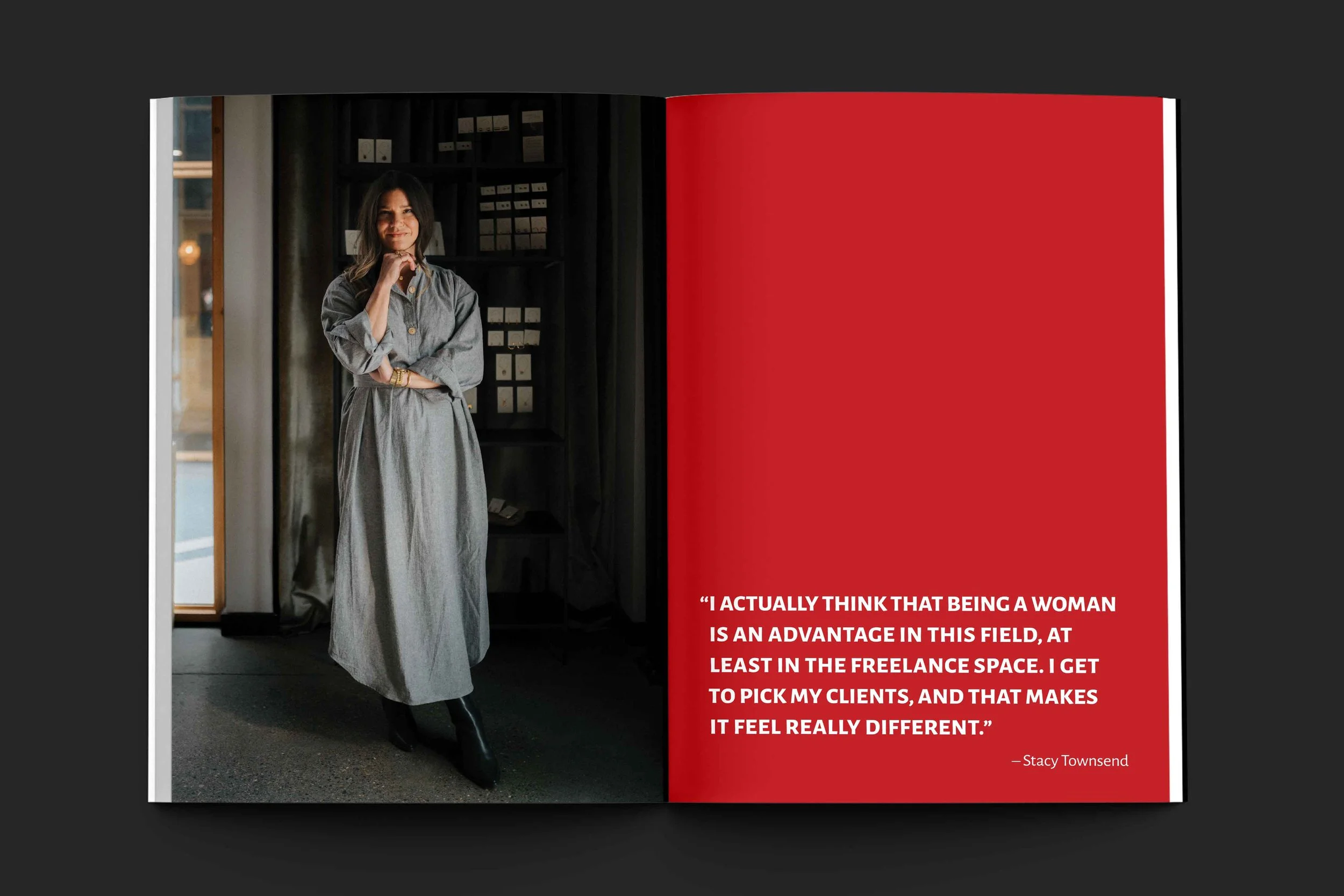
Despite being told by design firms that she was “often unqualified,” Stacy chose to start her own business and ultimately found success on her own terms. Owning her studio has given her greater autonomy and creative control. “I get to choose my clients, and that gives me a level of control that I wouldn’t have otherwise,” she says. Still, earning respect in the field can be difficult. While many women work in design, Stacy notes that access to leadership roles remains a significant challenge.
The importance of saying yes.
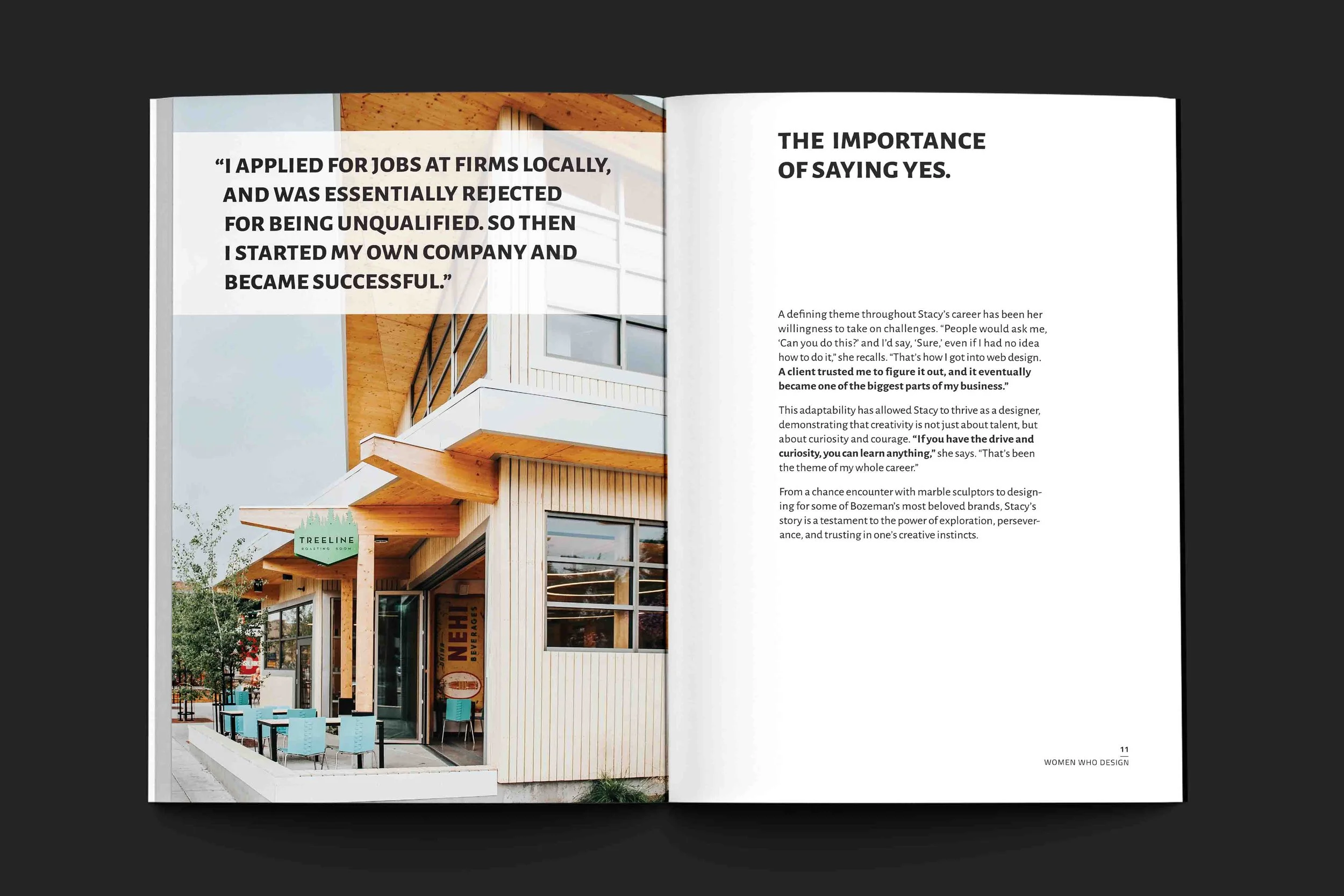
A defining theme throughout Stacy’s career has been her willingness to take on challenges. “People would ask me, ‘Can you do this?’ and I’d say, ‘Sure,’ even if I had no idea how to do it,” she recalls. “That’s how I got into web design. A client trusted me to figure it out, and it eventually became one of the biggest parts of my business.”
This adaptability has allowed Stacy to thrive as a designer, demonstrating that creativity is not just about talent, but about curiosity and courage. “If you have the drive and curiosity, you can learn anything,” she says. “That’s been the theme of my whole career.”
From a chance encounter with marble sculptors to designing for some of Bozeman’s most beloved brands, Stacy’s story is a testament to the power of exploration, perseverance, and trusting in one’s creative instincts.
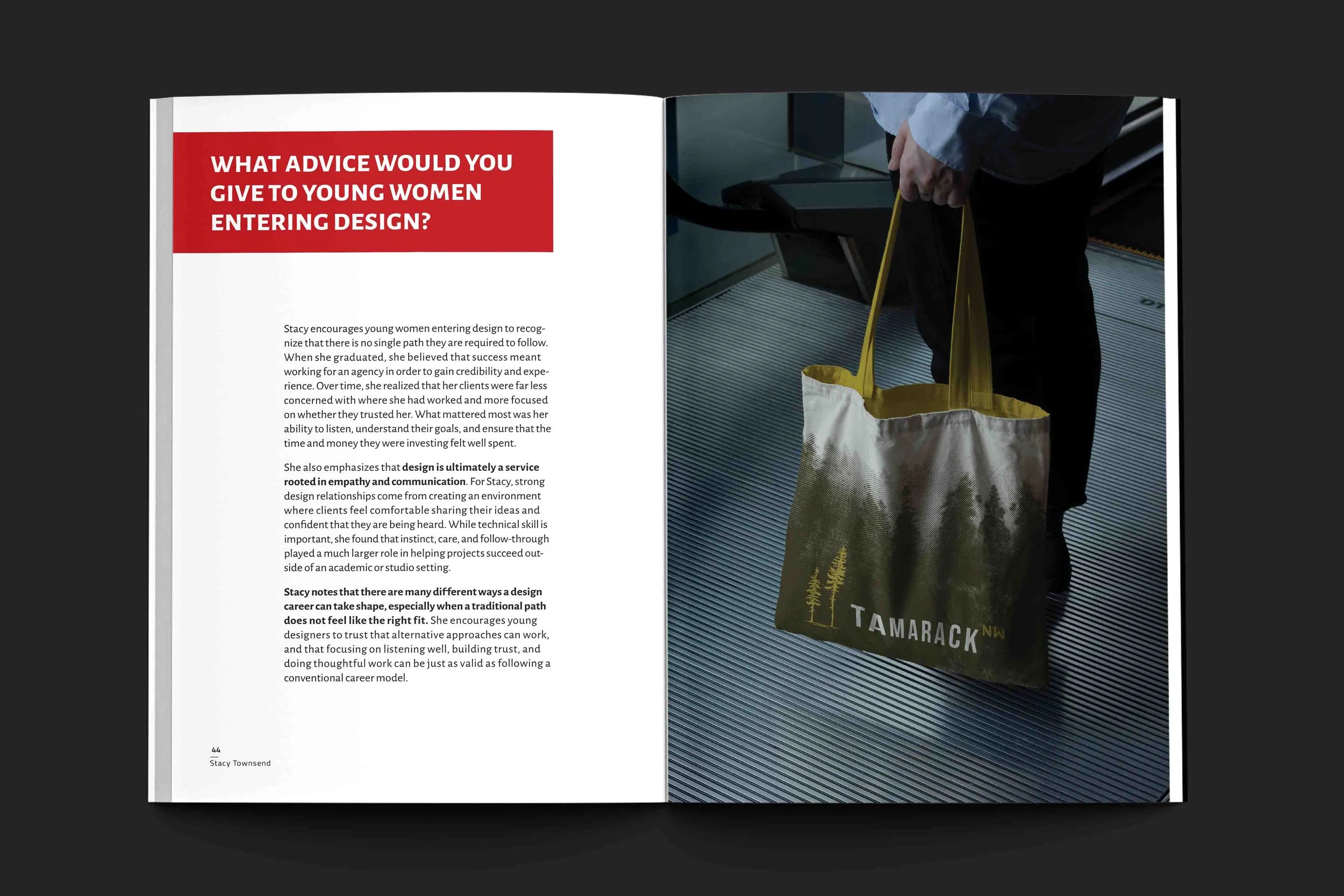
What advice would you give to young women entering design?
When you think about career paths, they often seem linear: four years of college, an internship, then a job. But for Stacy, a graphic designer in Bozeman, Montana, her journey was anything but conventional. As a nontraditional student, she meandered through various fields before finding her true passion in design.“I originally thought I’d go into the medical field,” she recalls. “I even pursued a dental career at one point because it seemed stable, but I wasn’t passionate about it.”
Stacy’s moment of clarity came unexpectedly while working at a coffee shop near a shared artist studio in Seattle. The studio was filled with independent marble sculptors who would come in daily, covered in fine white dust. One day, curiosity got the best of her, and she struck up a conversation.“They invited me over to their space, and I was just in awe. I remember thinking, ‘Wow, you really can do anything.’ These artists had built careers around their passion, and that was a turning point for me.”
Determined to pursue something creative yet marketable, Stacy transferred schools and majored in graphic design. Though it took her eight years to complete her degree, she now sees the value in taking her time. “Your journey in school doesn’t have to be four years,” she says. “Every step led me to where I am now.”
“The patriarchy was more present and challenging for me in the corporate world, where I often reported to male bosses. And no
matter what I did, there was always a ceiling.”
— Stacy Townsend