
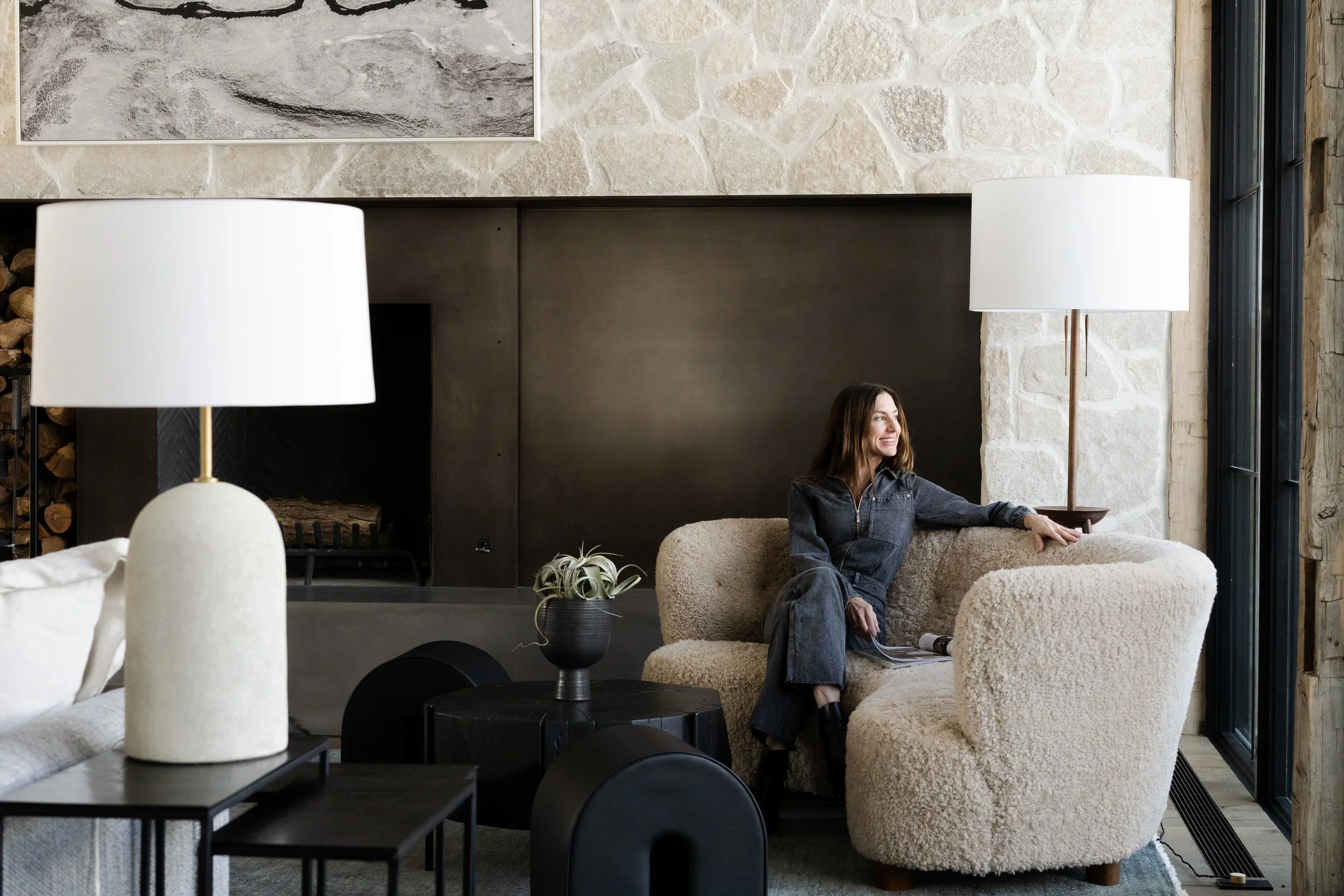
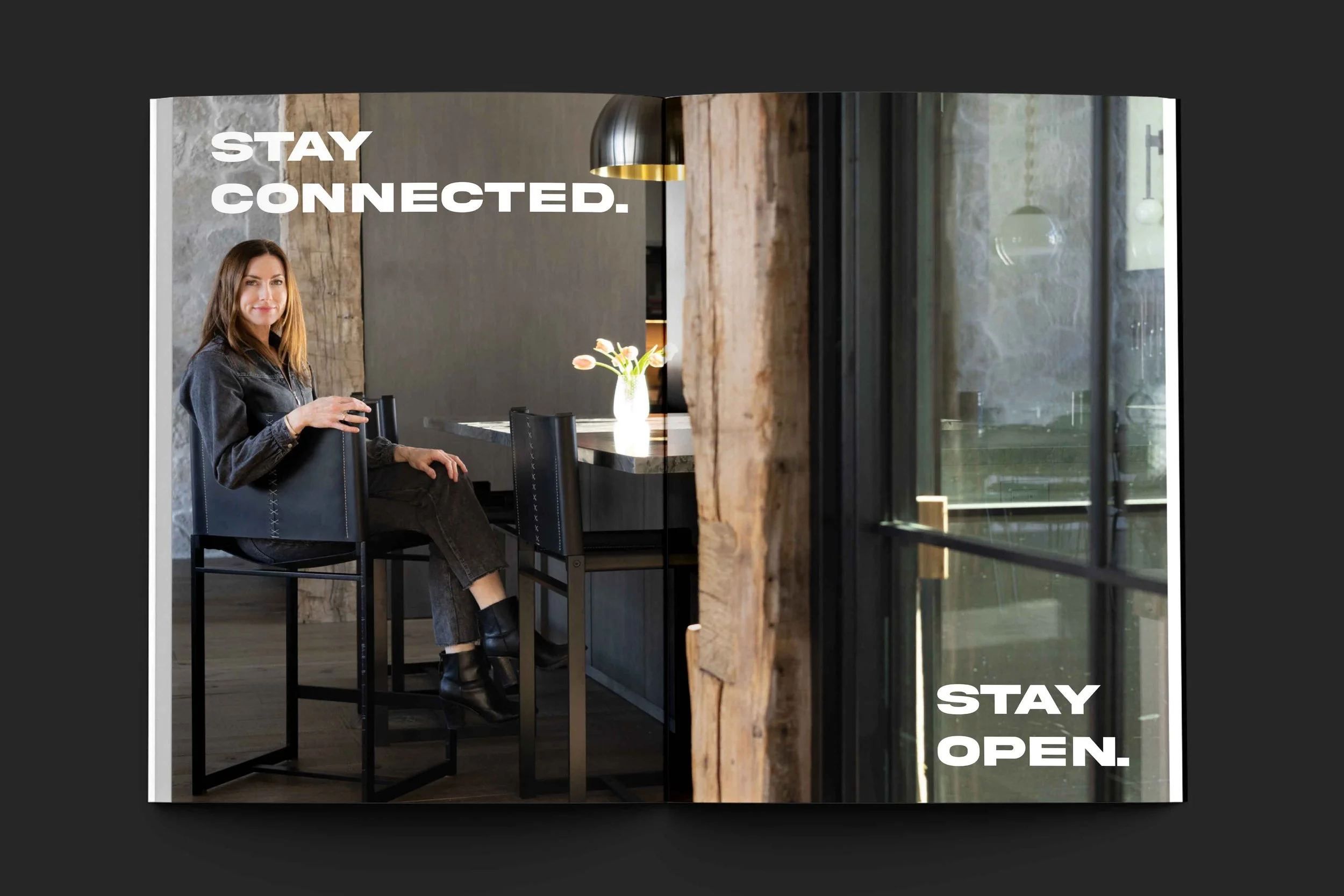
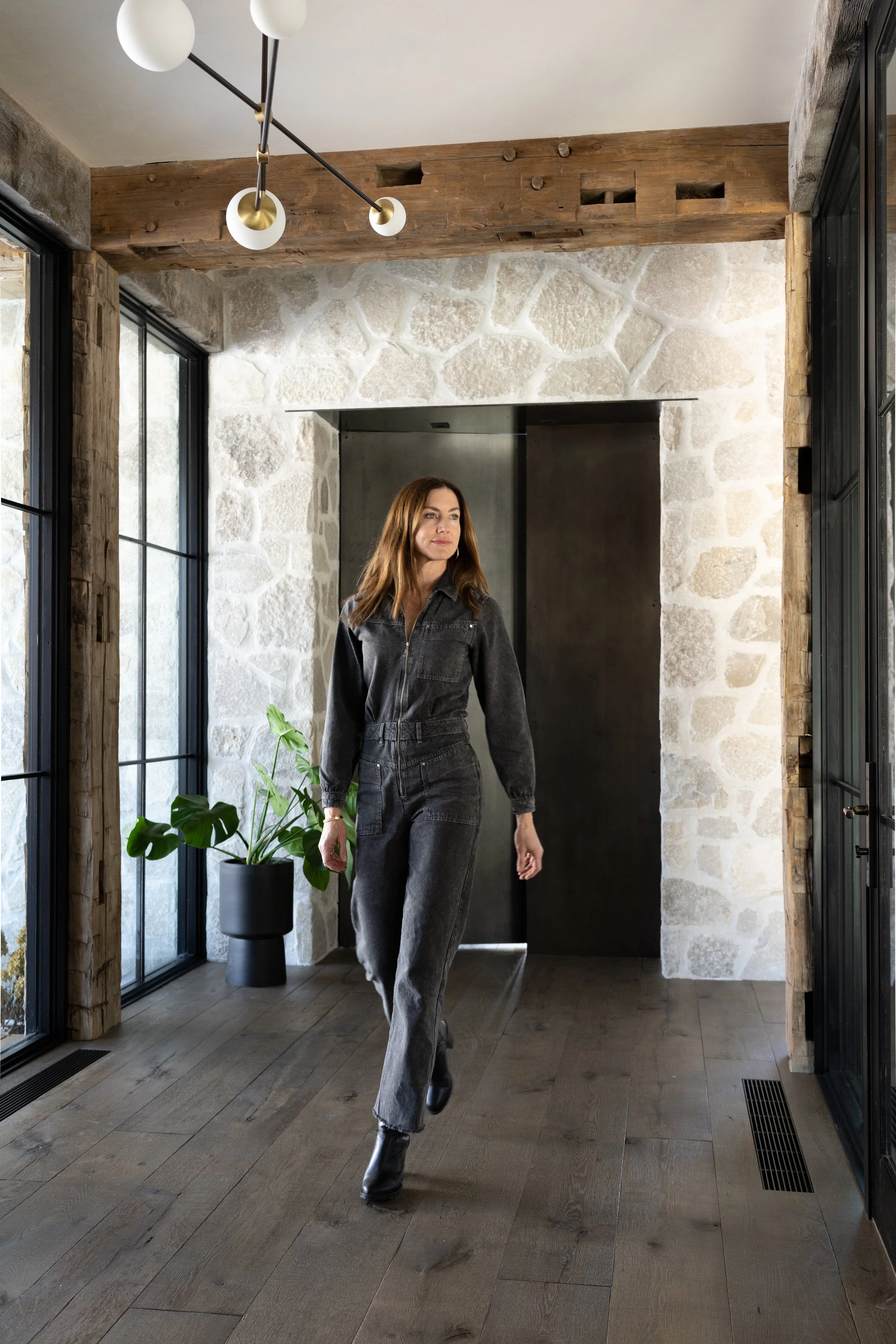
Jennifer Hoey
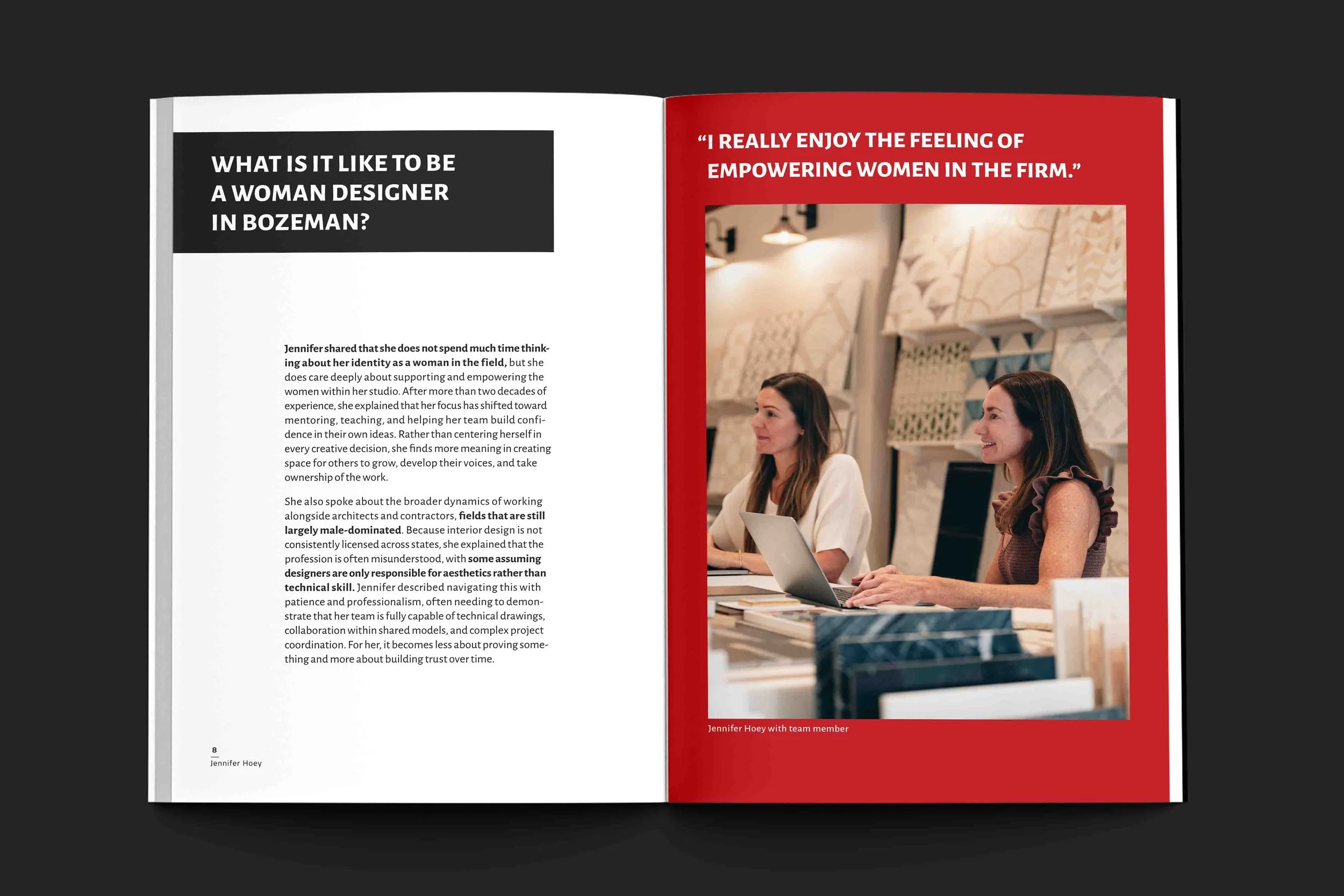
“I really enjoy the feeling of empowering women in the firm.”
— Jennifer Hoey
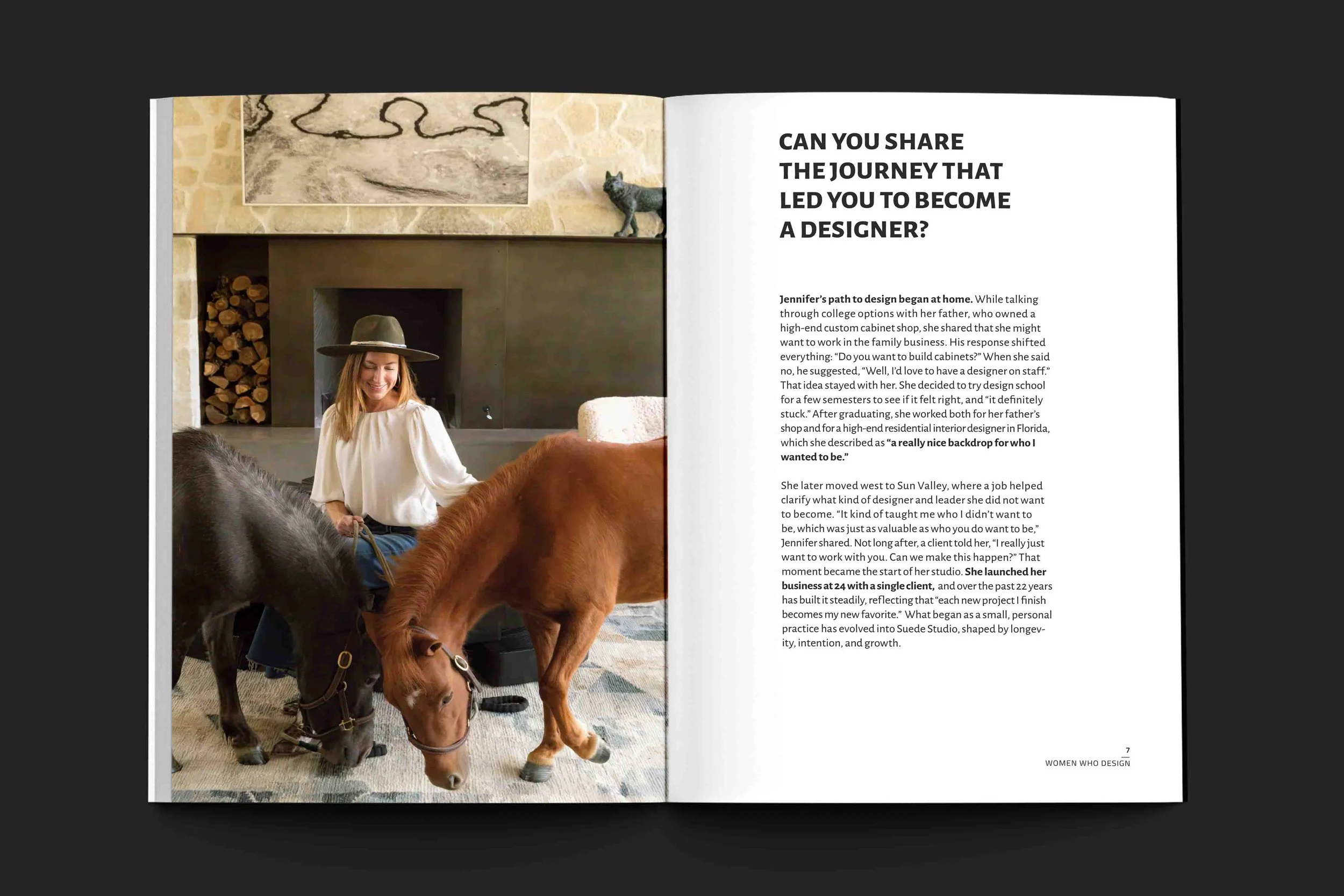
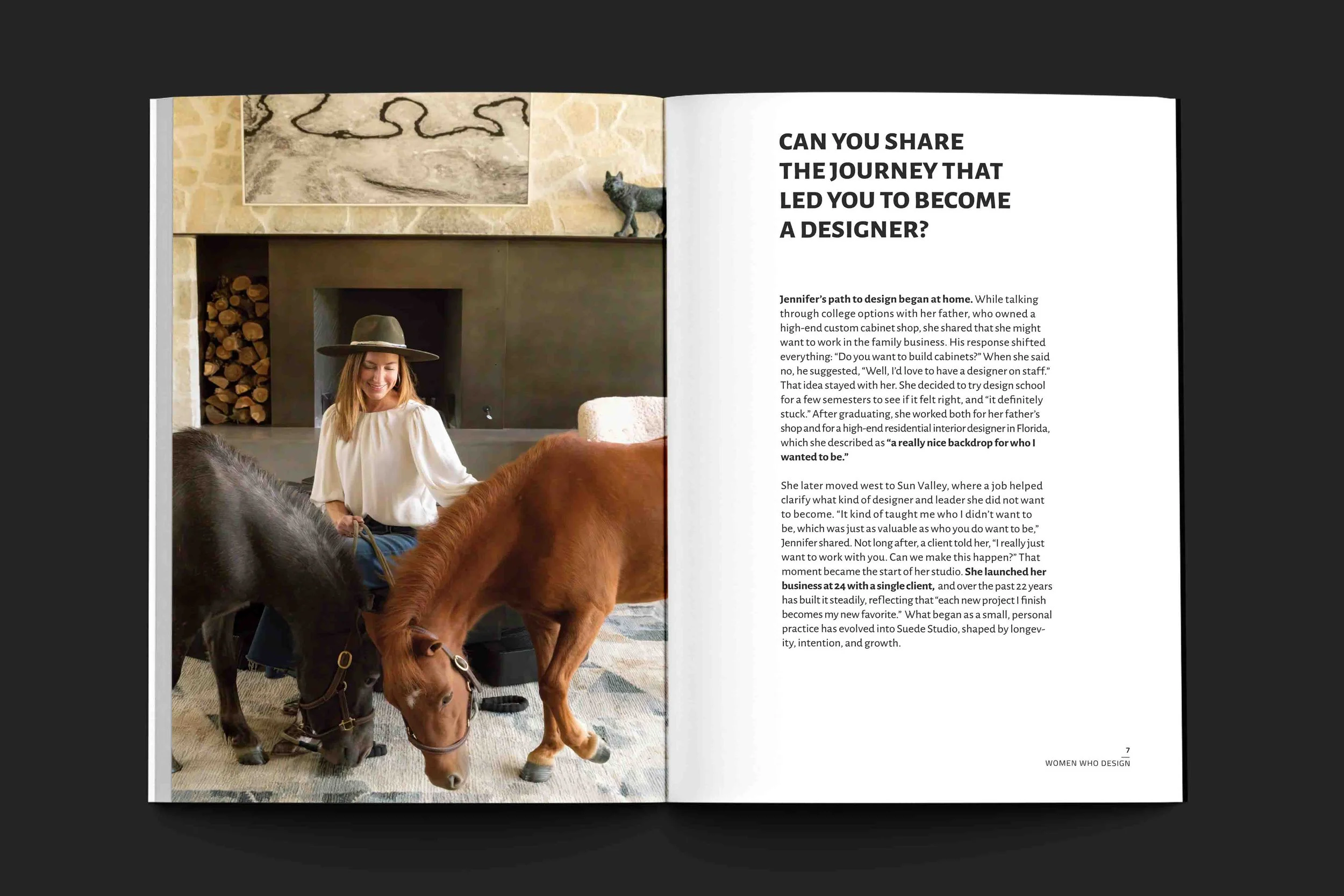
Can you share the journey that led you to become a designer?
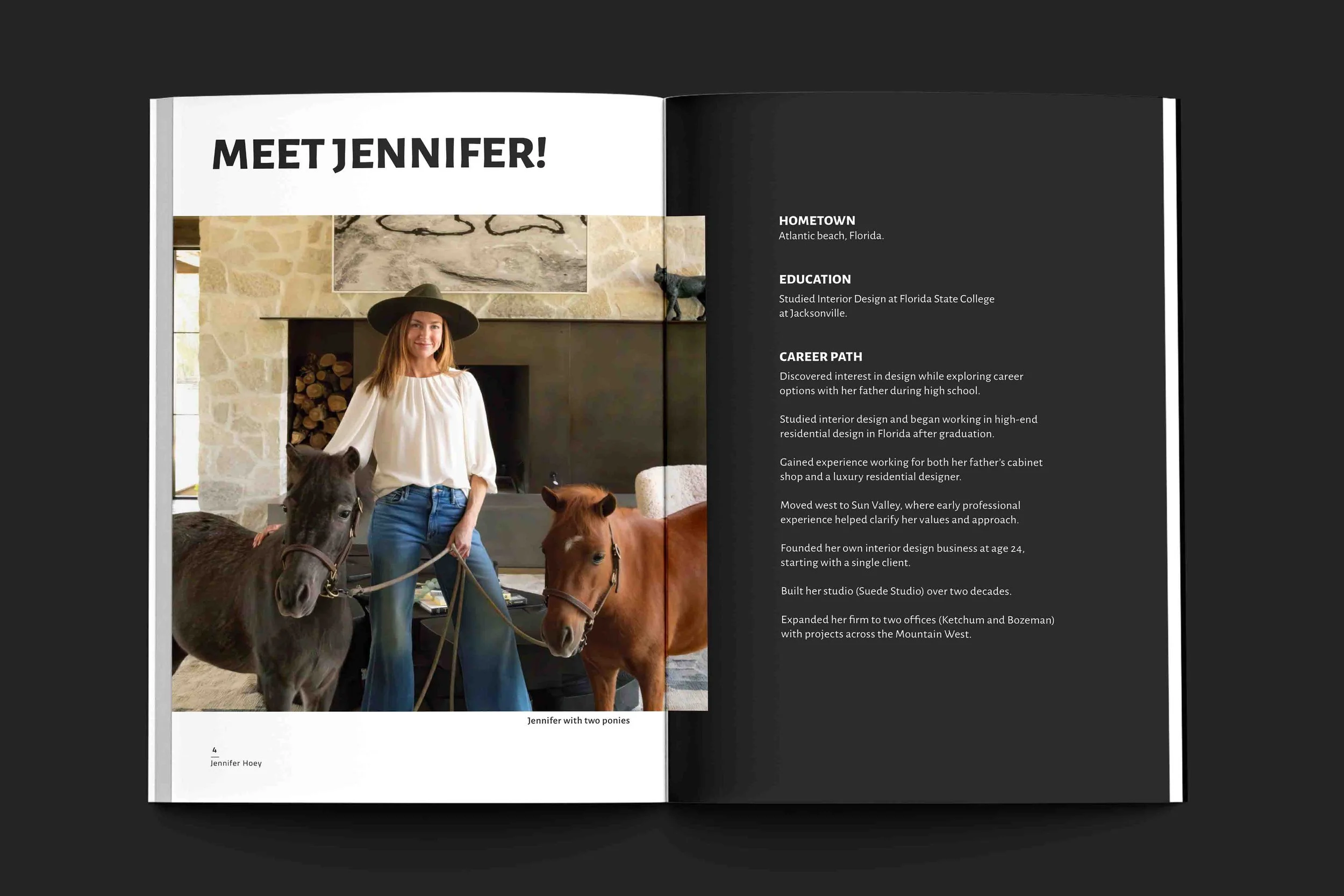
Jennifer’s path to design began at home. While talking through college options with her father, who owned a high-end custom cabinet shop, she shared that she might want to work in the family business. His response shifted everything: “Do you want to build cabinets?” When she said no, he suggested, “Well, I’d love to have a designer on staff.” That idea stayed with her. She decided to try design school for a few semesters to see if it felt right, and “it definitely stuck.” After graduating, she worked both for her father’s shop and for a high-end residential interior designer in Florida, which she described as “a really nice backdrop for who I wanted to be.”
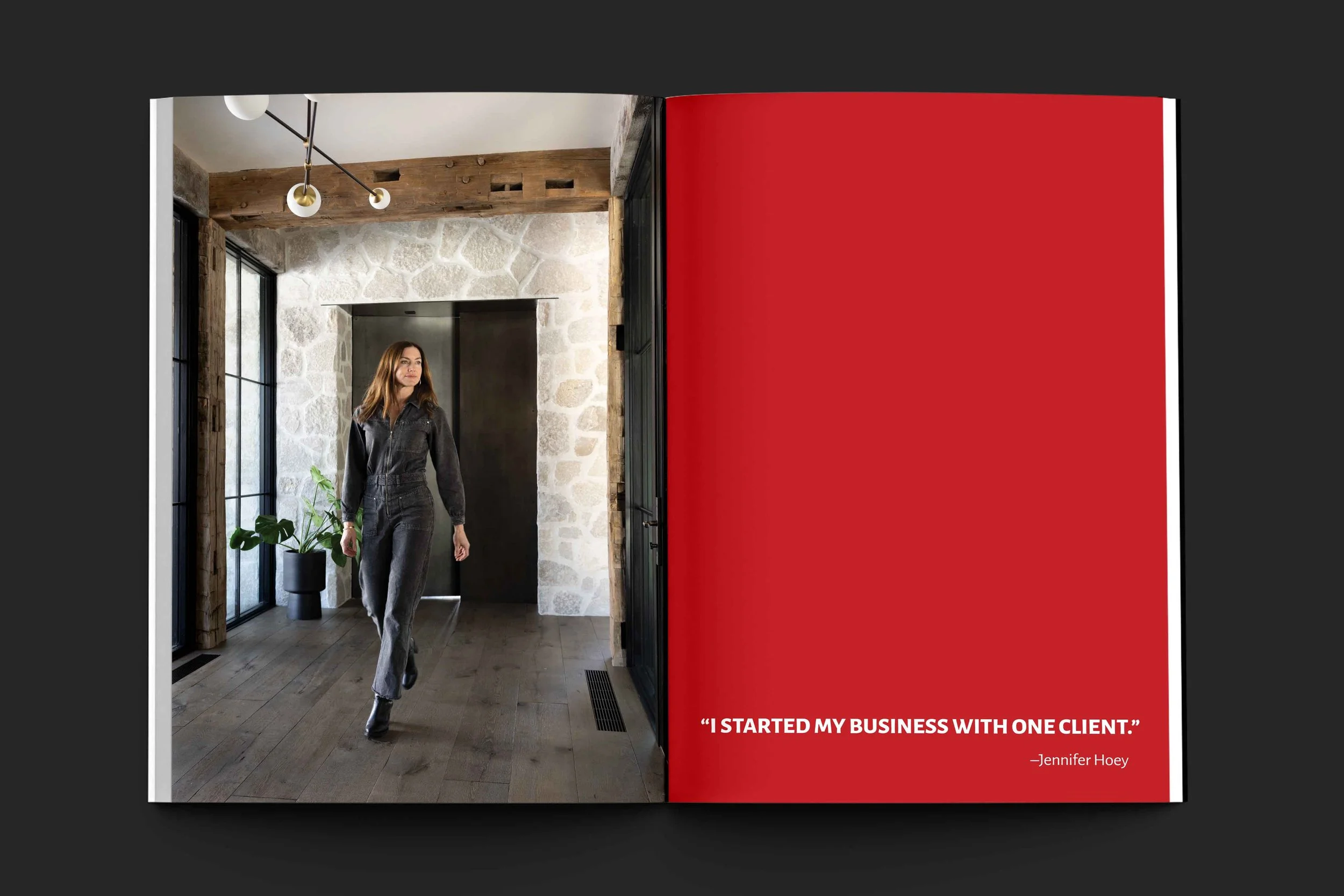
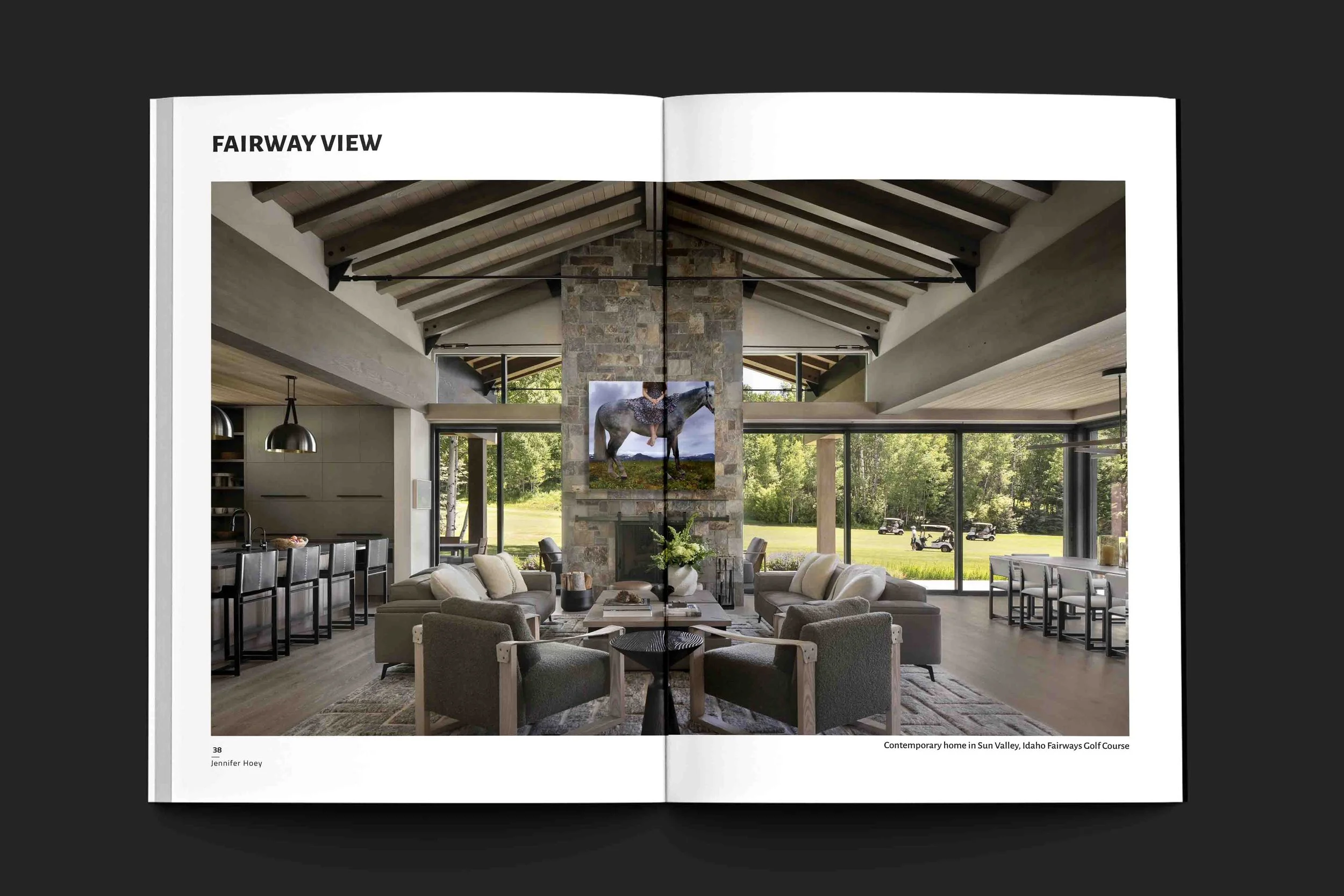
She later moved west to Sun Valley, where a job helped clarify what kind of designer and leader she did not want to become. “It kind of taught me who I didn’t want to be, which was just as valuable as who you do want to be,” Jennifer shared. Not long after, a client told her, “I really just want to work with you. Can we make this happen?” That moment became the start of her studio. She launched her business at 24 with a single client, and over the past 22 years has built it steadily, reflecting that “each new project I finish becomes my new favorite.” What began as a small, personal practice has evolved into Suede Studio, shaped by longevity, intention, and growth.
What is it like to be a woman designer in Bozeman?
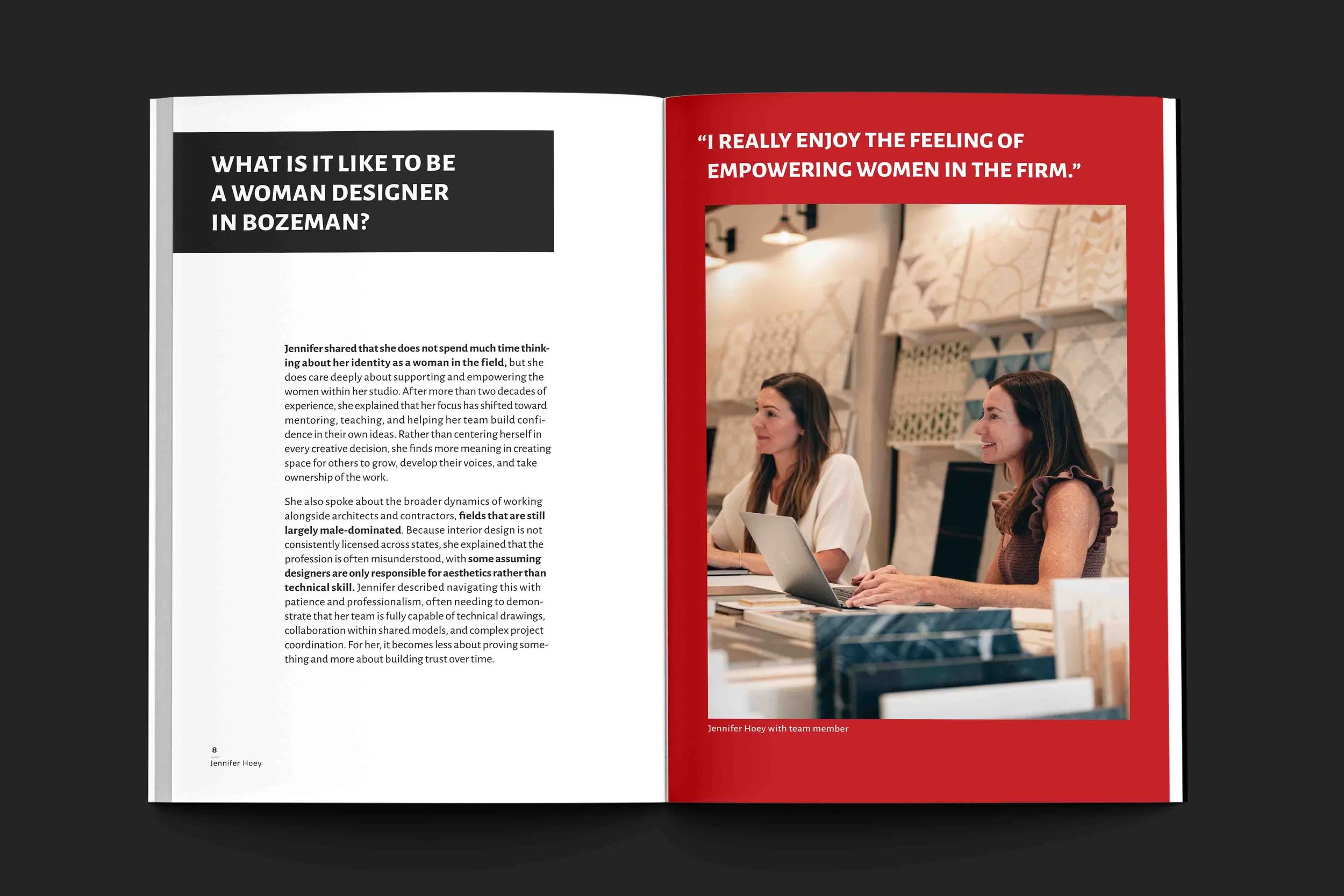
Jennifer shared that she does not spend much time thinking about her identity as a woman in the field, but she does care deeply about supporting and empowering the women within her studio. After more than two decades of experience, she explained that her focus has shifted toward mentoring, teaching, and helping her team build confidence in their own ideas. Rather than centering herself in every creative decision, she finds more meaning in creating space for others to grow, develop their voices, and take ownership of the work.
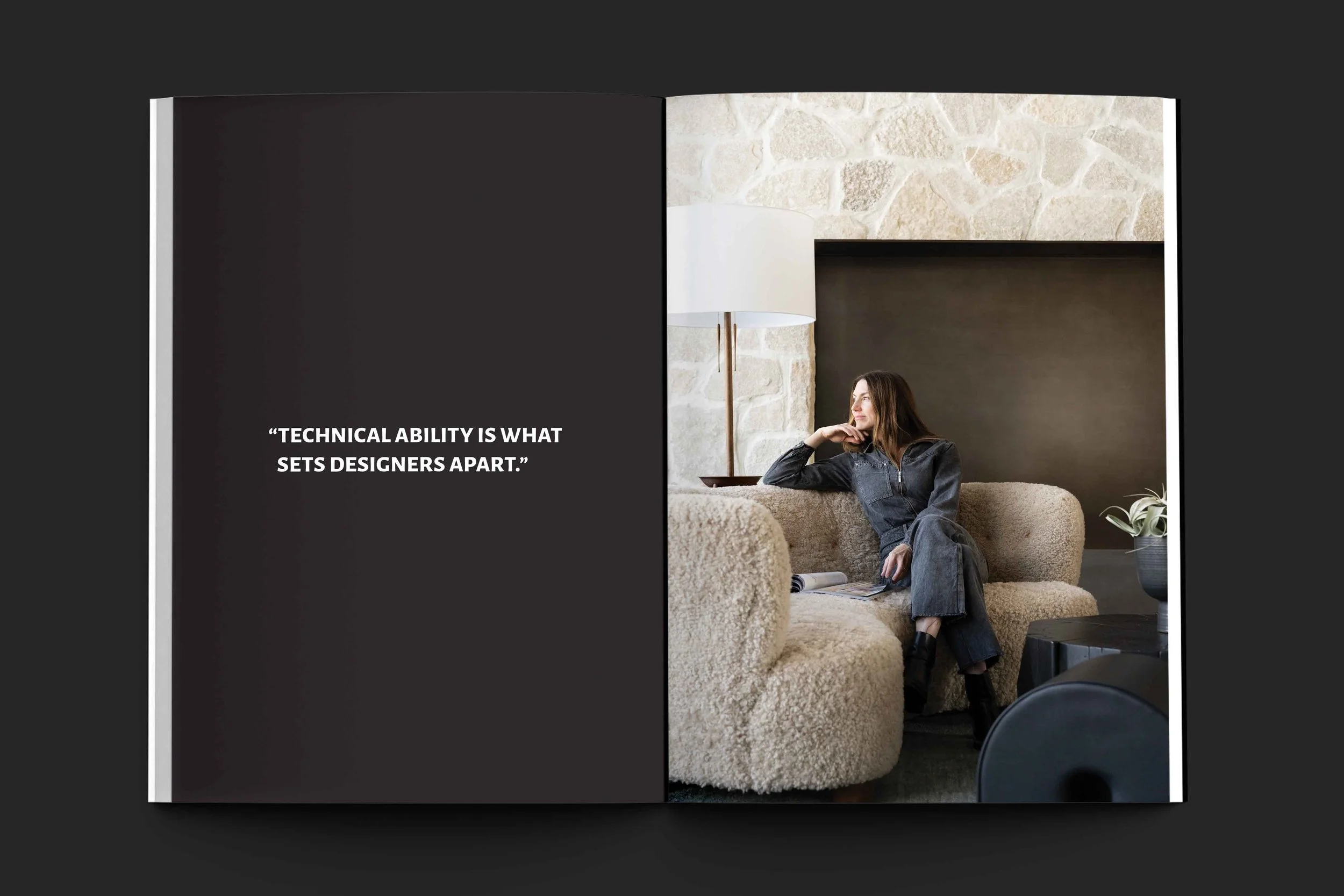
She also spoke about the broader dynamics of working alongside architects and contractors, fields that are still largely male-dominated. Because interior design is not consistently licensed across states, she explained that the profession is often misunderstood, with some assuming designers are only responsible for aesthetics rather than technical skill. Jennifer described navigating this with patience and professionalism, often needing to demonstrate that her team is fully capable of technical drawings, collaboration within shared models, and complex project coordination. For her, it becomes less about proving something and more about building trust over time.
Beyond the work.
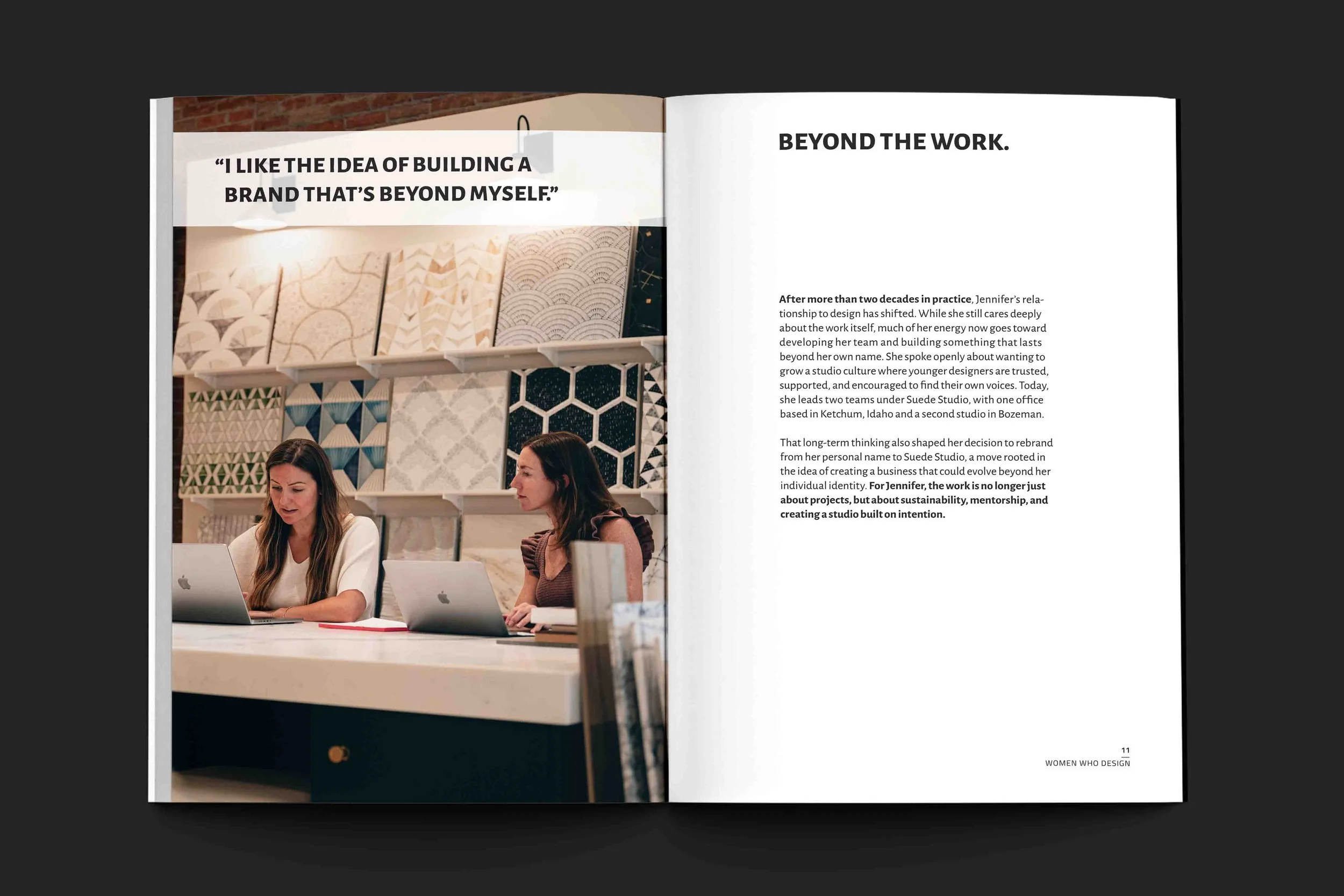
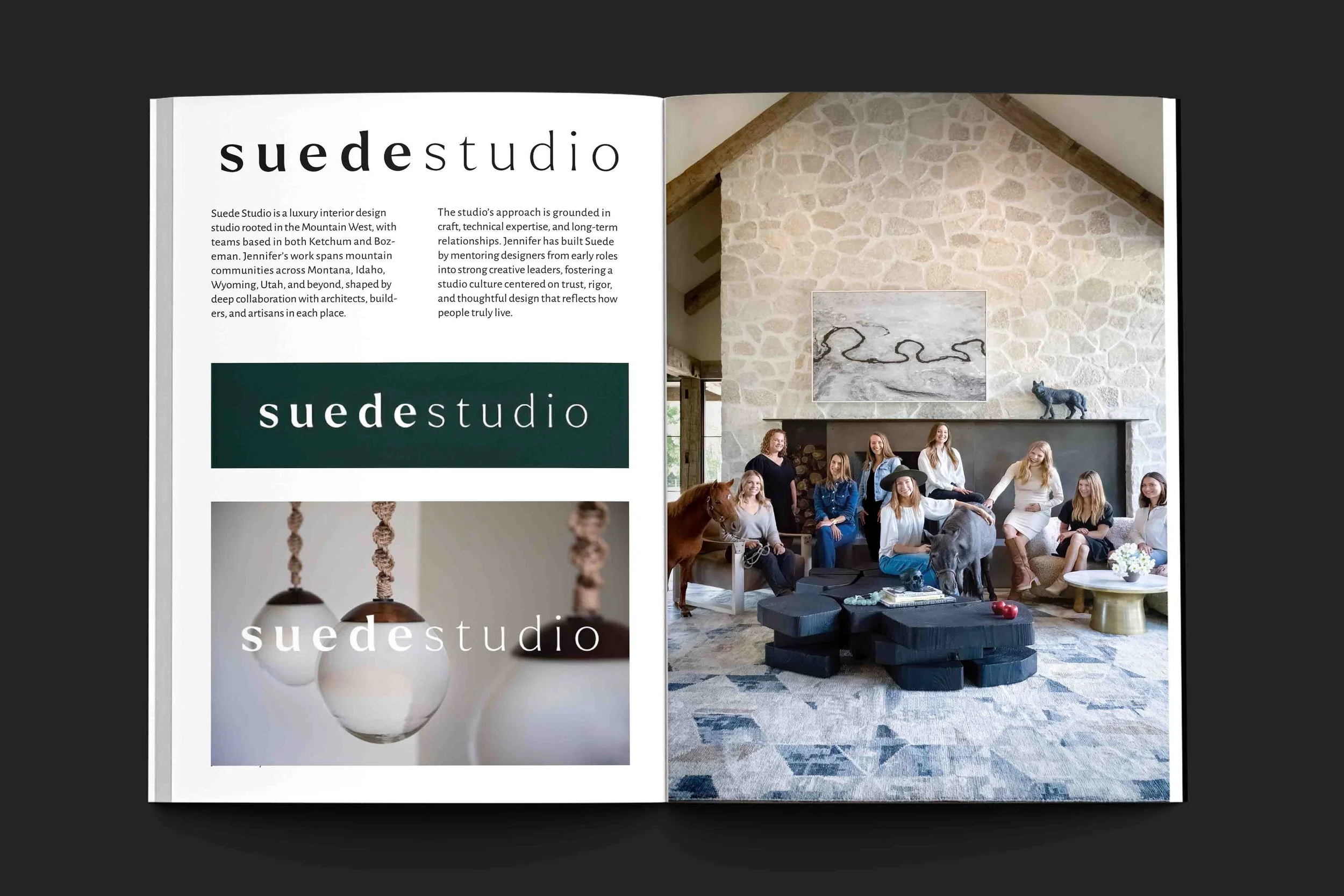
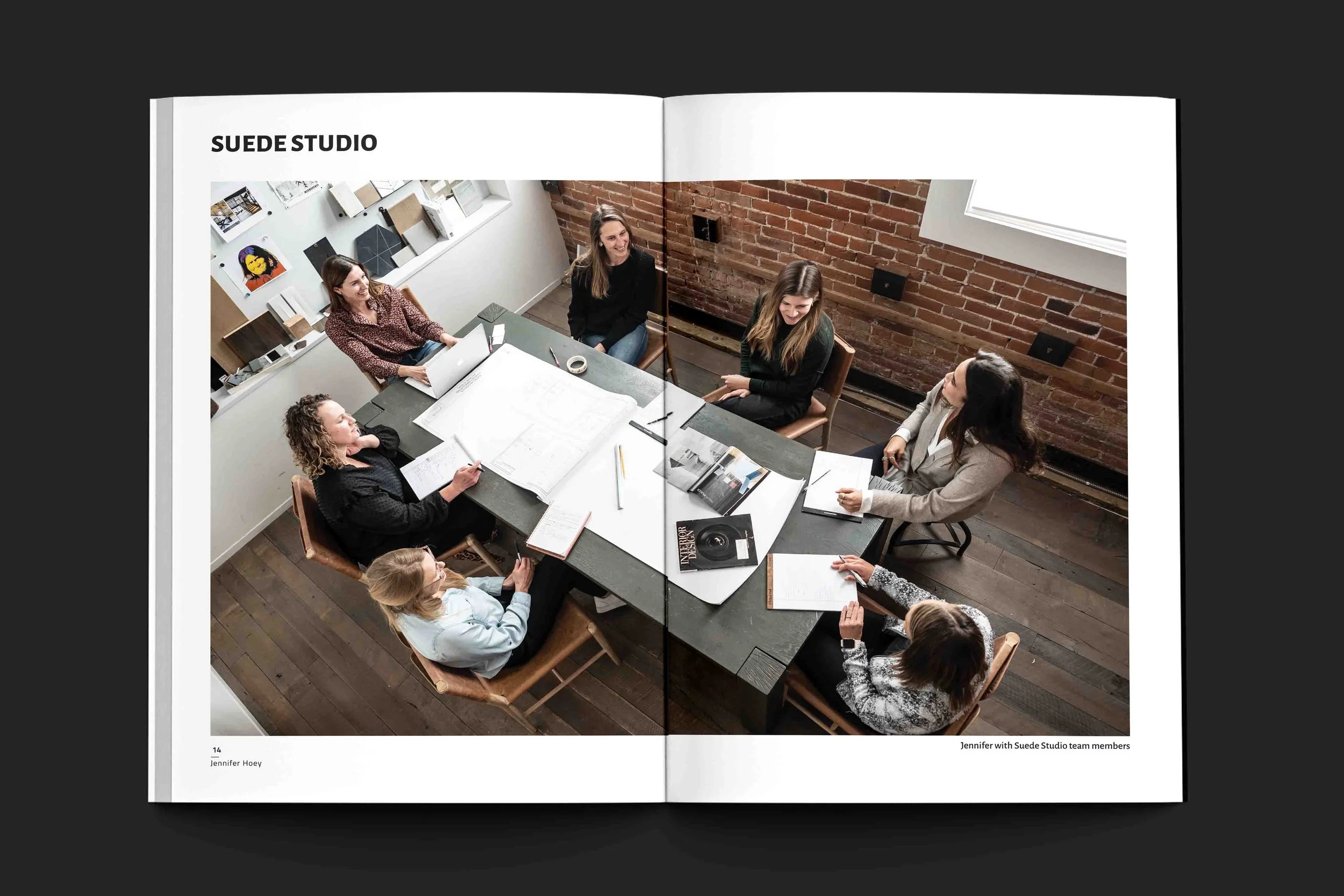
After more than two decades in practice, Jennifer’s relationship to design has shifted. While she still cares deeply about the work itself, much of her energy now goes toward developing her team and building something that lasts beyond her own name. She spoke openly about wanting to grow a studio culture where younger designers are trusted, supported, and encouraged to find their own voices. Today, she leads two teams under Suede Studio, with one office based in Ketchum, Idaho and a second studio in Bozeman.
That long-term thinking also shaped her decision to rebrand from her personal name to Suede Studio, a move rooted in the idea of creating a business that could evolve beyond her individual identity. For Jennifer, the work is no longer just about projects, but about sustainability, mentorship, and creating a studio built on intention.
What advice would you give to young women entering design?
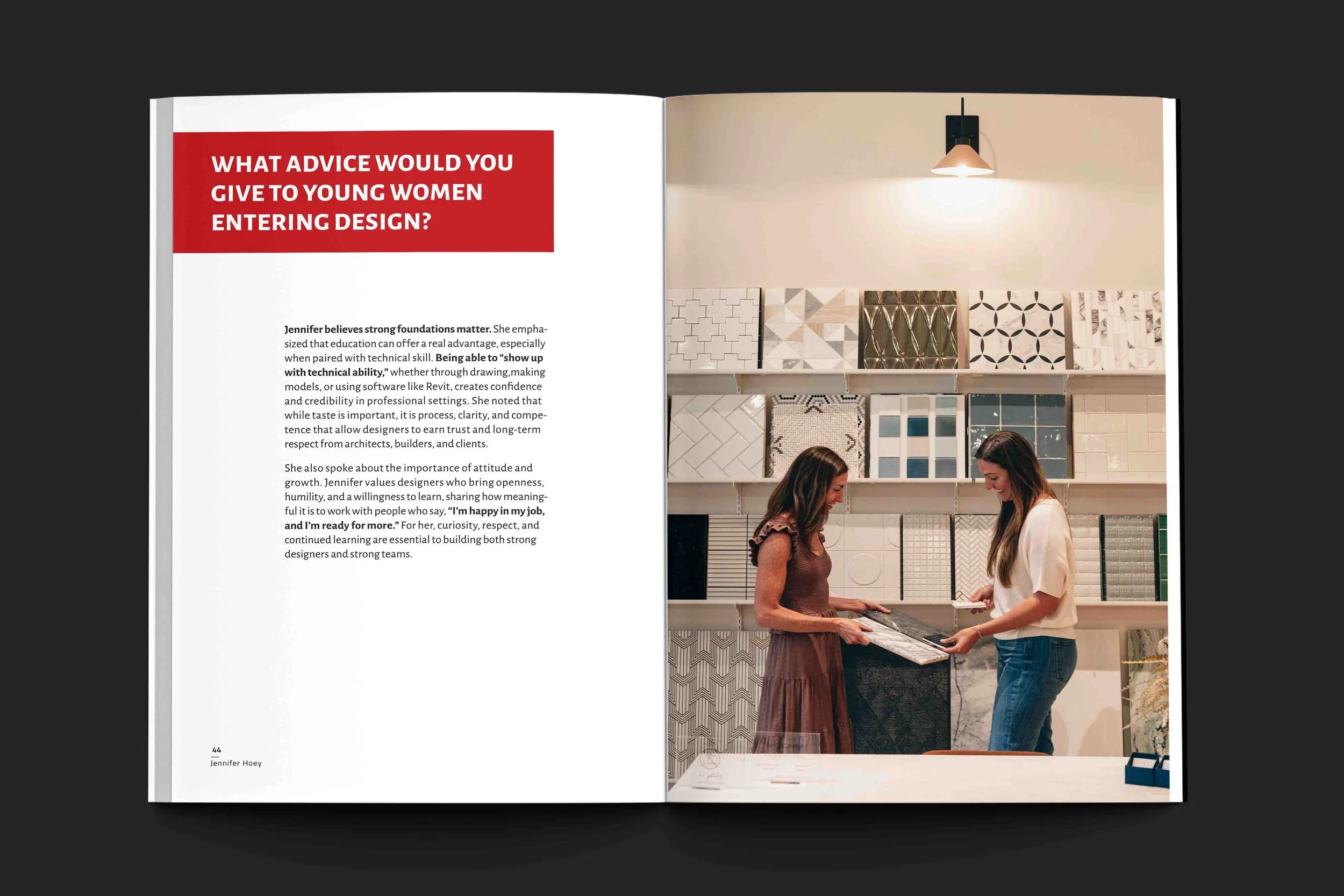
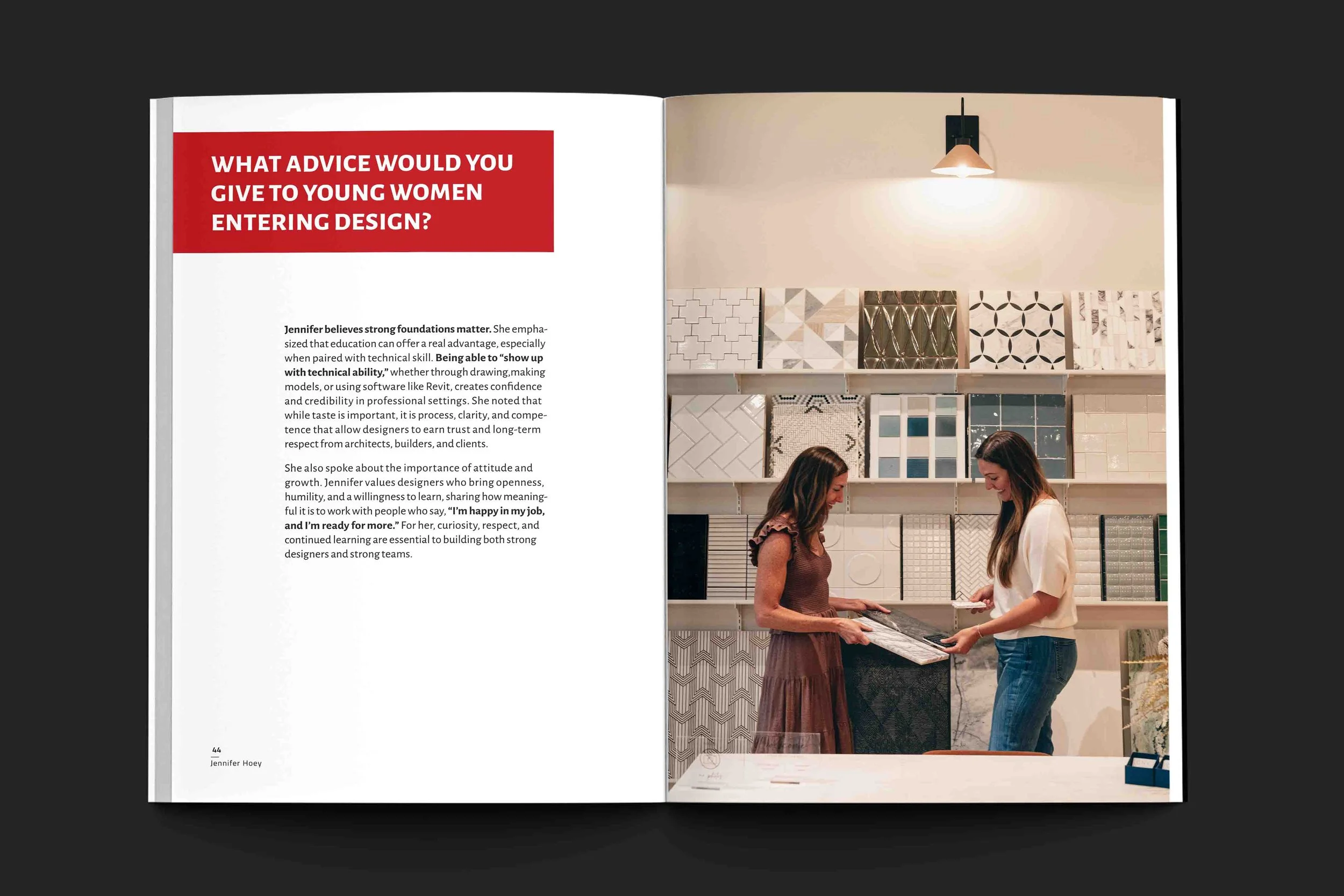
Jennifer believes strong foundations matter. She emphasized that education can offer a real advantage, especially when paired with technical skill. Being able to “show up with technical ability,” whether through drawing,making models, or using software like Revit, creates confidence and credibility in professional settings. She noted that while taste is important, it is process, clarity, and competence that allow designers to earn trust and long-term respect from architects, builders, and clients.
She also spoke about the importance of attitude and growth. Jennifer values designers who bring openness, humility, and a willingness to learn, sharing how meaningful it is to work with people who say, “I’m happy in my job, and I’m ready for more.” For her, curiosity, respect, and continued learning are essential to building both strong designers and strong teams.
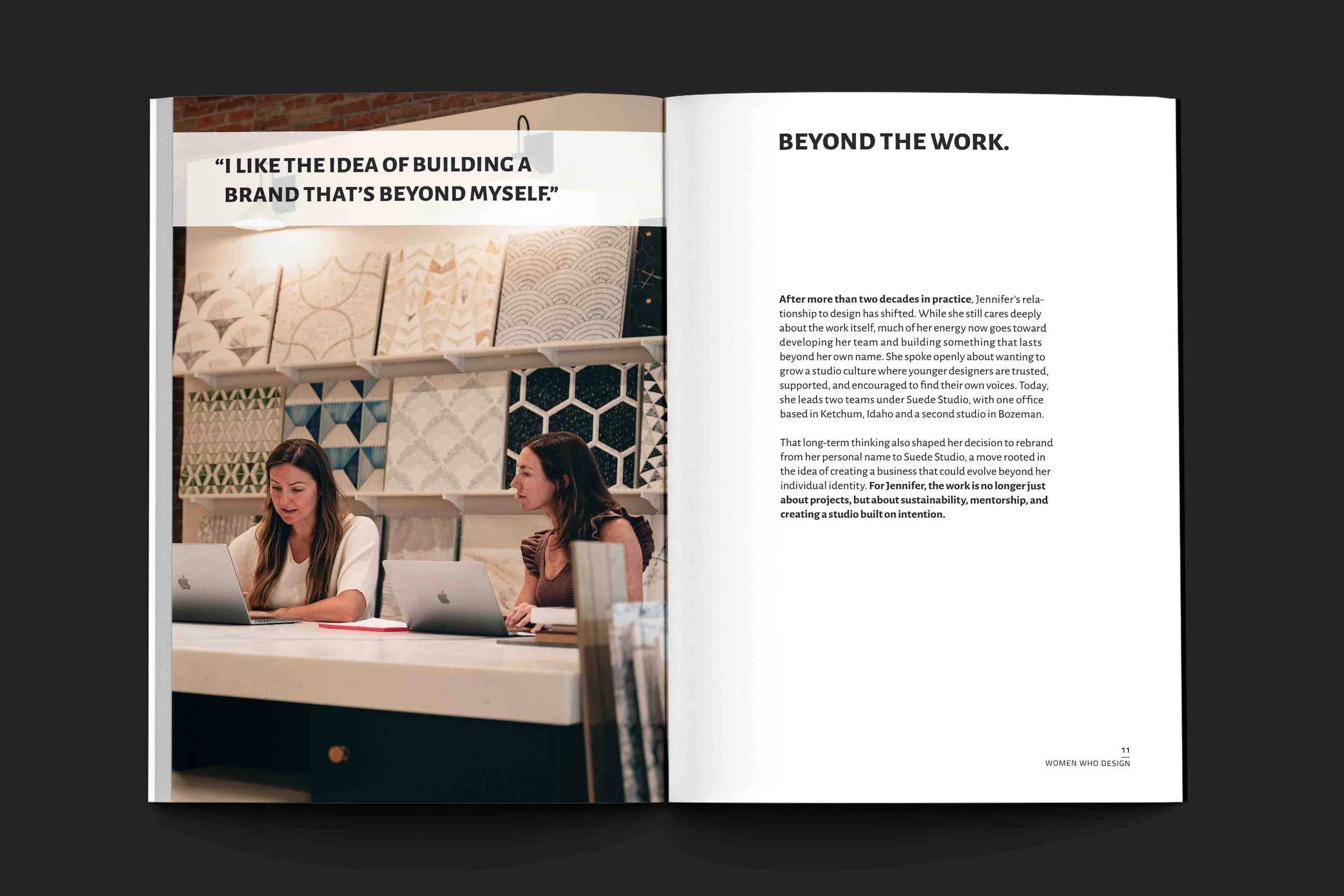


“I like the idea of building a brand that’s
beyond myself.”
— Jennifer Hoey