

Francesca Neff
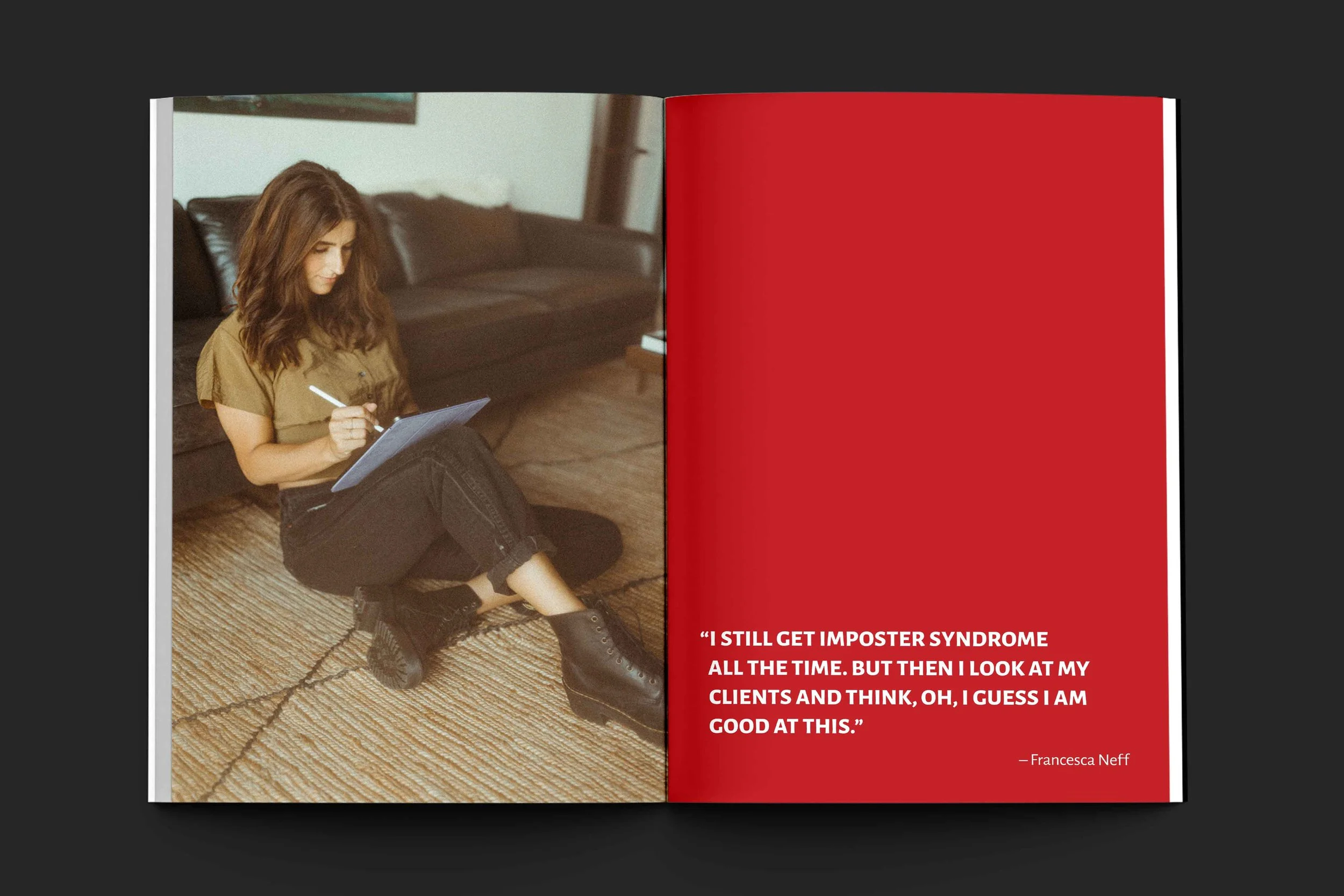
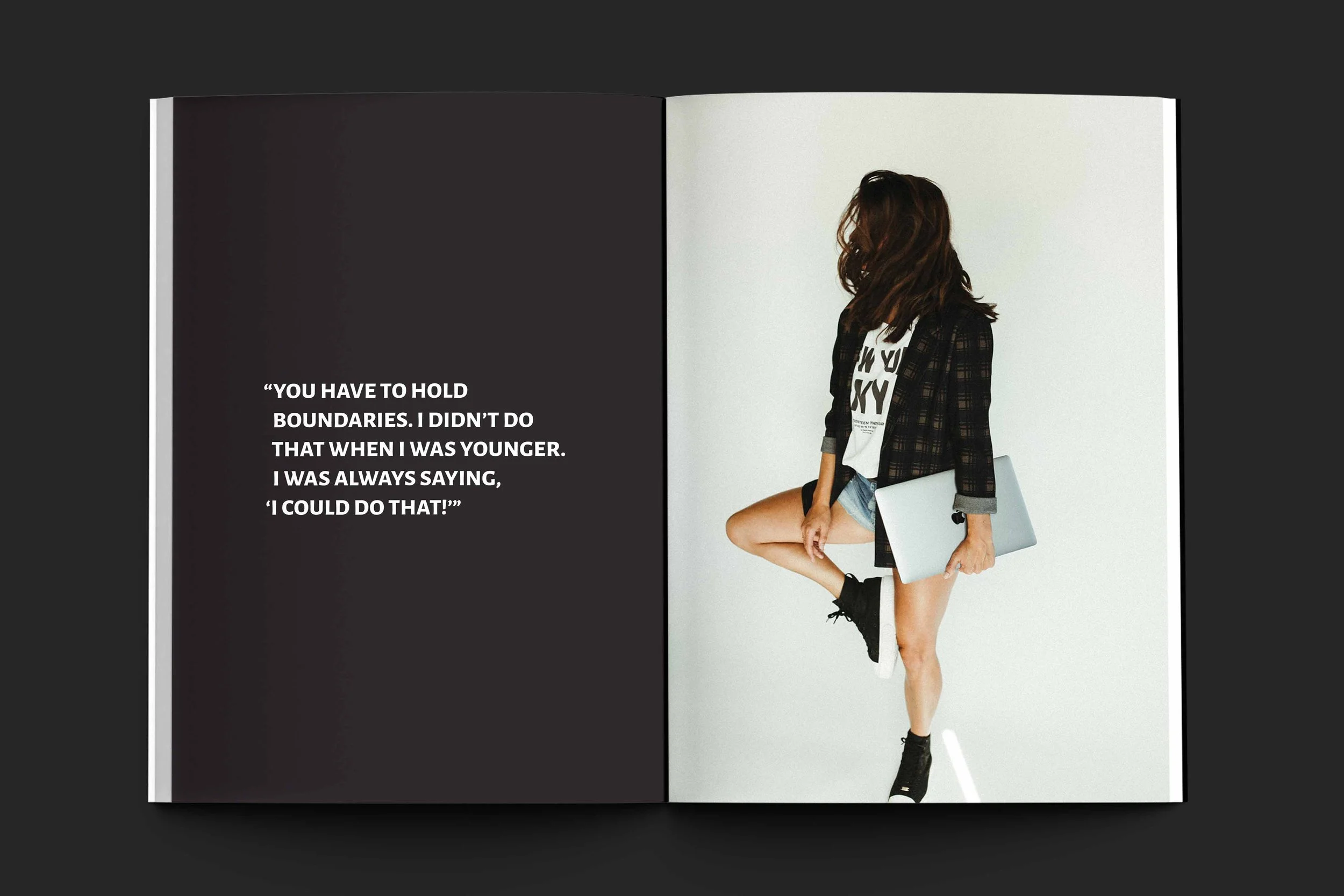
“You have to hold boundaries. I didn’t do that when I was younger. I was always saying,
‘I could do that!’”
— Francesca Neff
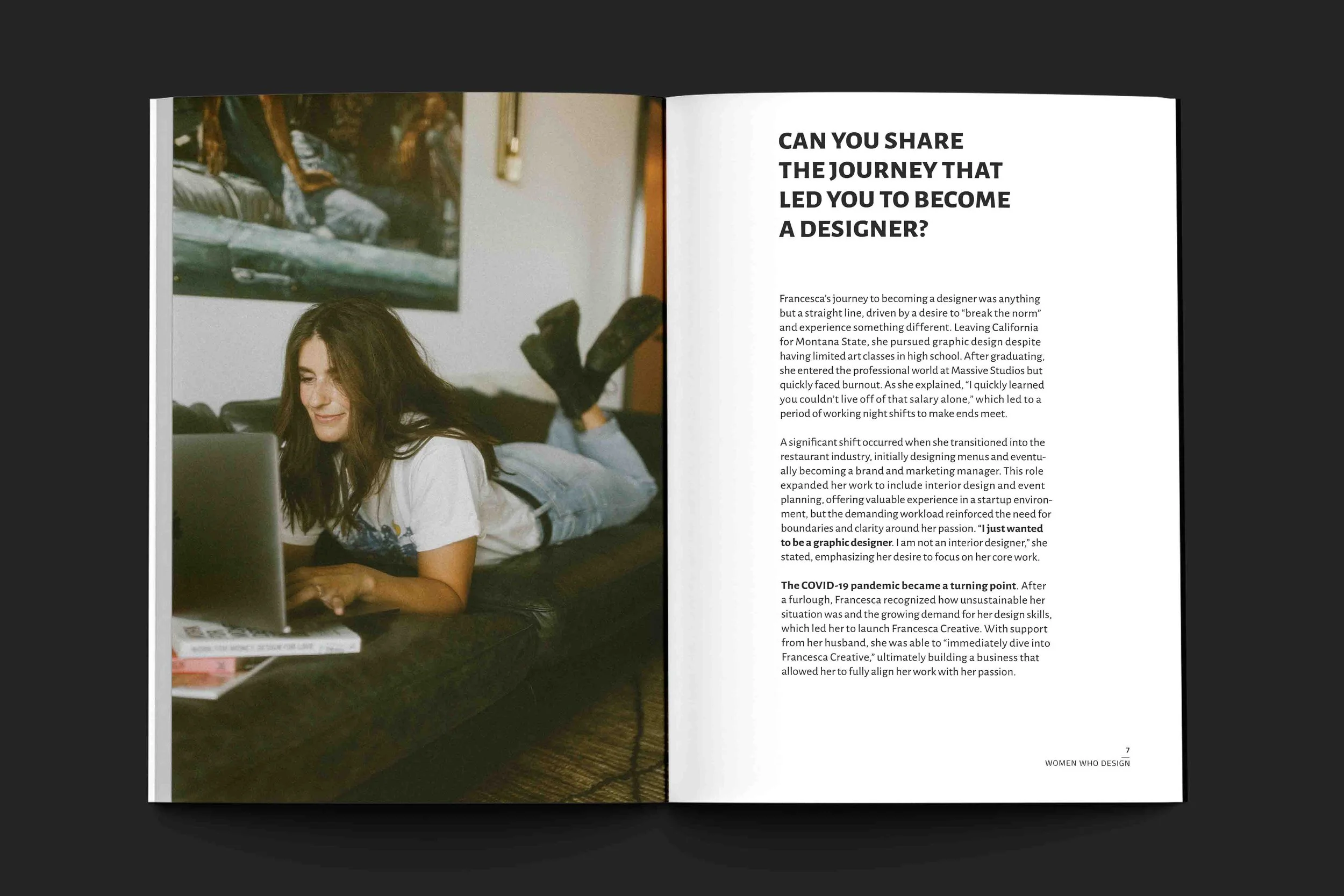
Can you share the journey that led you to become a designer?
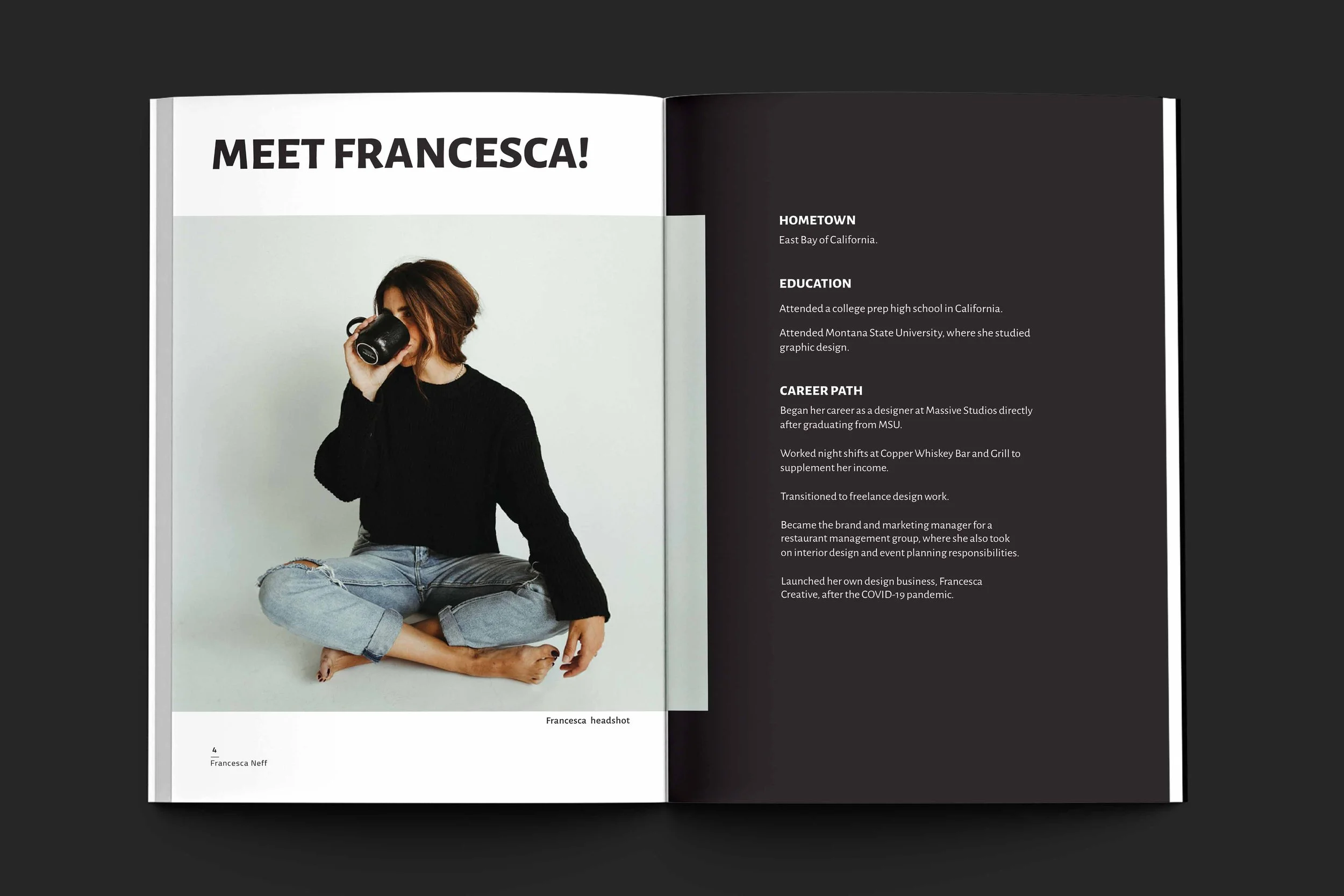
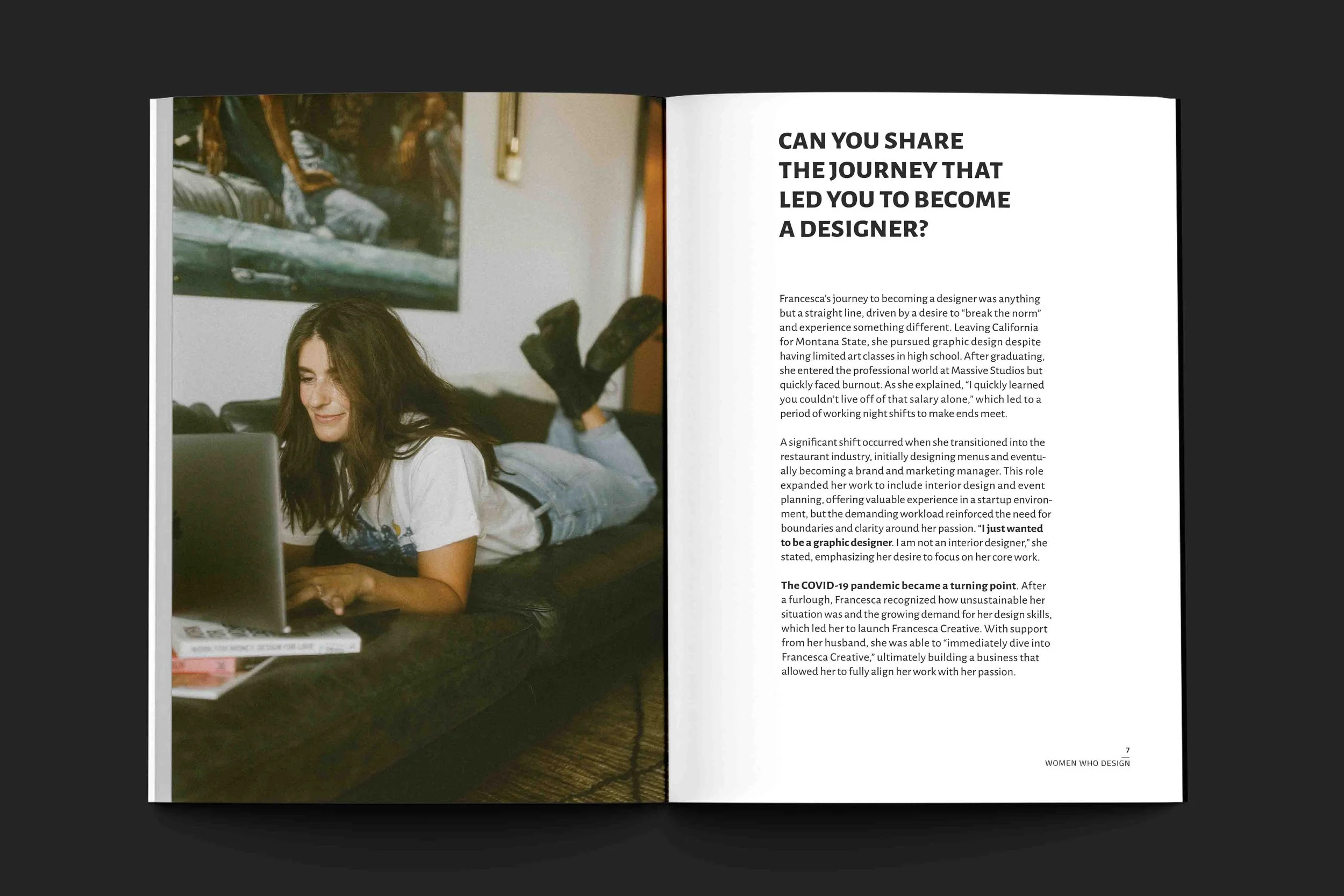
Francesca’s journey to becoming a designer was anything but a straight line, driven by a desire to “break the norm” and experience something different. Leaving California for Montana State, she pursued graphic design despite having limited art classes in high school. After graduating, she entered the professional world at Massive Studios but quickly faced burnout. As she explained, “I quickly learned you couldn’t live off of that salary alone,” which led to a period of working night shifts to make ends meet.
A significant shift occurred when she transitioned into the restaurant industry, initially designing menus and eventually becoming a brand and marketing manager. This role expanded her work to include interior design and event planning, offering valuable experience in a startup environment, but the demanding workload reinforced the need for boundaries and clarity around her passion. “I just wanted to be a graphic designer. I am not an interior designer,” she stated, emphasizing her desire to focus on her core work.
The COVID-19 pandemic became a turning point. After a furlough, Francesca recognized how unsustainable her situation was and the growing demand for her design skills, which led her to launch Francesca Creative. With support from her husband, she was able to “immediately dive into Francesca Creative,” ultimately building a business that allowed her to fully align her work with her passion.
What is it like to be a woman designer in Bozeman?
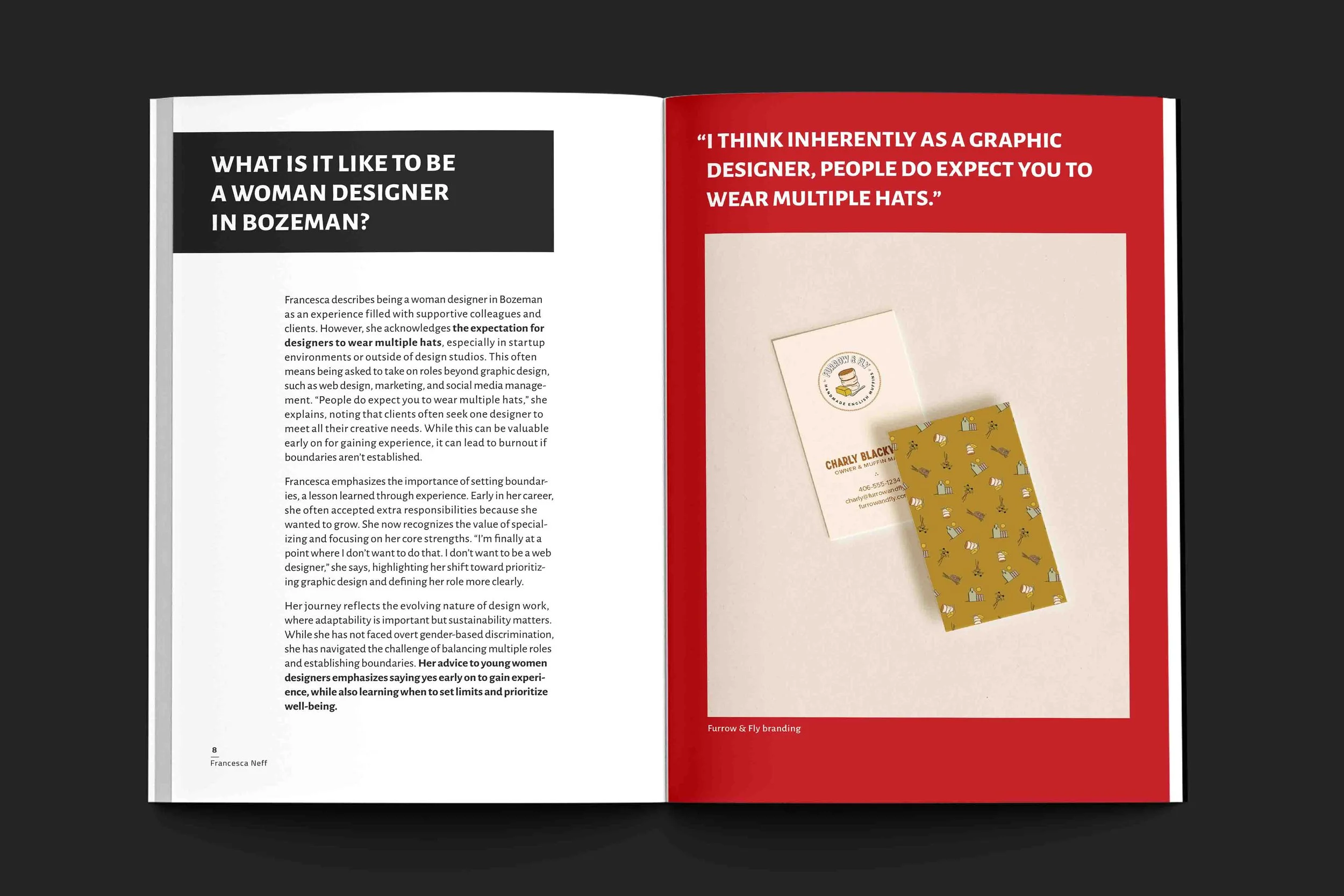
Francesca describes being a woman designer in Bozeman as an experience filled with supportive colleagues and clients. However, she acknowledges the expectation for designers to wear multiple hats, especially in startup environments or outside of design studios. This often means being asked to take on roles beyond graphic design, such as web design, marketing, and social media management. “People do expect you to wear multiple hats,” she explains, noting that clients often seek one designer to meet all their creative needs. While this can be valuable early on for gaining experience, it can lead to burnout if boundaries aren’t established.
Francesca emphasizes the importance of setting boundaries, a lesson learned through experience. Early in her career, she often accepted extra responsibilities because she wanted to grow. She now recognizes the value of specializing and focusing on her core strengths. “I’m finally at a point where I don’t want to do that. I don’t want to be a web designer,” she says, highlighting her shift toward prioritizing graphic design and defining her role more clearly.
Her journey reflects the evolving nature of design work, where adaptability is important but sustainability matters. While she has not faced overt gender-based discrimination, she has navigated the challenge of balancing multiple roles and establishing boundaries. Her advice to young women designers emphasizes saying yes early on to gain experience, while also learning when to set limits and prioritize well-being.
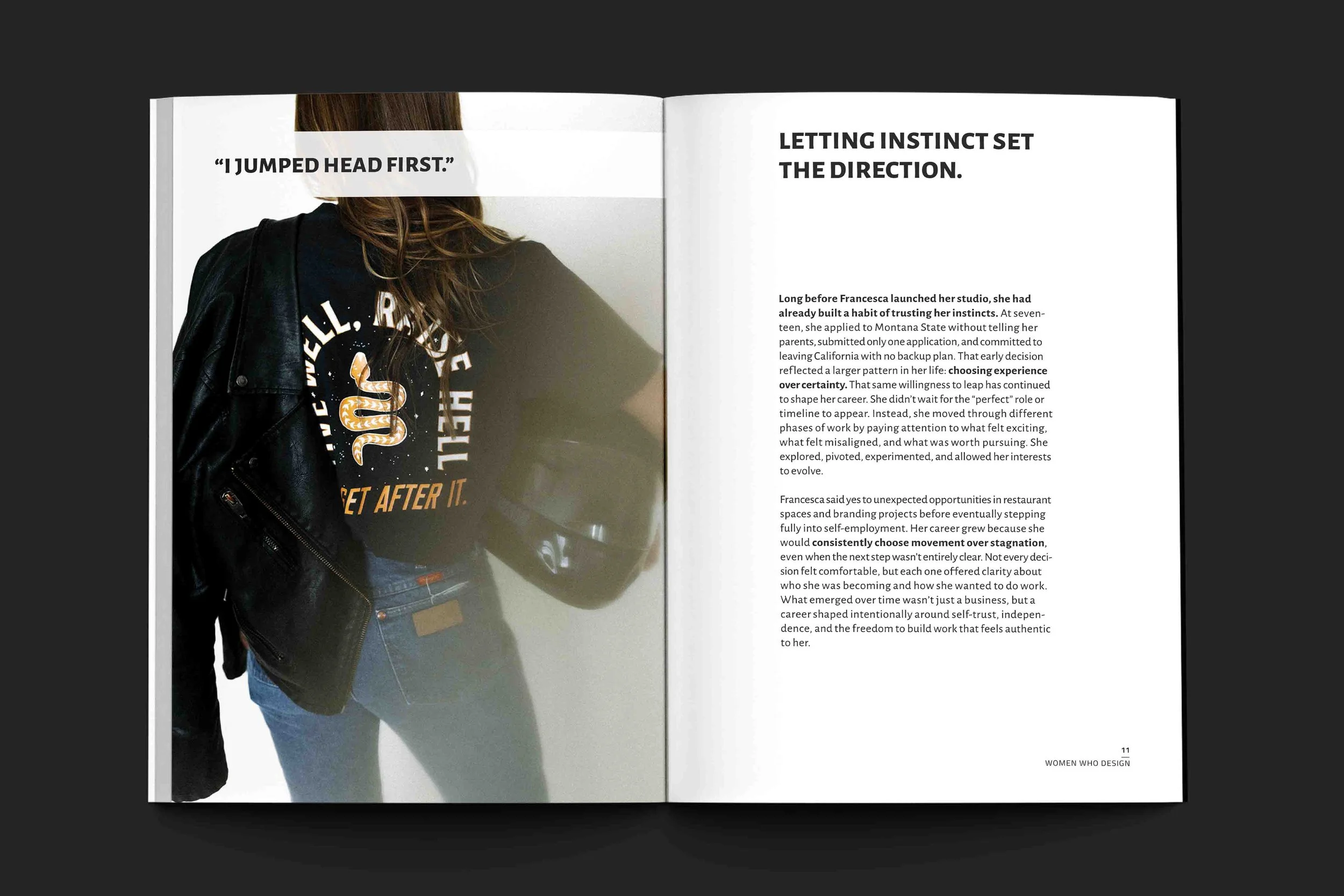
Letting instinct set the direction.
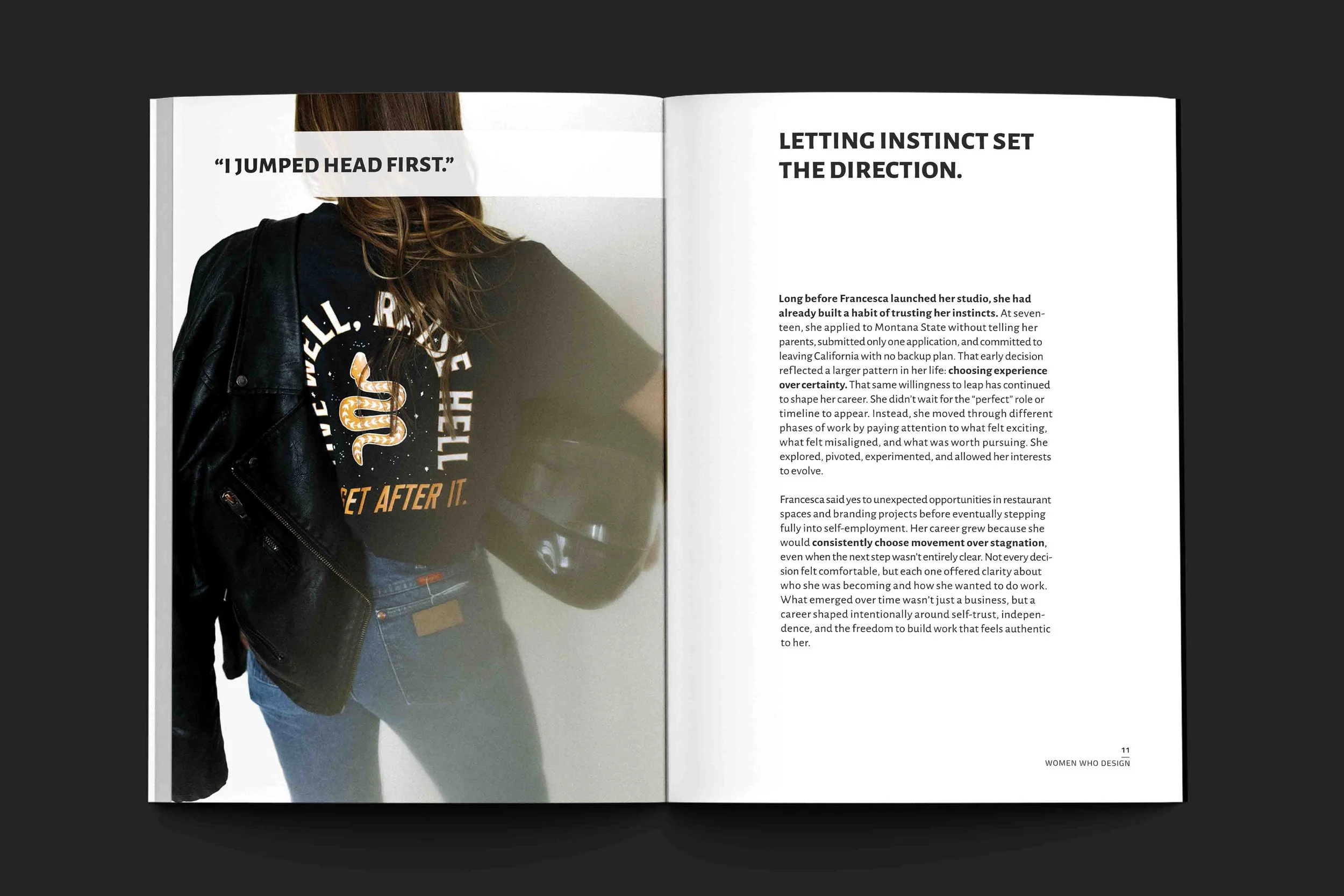
Long before Francesca launched her studio, she had already built a habit of trusting her instincts. At seventeen, she applied to Montana State without telling her parents, submitted only one application, and committed to leaving California with no backup plan. That early decision reflected a larger pattern in her life: choosing experience over certainty. That same willingness to leap has continued to shape her career. She didn’t wait for the “perfect” role or timeline to appear. Instead, she moved through different phases of work by paying attention to what felt exciting, what felt misaligned, and what was worth pursuing. She explored, pivoted, experimented, and allowed her interests to evolve.
Francesca said yes to unexpected opportunities in restaurant spaces and branding projects before eventually stepping fully into self-employment. Her career grew because she would consistently choose movement over stagnation, even when the next step wasn’t entirely clear. Not every decision felt comfortable, but each one offered clarity about who she was becoming and how she wanted to do work. What emerged over time wasn’t just a business, but a career shaped intentionally around self-trust, independence, and the freedom to build work that feels authentic to her.
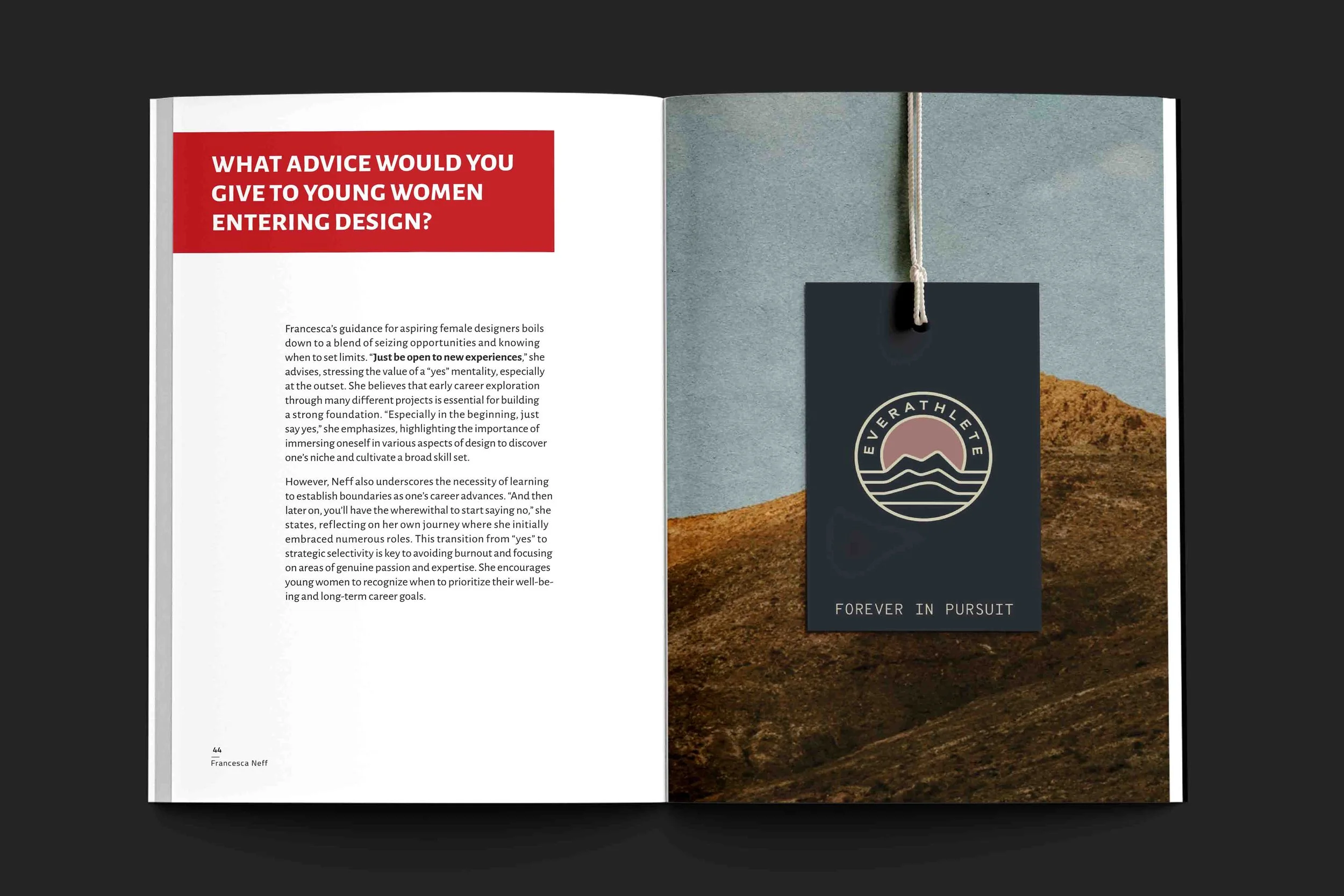
What advice would you give to young women entering design?
Francesca’s guidance for aspiring female designers boils down to a blend of seizing opportunities and knowing when to set limits. “Just be open to new experiences,” she advises, stressing the value of a “yes” mentality, especially at the outset. She believes that early career exploration through many different projects is essential for building a strong foundation. “Especially in the beginning, just say yes,” she emphasizes, highlighting the importance of immersing oneself in various aspects of design to discover one’s niche and cultivate a broad skill set.
However, Neff also underscores the necessity of learning to establish boundaries as one’s career advances. “And then later on, you’ll have the wherewithal to start saying no,” she states, reflecting on her own journey where she initially embraced numerous roles. This transition from “yes” to strategic selectivity is key to avoiding burnout and focusing on areas of genuine passion and expertise. She encourages young women to recognize when to prioritize their well-being and long-term career goals.
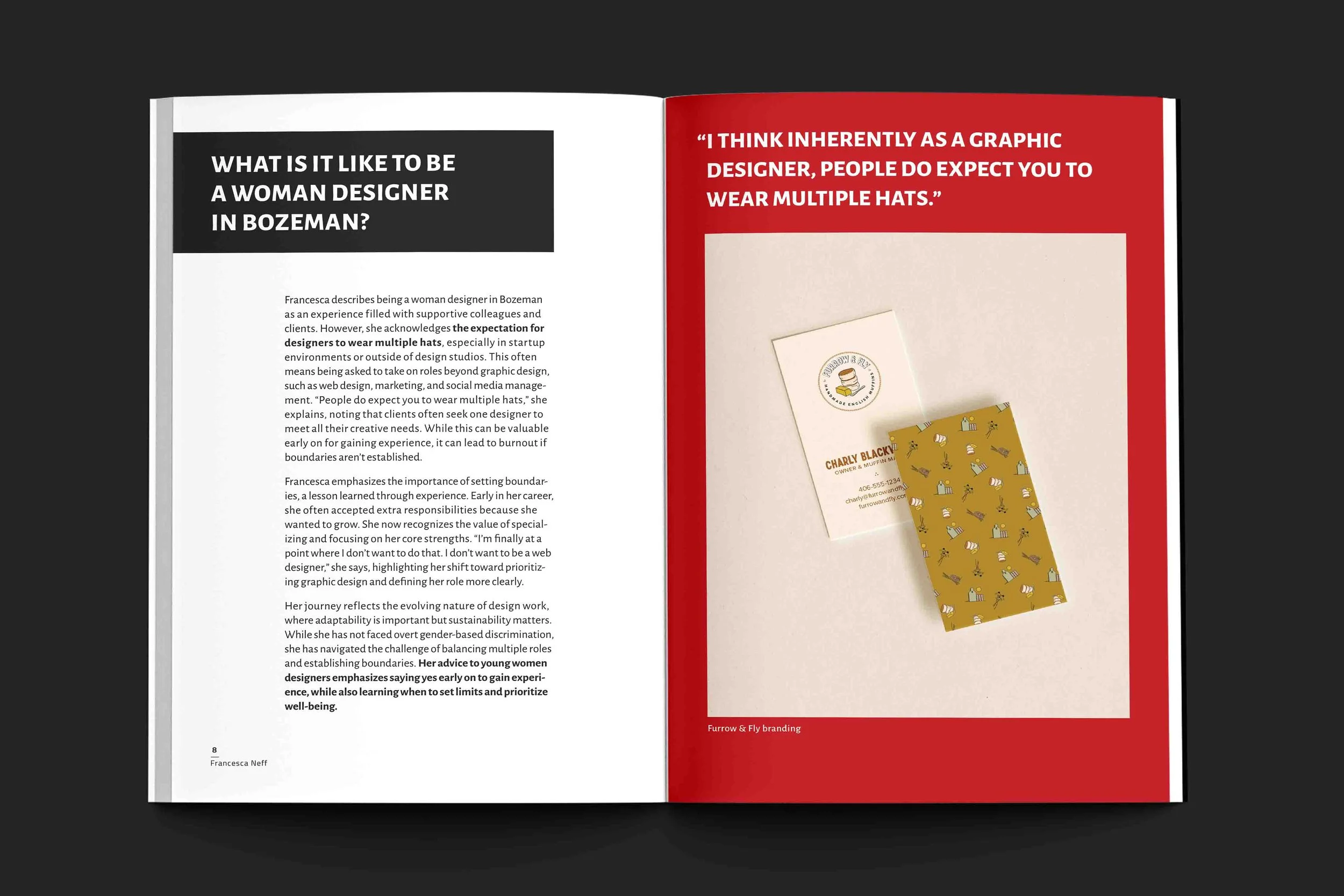

“I think inherently as a graphic designer, people do expect you to wear multiple hats.”
— Francesca Neff